Fort Santiago stands at the edge of Intramuros, the historic heart of Manila, where the Pasig River bends toward the bay. Built in the late 16th century, it was the citadel of Spanish colonial power, a stone sentinel guarding the city from invaders and uprisings. The fort’s thick walls, once whitewashed under the tropical sun, now bear the marks of time—cracks and crevices softened by moss, the scars of wars and earthquakes. Walking through its arched gateways, you step into a place where history feels tangible, not just in the grand structures but in the quiet corners where the past lingers.
The fort was named after Saint James the Great, the patron saint of Spain, and its construction began under the orders of Miguel López de Legazpi, the Basque conquistador who established Manila as the capital of the Spanish East Indies. Over the centuries, it served multiple roles: a military stronghold, a prison, and even a temporary residence for Spanish governors. The original wooden palisade was soon replaced with stone, a necessity in a land prone to typhoons and rebellions. The walls were designed to withstand sieges, with bastions jutting out like the points of a star, allowing defenders to fire upon attackers from multiple angles.
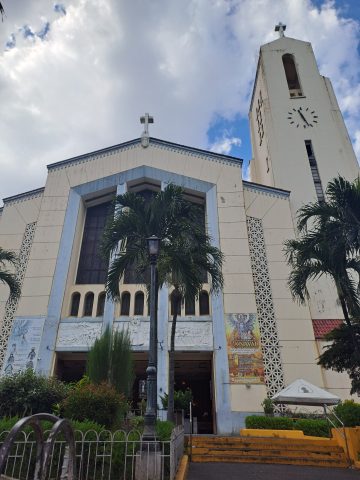
One of the most striking features of Fort Santiago is the Plaza de Armas, a vast open space at its center. This was where soldiers drilled, executions took place, and, in later years, where the American flag was raised after the Spanish surrendered Manila in 1898. The plaza is surrounded by low-slung buildings that once housed barracks, storerooms, and offices. Today, some of these structures have been repurposed as museums, their interiors filled with artifacts that tell the story of the fort’s layered past. A small chapel, dedicated to Saint James, still stands near the entrance, its simple altar a reminder of the faith that accompanied conquest.
Beneath the fort’s imposing exterior lies a darker history. During World War II, the Japanese occupation forces used its dungeons to imprison and torture Filipino and American soldiers. The cells, now empty, are a somber reminder of the suffering endured here. One of the most famous prisoners was José Rizal, the national hero of the Philippines, who was held in Fort Santiago before his execution in 1896. His final footsteps are marked along a path leading to the river, where he was said to have walked before facing the firing squad. The path, lined with bronze footprints, is a pilgrimage site for many Filipinos, a quiet tribute to a man whose writings helped spark the revolution against Spanish rule.
The fort’s architecture is a blend of European military design and local adaptation. The thick stone walls, made from volcanic tuff quarried nearby, were built to withstand both cannon fire and the humid climate. The bastions, named after saints, were positioned to cover every approach, their angled walls deflecting enemy shots. Inside, the buildings were practical rather than ornate—long, narrow structures with high ceilings to allow air to circulate in the sweltering heat. The fort’s layout reflects the Spanish obsession with defense, but also the realities of building in a tropical environment, where wood rotted and metal rusted quickly.
Over the centuries, Fort Santiago has weathered more than just time. It survived the British invasion of 1762, when Manila was briefly occupied, and the American bombardment during the Spanish-American War. In 1945, it was heavily damaged during the Battle of Manila, when retreating Japanese forces set fire to much of the city. After the war, the fort was restored, though not to its original grandeur. Some sections were left as ruins, a deliberate choice to preserve the sense of history rather than erase it. Today, it stands as a monument to resilience, a place where the layers of colonialism, war, and nationhood are visible in every stone.
Visiting Fort Santiago is not just about seeing a historic site; it’s about feeling the weight of the past. The fort is quieter now than it once was, the sounds of drills and cannon fire replaced by the rustle of leaves and the distant hum of the city. The Pasig River, once a vital artery for trade and defense, now flows sluggishly past, its banks lined with trees that have grown over the old docks. In the evenings, the fort is bathed in golden light, the shadows of the walls stretching long across the plaza. It’s a place where history is not just remembered but experienced—a rare spot in a modern city where the past still breathes.
For Filipinos, Fort Santiago is more than a tourist attraction; it’s a symbol of endurance. It has witnessed the rise and fall of empires, the birth of a nation, and the struggles of its people. The fort’s story is intertwined with that of Manila itself, a city that has been rebuilt time and again after destruction. Walking through its gates, you can’t help but feel the echoes of the past—the voices of soldiers, prisoners, and revolutionaries who once stood where you stand. It’s a place that demands reflection, not just admiration, a reminder that history is not just about the grand events but the lives of those who lived through them.