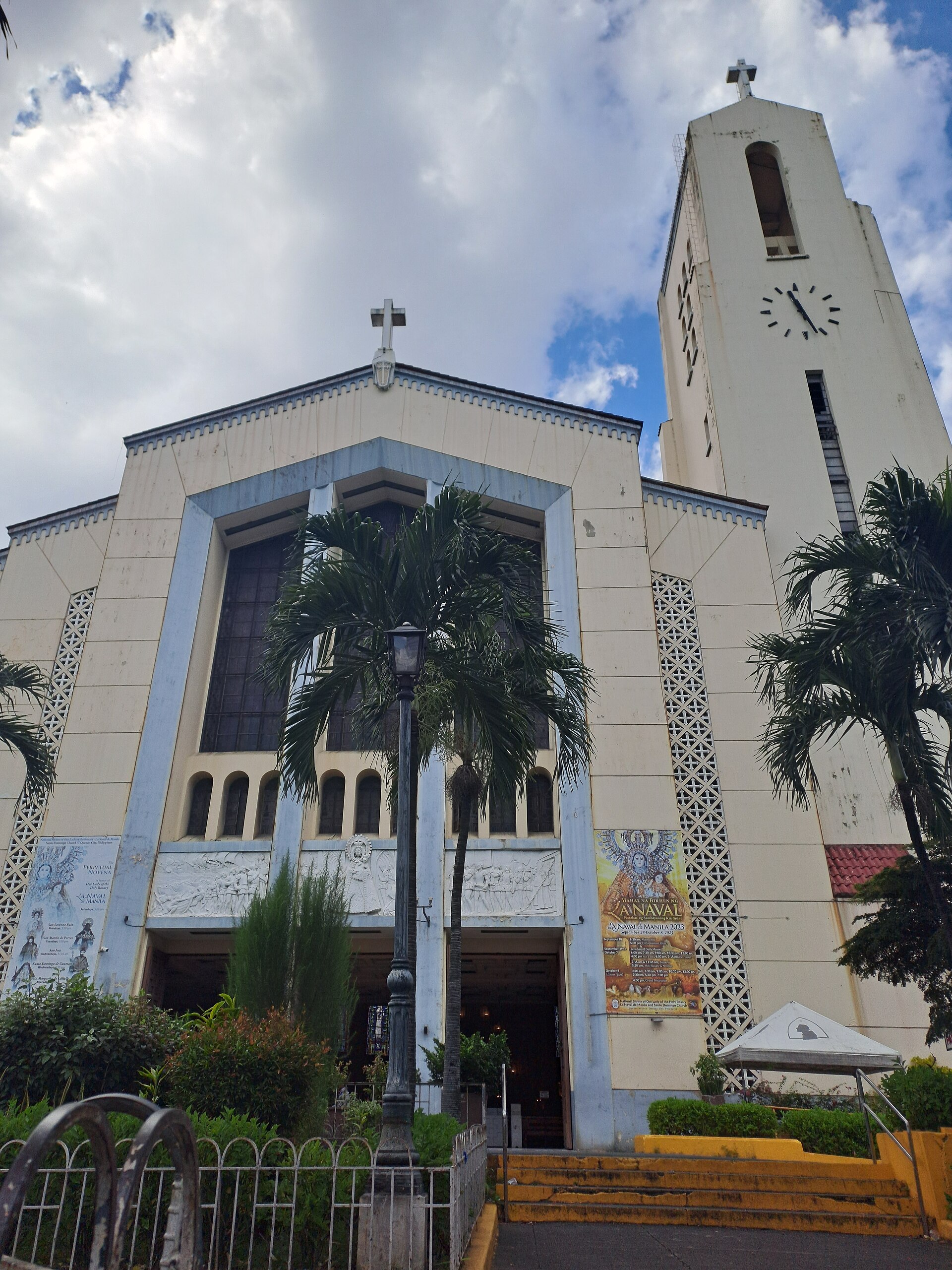
Intramuros, the historic heart of Manila, is a place where time seems to slow down, allowing the past to breathe through its cobblestone streets and weathered walls. Among its many landmarks, the Church of Santo Domingo holds a quiet but profound presence. Though the original structure no longer stands, its legacy endures in the stories of faith, resilience, and artistry that have shaped this corner of the Philippines for centuries.
The first Santo Domingo Church was built in the late 16th century, shortly after the Spanish established Manila as the capital of their colonial empire in the East. The Dominicans, one of the earliest religious orders to arrive in the Philippines, chose this site to build their spiritual home. Over the years, the church became more than just a place of worship—it was a center of learning, culture, and even political influence. The original structure, made of stone and wood, stood as a testament to the Spanish colonial architecture of the time, blending European design with local craftsmanship. Its bell tower, one of the tallest in the city, served as a landmark for ships approaching Manila Bay.
Like much of Intramuros, Santo Domingo has faced its share of destruction. The church was rebuilt several times after fires and earthquakes, each iteration reflecting the changing tastes and technologies of the era. The most devastating blow came during World War II, when the entire district was reduced to rubble by bombings. The church that once stood proudly near Plaza Santo Tomas was lost, along with countless artifacts, paintings, and religious relics that had been collected over centuries. What remains today is a newer structure, relocated to Quezon City in the 1950s, where the Dominicans reestablished their presence. Yet, even in its absence, the spirit of the original Santo Domingo lingers in Intramuros.
The church was not just a religious site but a cultural treasure. Its interiors were adorned with intricate woodwork, gilded altars, and paintings by some of the most skilled artists of the colonial period. The image of Our Lady of the Rosary of La Naval de Manila, a revered statue of the Virgin Mary, was housed here and became the focal point of one of the Philippines’ most important religious festivals. The statue, believed to have miraculous powers, was paraded through the streets of Intramuros in grand processions, drawing thousands of devotees. These traditions continue today, though now centered in the new Santo Domingo Church, they still carry the weight of history.
Walking through Intramuros, it’s easy to imagine the church as it once was—a grand, imposing structure with a façade that spoke of both power and piety. The original site, now marked by a simple plaque, sits near the ruins of other colonial-era buildings, a reminder of the layers of history buried beneath the modern city. The area around it was once bustling with activity: merchants selling goods from across Asia, friars discussing theology, and locals going about their daily lives under the watchful gaze of the church’s spires. Even in its silence, the space where Santo Domingo stood tells a story of a time when faith and empire were intertwined.
The church’s significance extends beyond its physical form. It was here that some of the earliest educational institutions in the Philippines were founded, including the University of Santo Tomas, which began as a small school within the church’s walls. The Dominicans played a crucial role in shaping the intellectual and spiritual life of the colony, and their influence can still be felt in the country’s traditions, language, and even its legal system. The church was also a sanctuary during times of crisis, offering refuge to those fleeing conflict or natural disasters. In many ways, Santo Domingo was a microcosm of the Philippines itself—resilient, adaptive, and deeply rooted in its past.
Today, Intramuros is a place where history is both preserved and reimagined. While the original Santo Domingo Church may be gone, its memory is kept alive by those who visit the district, drawn by its stories and its atmosphere. The newer church in Quezon City, though different in setting, continues the traditions that began centuries ago, from the annual La Naval de Manila festivities to the quiet moments of prayer. For those who take the time to explore, the legacy of Santo Domingo offers a glimpse into the soul of the Philippines—a blend of indigenous, Spanish, and Asian influences that have shaped its identity.
Visiting the site of the old church, one can’t help but feel the weight of history. The air is thick with the echoes of prayers, the rustle of old parchments, and the distant sound of church bells. It’s a place that invites reflection, not just on the past, but on the enduring nature of faith and community. Santo Domingo may no longer stand in Intramuros, but its spirit remains, woven into the very fabric of the city. For anyone seeking to understand Manila beyond its modern façade, this is a place where the past is not just remembered—it is felt.