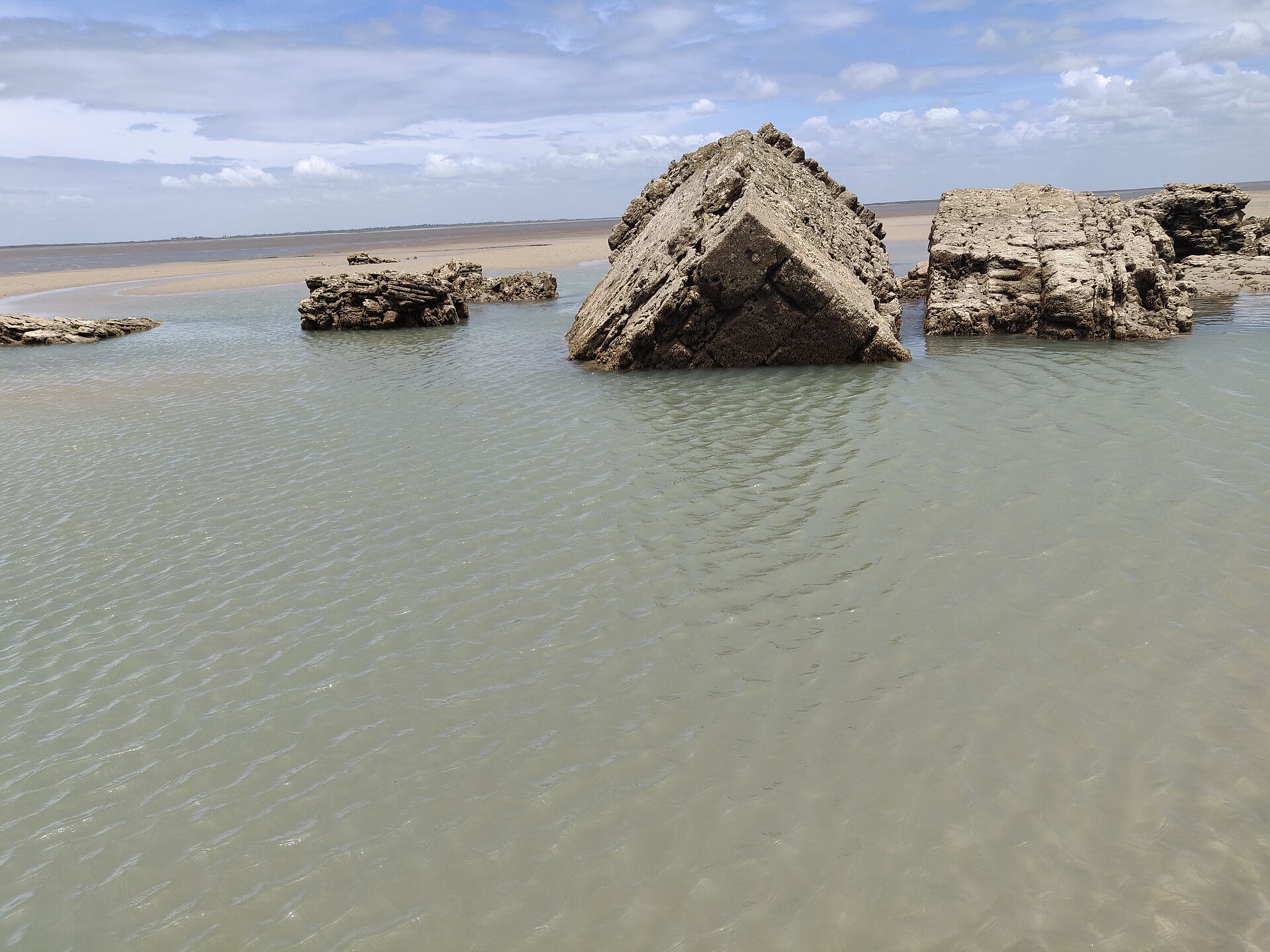
Fort São Caetano stands where the Pungwe River meets the Indian Ocean, a quiet sentinel overlooking the waters that once carried Portuguese ships to this corner of East Africa. Built in the early 16th century, it was one of the first permanent European structures in Mozambique, though its origins are tangled in the messy realities of colonial ambition. The fort was meant to secure Portugal’s foothold in the region, a base for trade and a bulwark against rival powers—Dutch, Arab, and local kingdoms alike. Its walls, thick and weathered, have seen centuries of shifting allegiances, from the height of the spice trade to the decline of empire.
The architecture is unmistakably Portuguese, a square bastion with rounded turrets at each corner, designed more for function than grandeur. The stonework, though eroded by salt and time, still bears the marks of its builders—local laborers and Portuguese masons working with materials hauled from nearby quarries. Inside, the space is sparse, a reminder that this was never a palace or a showpiece, but a military outpost. The central courtyard, now overgrown with weeds, once held cannons aimed at the horizon, ready to repel invaders or assert control over passing ships.
For much of its history, Fort São Caetano was less a fortress and more a symbol. By the 17th century, the Portuguese had shifted their focus to other parts of Mozambique, and Beira’s strategic importance waned. The fort was abandoned, reoccupied, and abandoned again, its stones looted for other buildings, its purpose forgotten. It wasn’t until the late 19th century, when the Portuguese reasserted their presence in the region, that the fort was restored—not as a military stronghold, but as a relic of a bygone era. Today, it stands as one of the few tangible links to Mozambique’s early colonial past.
The surrounding area tells its own story. Beira, a city that grew up around the fort, has always been a place of contradictions. It was a hub for the slave trade, a gateway for ivory and gold, and later, a port for the export of cashews and cotton. The fort’s location, at the mouth of the Pungwe, made it a natural point of control, but also a place where cultures collided. Arab traders, African kingdoms, and European merchants all left their mark here, though the fort itself remains stubbornly Portuguese in its design and legacy.
Visiting Fort São Caetano today is a quiet experience. There are no crowds, no guided tours, just the sound of the ocean and the occasional call of seabirds. The walls are crumbling in places, and the interior is mostly empty, save for a few plaques and the occasional graffiti. But there’s a certain dignity to its decay—a sense that this place has seen enough history to know it doesn’t need to perform for visitors. The view from the ramparts is still impressive, stretching across the river and the ocean beyond, a reminder of why this spot was chosen all those centuries ago.
The fort’s significance goes beyond its military history. It’s a rare surviving example of early Portuguese colonial architecture in Africa, a style that would later evolve into the more ornate buildings of Mozambique’s other cities. Unlike the grand churches and palaces of Ilha de Moçambique, Fort São Caetano is rough and utilitarian, a reflection of the harsh realities of empire-building. Its very existence speaks to the fragility of colonial power—how quickly it could be established, how easily it could be forgotten.
For locals, the fort is part of the fabric of Beira, though its colonial past is a complicated legacy. Mozambique gained independence in 1975, and since then, the country has grappled with how to remember its history—both the pre-colonial kingdoms and the centuries of foreign rule. Fort São Caetano is neither celebrated nor reviled; it simply is, a silent witness to the ebb and flow of power. Some see it as a reminder of resilience, others as a relic of oppression. Most, though, just pass by it on their way to the beach or the market, its stones as much a part of the city as the palm trees or the sand.
If you visit, it’s worth taking a moment to sit on the low wall facing the ocean. The breeze carries the scent of salt and fish, and the waves lap against the shore in a rhythm that hasn’t changed in centuries. The fort may not be grand, but it has a way of making you feel the weight of time. It’s not a place for selfies or souvenirs, but for quiet reflection—on the people who built it, the lives it touched, and the world that has moved on without it. In a country where history is often overshadowed by more recent struggles, Fort São Caetano offers a rare glimpse into an older, more layered past.