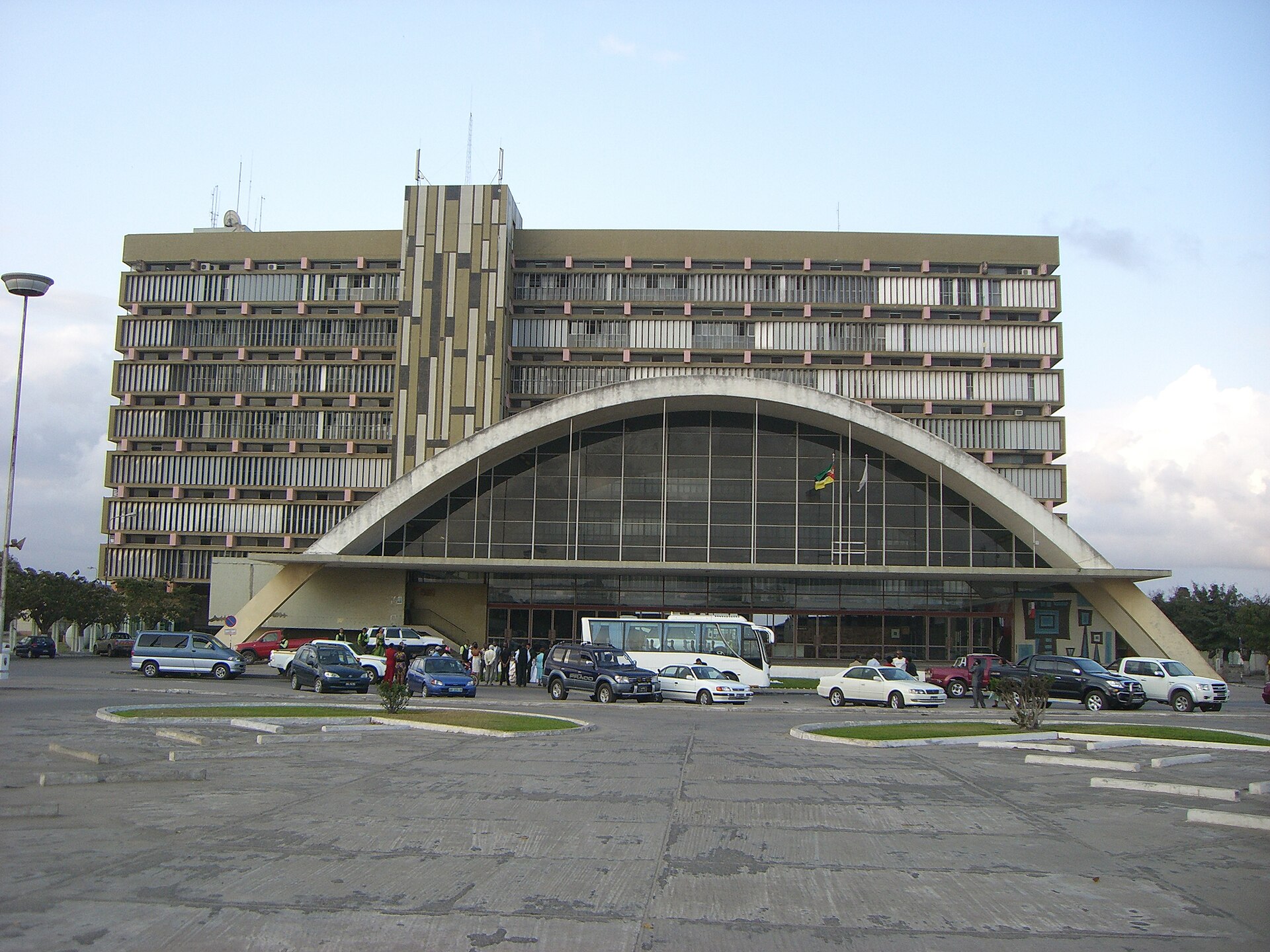
Beira’s railway station is one of those places where time moves slowly. Built in the early 20th century, it witnessed the city’s colonial past, when Beira was a key port and transport hub for British and Portuguese interests in southern Africa. The station was part of the Beira Railway, a line connecting landlocked Rhodesia (now Zimbabwe) to the Indian Ocean. It carried copper, tobacco, and passengers traveling for opportunity or escape. Trains no longer run often, but the building remains, its faded grandeur hinting at another era.
The architecture blends practicality and colonial ambition. The station’s design includes high ceilings, large windows, and wide verandas for relief from the heat. Built from local materials, its pale yellow walls have aged, while the roof, once deep red, now shows decades of sun. Inside, the ticket hall has wooden counters, old fans, and remnants of its past—faded timetables and Portuguese signs. It’s not grand, but its simplicity has dignity.
For much of the 20th century, the station drove Beira’s economy. The railway linked Africa’s interior to the coast, and the station was where merchants, travelers, and laborers met. At its peak, the line carried goods to the port, then one of Mozambique’s busiest. But after independence in 1975 and the civil war, the railway fell into disrepair. Efforts to revive it have had limited success, and the station now sees little use, its platforms often empty.
Walking through the station today, you notice the quiet. The main hall smells of old wood and damp stone. The platforms, once crowded, now stretch in silence, overgrown in places. The clock, if it still works, has stopped keeping time. The few people who pass through seem to do so out of necessity. Yet the place feels poignant—a reminder of how landmarks outlive their purpose.
The station’s location adds to its character. Beira is a city of contrasts, where a port town’s energy meets decaying colonial buildings. The station sits near the waterfront, close to old warehouses and crumbling hotels. Around it, fishermen mend nets and vendors sell fruit under acacia trees. The station, with its peeling paint and rusted railings, fits the scene—a relic left as it is.
For those who look, the station reveals Mozambique’s layered history. It reflects colonialism, independence struggles, and rebuilding. The railway was about power, trade, and movement. The station now tells what happens when those connections break. But it also shows resilience. Beira has survived cyclones, war, and decline, and the station still stands.
Visiting isn’t about tourism. There are no tours, shops, or grand narratives. It’s a place to wander, sit on a bench, or imagine the trains that once arrived with their own stories. The station’s future is unclear—whether it will be restored or left to fade—but for now, it remains a quiet corner of Beira, where the past lingers just beneath the surface.