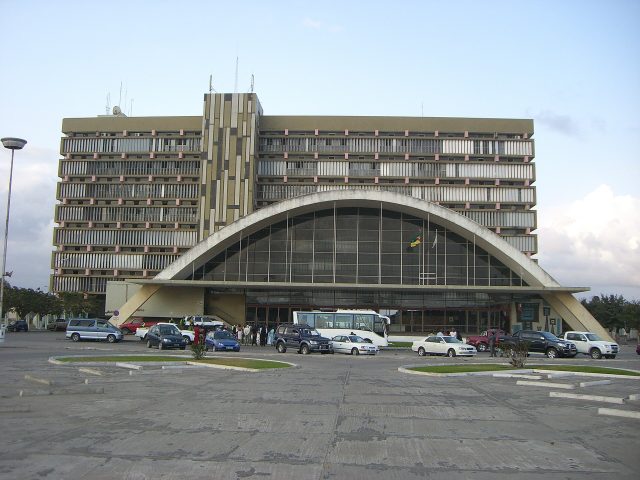
Our Lady of the Rosary Cathedral in Beira is one of those places that feels suspended in time, bearing witness to the city’s rise and fall. Built in the early 20th century, it stands as both a spiritual heart for the local Catholic community and a quiet monument to Mozambique’s colonial past. The cathedral’s whitewashed walls rise above the low-slung buildings of Beira’s old quarter, its unassuming presence making it instantly recognizable. There’s no grandeur here, no ornate flourishes—just a sense of understated dignity that gives it a character all its own.
The cathedral’s story is woven into Beira’s history. Founded by the Portuguese in the late 19th century as a trading port, the city quickly became a key economic hub along the Indian Ocean coast. The Catholic Church played a central role in colonial life, and the cathedral’s construction in 1925 reflected that influence. By then, Beira had grown into the capital of its province, a place where European settlers and local communities intersected. The cathedral wasn’t just a place of worship; it became a gathering point for people of different backgrounds, a rare space where traditions and cultures overlapped.
Architecturally, the cathedral is a product of its time. Its neo-Gothic design features tall, pointed windows and sturdy buttresses that lend it an airy solidity. The facade is simple, marked by a modest entrance topped with a small bell tower. Inside, the space feels vast and luminous, with high vaulted ceilings supported by slender columns. The stained glass, though not as vivid as in European cathedrals, casts a soft glow, adding to the sense of tranquility. The interior is free of excess, its restraint making the atmosphere feel all the more sincere.
The cathedral has endured its share of hardships. During Mozambique’s civil war, which raged from the mid-1970s to the early 1990s, much of Beira was damaged or destroyed. The cathedral survived, though the years of conflict left their mark. Today, it shows signs of wear, but that only adds to its charm. Locals speak with pride about how the building once offered refuge during the worst of the fighting and how the community came together to restore it afterward. Those stories are part of what makes the cathedral more than just a structure—they’re a testament to resilience.
For Beira, Our Lady of the Rosary is more than a religious site; it’s a piece of the city’s identity. Beyond services, it hosts cultural events, concerts of sacred music, and occasional art exhibitions. On holidays like Christmas and Easter, the cathedral fills with worshippers, its walls echoing with hymns and prayers. Even those who don’t practice Catholicism often visit, drawn by the sense of history and quiet reflection the place offers. It’s a space where the past and present coexist, where faith and daily life intersect.
The area around the cathedral is worth exploring, too. The square in front is one of the few places in Beira where traces of the colonial era remain visible. Old buildings with wooden verandas and carved balconies, once home to Portuguese merchants and officials, still stand, though many are in need of repair. Their faded elegance adds to the neighborhood’s character. Nearby, small cafés serve strong coffee and fresh pastries, while vendors sell handmade crafts—woven baskets, shell jewelry, and traditional fabrics. It’s a place where the city’s layers reveal themselves slowly.
Visiting the cathedral is a chance to engage with Mozambique’s complicated history. Colonialism, independence, war, and the struggle for peace—all of these threads are woven into its walls. The building stands as a reminder that even in difficult times, people hold onto what matters. Today, it remains a place of worship, but also a symbol of Beira’s endurance. The city has faced hardships, yet it continues to move forward, and the cathedral is part of that story.
If you find yourself in Beira, take a moment to step inside. Sit on one of the wooden pews, listen to the quiet, and let the space settle around you. There’s no opulence here, no grand murals, but something deeper—a sense of place that lingers. Our Lady of the Rosary isn’t just a building; it’s a living piece of the city, shaped by its past and its people.