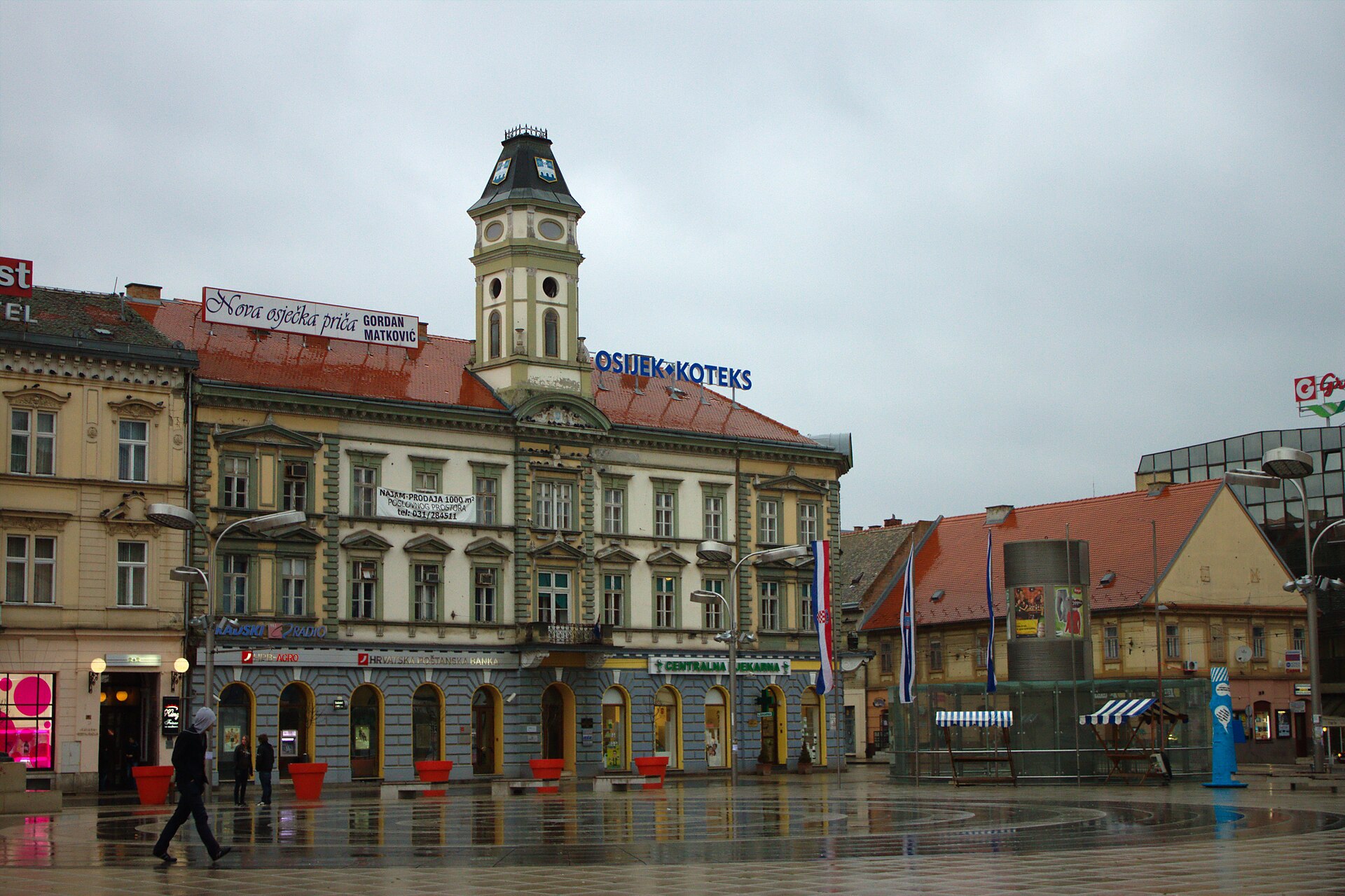
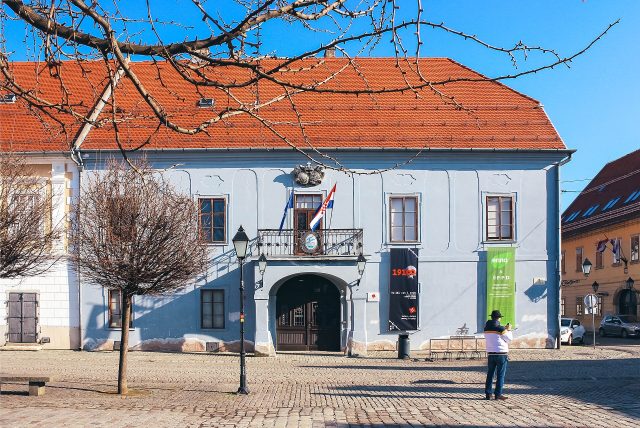
European Square in Osijek is one of those places where the city unfolds at its own unhurried pace, like an old photo album you leaf through slowly. There’s no rush here, no crowds following tourist trails—just the quiet sense that time moves a little differently than it does elsewhere in Croatia. Tucked in the heart of the Upper Town, this part of Osijek feels steeped in history and tradition. The square isn’t just an open space; it’s a crossroads where different eras overlap, from the Austro-Hungarian past to the rhythms of modern life.
The architecture around the square tells its story without words. Most of the buildings date back to the late 19th and early 20th centuries, when Osijek flourished under Habsburg rule. Their facades are adorned with stucco details, wrought-iron balconies, and tall windows that once let light into the parlors of well-to-do townspeople. One of the most striking structures is the former Central Hotel, where merchants and travelers once stayed. Today, it houses cafes and small shops, but the high ceilings and spacious interiors still carry the echo of its grander days.
The square hasn’t always been called European Square. Over the years, it’s had different names—Main Square, Franz Joseph Square—and after World War II, it was renamed in honor of liberation. Its current name came in the 21st century, after Croatia joined the European Union, a fitting choice for a place that embodies the meeting of cultures. Osijek itself sits at the intersection of Slavic, Hungarian, and Austrian influences, and the square reflects that blend in its quiet, unassuming way.
At the center stands a modest memorial to the victims of World War II. It’s not a towering monument, just a simple reminder of the city’s painful history. Locals often gather here, sitting on benches or strolling with their children. There are no tourist crowds, which makes the square feel genuinely alive—it belongs to the people who call Osijek home, not to visitors passing through.
In the summer, European Square becomes a hub for local events. Concerts, street art festivals, and craft fairs fill the space, drawing crowds from across the city. In winter, a small Christmas market appears, selling mulled wine, traditional sweets, and handmade souvenirs. But even on ordinary days, the square is far from empty. The cafes and restaurants around it are always busy, and in the evenings, groups of friends gather to share a glass of wine or a cup of coffee.
Osijek isn’t trying to be another Dubrovnik or Split. It has its own pace, a little slower, a little more provincial, but no less compelling. European Square captures that essence perfectly. There’s no need for grand landmarks here—the atmosphere itself is the main attraction. Walking through it, you get a sense of the city’s rhythm, its character, and even a glimpse of its past.
If you find yourself in Osijek, don’t rush away from the square. Step into one of the cafes on the ground floor of an old building, where they might serve local treats like *orihi*, a nut-filled cookie, or *kremšnita*, a layered custard pastry. Or just sit on a bench and watch as people go about their day, children play near the fountain, and the city breathes around you. It’s in these small moments that you understand why Osijek is often called one of Croatia’s coziest cities.
European Square isn’t just a place on a map—it’s part of the city’s identity. It doesn’t try to impress or dazzle; it simply exists, as much a part of Osijek as the Drava River or the old tram lines. Maybe that’s its real charm: in its unpretentiousness, in the way history isn’t confined to museums but lives in the everyday. Here, the past and present don’t compete—they coexist, quietly and naturally.