Jelgava Theatre doesn’t stand out in the cityscape. It occupies a square that once thrived as a trading hub, though now most passersby overlook its plain facade. Unlike grand cultural landmarks, this theatre doesn’t rely on spectacle. It feels alive in its own way—rooted in the town’s rhythm, unassuming, real.
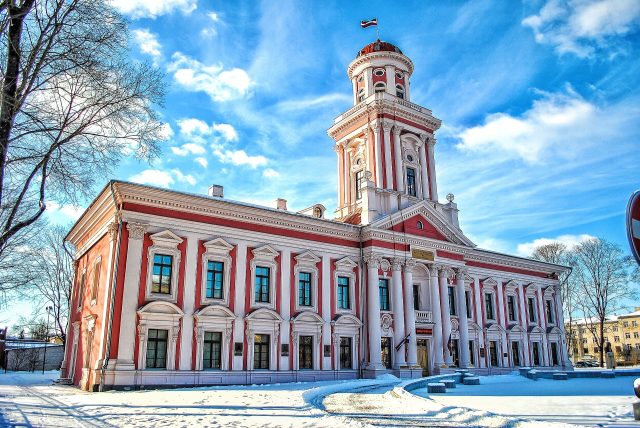
The theatre’s origins trace back to the 19th century, when Jelgava—then Mitau—was part of the Russian Empire and a cultural hub of the Courland Governorate. The first building, erected in 1818, burned down. The current structure dates to 1959, built during the Soviet era. Its architecture is straightforward: clean lines, tall windows, a modest portico. No extravagance, just a space built to serve its purpose.
The auditorium isn’t large, but it doesn’t feel cramped either. The stage is simple, yet well-equipped. Wooden panels, soft lighting, and slightly worn seats give the place a lived-in warmth. It’s as if the theatre has always been here, watching generations come and go.
The theatre’s repertoire includes classics, contemporary plays, Latvian and international drama, experimental works, and children’s performances. The actors here don’t just work—they belong. Some have become local legends, their performances eagerly awaited. For many in Jelgava, the theatre is more than a building. It’s where traditions are shared, where evenings become memorable.
Latvian-language productions hold a special place here. During the Soviet era, Russian-language performances were staged, but after independence, the theatre became a space for preserving national culture. That doesn’t mean other traditions are excluded—just that Latvian drama and folklore shape its identity. When folk songs fill the air or scenes from traditional tales unfold, the auditorium feels like a gathering of family.
The theatre isn’t just about performances. Its walls have hosted literary evenings, chamber music concerts, and exhibitions by local artists. Writers and poets hold readings here, drawing crowds who come for more than entertainment. The foyer displays photographs of past performances, old playbills, and portraits of actors. These details make the theatre feel alive, evolving with the city.
In a small town like Jelgava, the theatre is both a cultural and social hub. For some, it’s a place to unwind. For others, a chance to connect with art. For many, it’s tied to childhood memories. The seats aren’t always full, but they’re rarely empty. People come not for spectacle, but for something deeper—a sense of belonging, a pause from daily life, the emotions only live performance can stir.
Like many provincial theatres, Jelgava’s has faced challenges. Funding fluctuates, audiences age, and young people often leave. Yet it persists because the town still needs it. It doesn’t chase trends or seek to impress. It simply offers what it always has: a space for art in its most honest form.
If you’re in Jelgava, don’t walk past. Step inside. Check the playbill. Maybe you’ll catch a performance. You won’t find extravagance here, but you might find something rarer—a place where art isn’t for the elite, but for anyone who wants it.