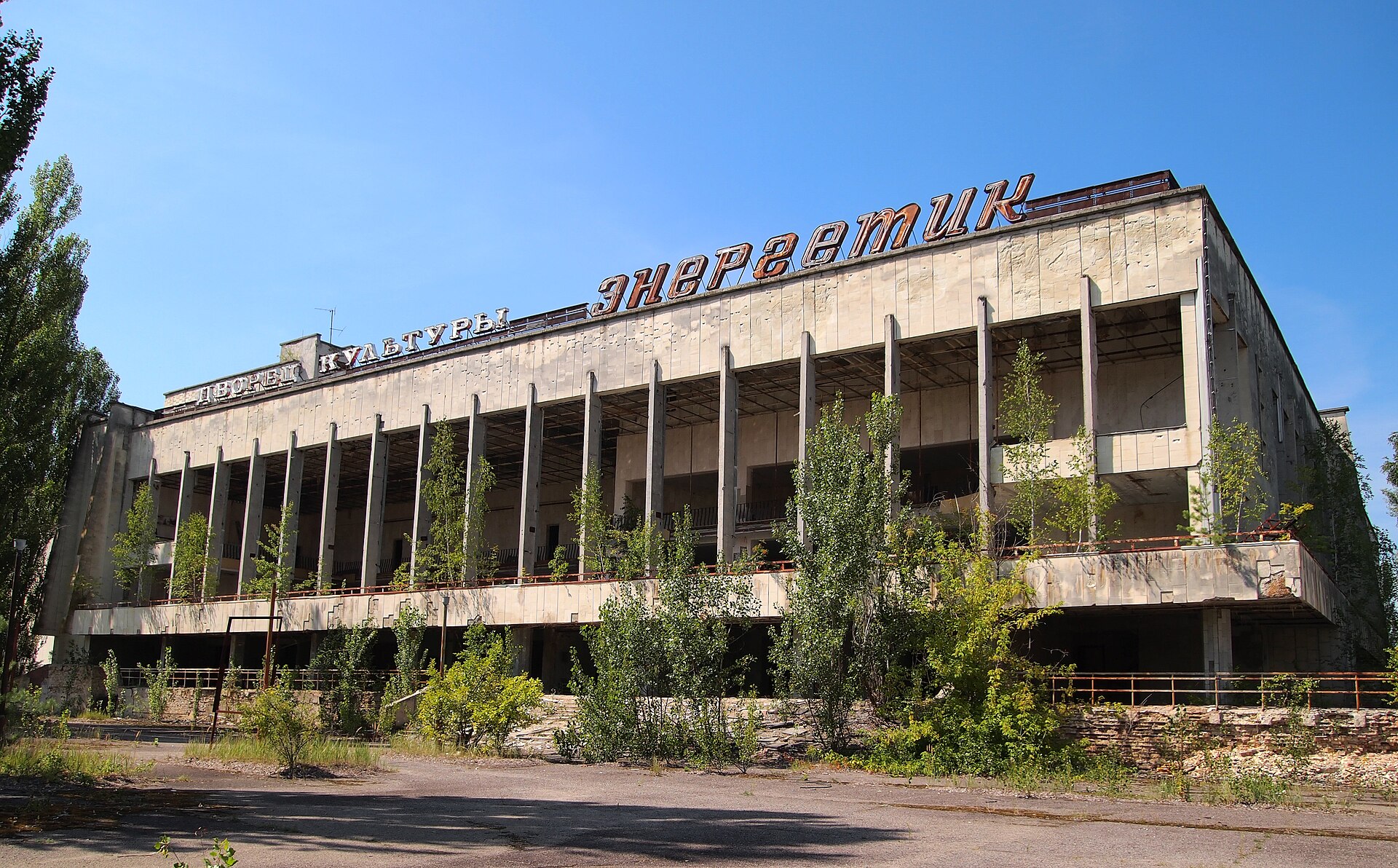
Slavutych is a city that feels like a time capsule of the late Soviet era, built in haste yet with unexpected care. It was founded in 1986 to house the workers of the Chernobyl Nuclear Power Plant after the disaster forced the evacuation of Pripyat. The city was designed by architects from eight Soviet republics, each contributing a distinct neighborhood that reflected their regional styles. This patchwork of influences gives Slavutych a unique character—wide boulevards lined with birch trees, low-rise apartment blocks in pastel hues, and public spaces that feel both grand and intimate. At the heart of this planned community stands the Palace of Culture Energetik, a building that embodies the city’s dual identity: a monument to resilience and a quiet testament to the ideals of its time.
The Palace of Culture was conceived as more than just a venue for performances or gatherings. In Soviet tradition, such palaces were meant to be cultural hubs where workers could engage in art, education, and leisure under one roof. Energetik was no exception. Its construction began in the late 1980s, and by the time it opened, the Soviet Union was already unraveling. Yet the building was completed with a sense of urgency, as if to prove that life—and culture—would go on despite the upheavals. The architecture blends modernist simplicity with decorative elements that hint at the optimism of the era. The facade is unassuming, with clean lines and large windows, but the interior reveals a more elaborate design, where function and symbolism intertwine.
Inside, the Palace of Culture feels like a relic of another age, yet it remains very much alive. The main auditorium, with its high ceiling and rows of plush seats, has hosted countless concerts, lectures, and community events over the decades. The stage has seen performances by local choirs, theater troupes, and even visiting artists from across the former Soviet Union. The walls are adorned with murals and reliefs that celebrate themes of labor, progress, and unity—motifs that were central to Soviet cultural policy. Some of these artworks have faded with time, but they still carry the weight of their original intent, offering a glimpse into the values that shaped Slavutych and its people.
Beyond the auditorium, the building houses a variety of spaces that reflect its role as a center of social life. There are classrooms where children attend music and dance lessons, a library stocked with books in Ukrainian and Russian, and exhibition halls that showcase local artists. The corridors are wide and well-lit, designed to encourage lingering and conversation. In the evenings, the Palace often buzzes with activity—rehearsals for a folk dance ensemble, a meeting of the city’s veterans, or a lecture on the history of the Chernobyl disaster. For many residents, Energetik is not just a building but a second home, a place where the community gathers to mark milestones, share stories, and keep traditions alive.
The history of the Palace of Culture is inseparable from the history of Slavutych itself. When the city was built, it was meant to be a temporary solution—a place for Chernobyl workers to live until the situation at the plant stabilized. But as the years passed, Slavutych became permanent, and so did its institutions. Energetik, like the city, had to adapt to changing realities. After Ukraine gained independence, the building took on new roles. It became a venue for political rallies, a polling station during elections, and a shelter for those displaced by later conflicts. The murals that once glorified Soviet achievements now share space with Ukrainian flags and symbols of national identity, a quiet reflection of the country’s evolving story.
What makes Energetik remarkable is not just its architecture or its history, but the way it has endured. In a city born out of tragedy, the Palace of Culture stands as a symbol of continuity. It has survived economic crises, political upheavals, and the slow decline of the industries that once sustained Slavutych. Yet it remains a vital part of the community, a place where people come to remember, to create, and to connect. The building’s very existence is a testament to the resilience of those who call Slavutych home. For outsiders, it offers a rare window into a city that is often overlooked, a place where the past and present coexist in unexpected ways.
Visiting Energetik today, one can’t help but feel the weight of its history. The building is not a museum, but it carries the same sense of quiet significance. The air inside is thick with the echoes of countless conversations, performances, and gatherings. The furniture, though worn, is well cared for, and the spaces are kept clean and functional. There is no grandiosity here, just a sense of purpose. The Palace of Culture was built to serve the people of Slavutych, and it continues to do so, adapting to their needs as the city itself evolves. It is a reminder that even in places shaped by hardship, culture and community can thrive.
For those who take the time to explore Slavutych, Energetik offers more than just a glimpse into the city’s past. It provides a deeper understanding of what it means to build a life in the shadow of history. The Palace of Culture is not just a relic of the Soviet era; it is a living part of a city that has had to reinvent itself time and again. Whether you’re attending a concert, browsing the library, or simply walking through its halls, the building invites you to reflect on the stories it holds. In a world where so much is fleeting, Energetik stands as a quiet monument to the enduring power of place and memory.