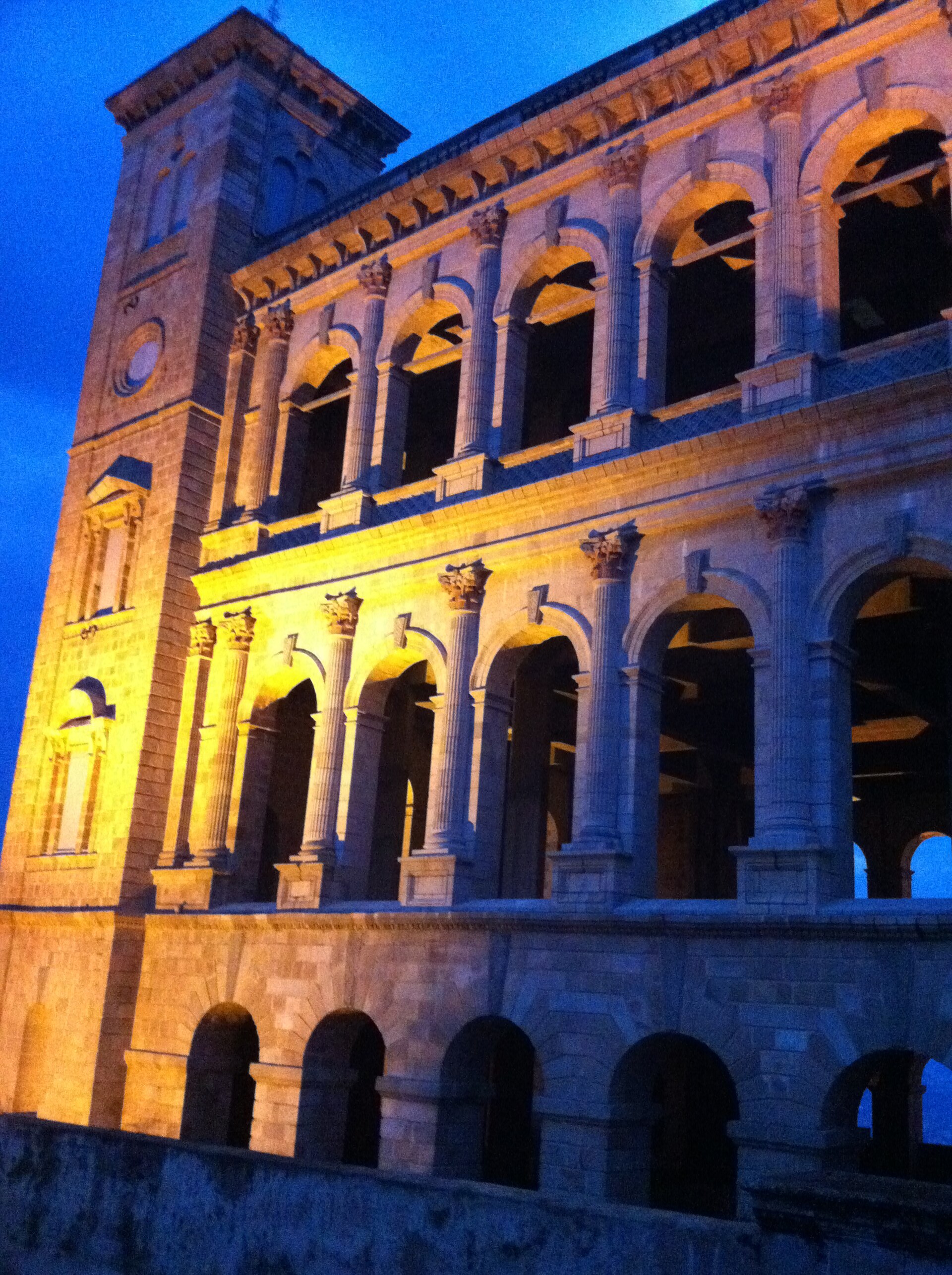
Perched on the highest hill in Antananarivo, the Rova of Antananarivo—or the Queen’s Palace—stands as a quiet witness to Madagascar’s royal past. Built in the early 19th century under the reign of King Andrianampoinimerina, the complex was later expanded by his successor, Queen Ranavalona I, who left an indelible mark on the island’s history. The palace wasn’t just a residence; it was the political and spiritual heart of the Merina kingdom, a place where decisions that shaped the nation were made. Today, its weathered wooden structures and stone foundations tell a story of ambition, power, and the slow erosion of time.
The architecture of the Rova blends traditional Malagasy design with European influences, a reflection of the island’s shifting relationships with foreign powers. The original wooden palace, known as Manjakamiadana, was constructed without a single nail, using only interlocking joints—a testament to the craftsmanship of local builders. Later, during the French colonial period, the structure was reinforced with stone, giving it a more imposing, fortress-like appearance. The result is a building that feels both ancient and strangely familiar, as if it belongs to no single era but to all of them at once.
Queen Ranavalona I, who ruled from 1828 to 1861, is one of Madagascar’s most controversial figures. Her reign was marked by a fierce resistance to foreign influence, particularly from European missionaries and traders. She maintained the island’s independence through a mix of diplomacy and brute force, earning a reputation for both cunning and cruelty. The palace became a symbol of her authority, a place where she could oversee her kingdom and keep potential threats at bay. Yet, despite her efforts, the winds of change were already blowing across the island, and by the end of the 19th century, Madagascar would fall under French control.
The Rova’s most striking feature is its location. From the palace grounds, the view stretches across Antananarivo, offering a sweeping panorama of the city’s red-brick houses, lush valleys, and distant hills. The elevation wasn’t just for aesthetics—it was a strategic choice. The hill, known as Analamanga, or "Blue Forest," was considered sacred, and its height made the palace nearly impregnable. Even today, standing on the terrace, it’s easy to imagine the queen surveying her domain, the city sprawling beneath her like a living map.
A fire in 1995 devastated much of the palace, reducing many of its wooden structures to ashes. What remains today is a mix of original ruins and careful reconstructions, a patchwork of history and memory. The stone shell of Manjakamiadana still stands, its empty windows framing the sky like forgotten eyes. Nearby, the tombs of Madagascar’s last monarchs lie in quiet dignity, their simple stone markers a stark contrast to the grandeur that once surrounded them. The fire didn’t erase the palace’s significance; if anything, it made its story more poignant, a reminder of how fragile even the most powerful legacies can be.
Visiting the Rova is less about admiring pristine architecture and more about stepping into a story. The air here is thick with the weight of history, and the silence feels deliberate, as if the place itself is holding its breath. The few remaining artifacts—carved wooden panels, fragments of royal regalia—are displayed with little fanfare, allowing visitors to fill in the gaps with their own imagination. There are no grand exhibits or interactive displays, just the quiet hum of the past lingering in the corners.
The palace’s decline mirrors the broader arc of Madagascar’s history. After the fall of the Merina monarchy in 1897, the Rova was repurposed as a museum, its halls filled with colonial-era relics and European interpretations of Malagasy culture. For decades, it stood as a symbol of a past that was being systematically erased, its significance downplayed in favor of a new, French-dominated narrative. It wasn’t until after independence in 1960 that the palace began to reclaim its place in the national consciousness, though the fire and subsequent neglect have made its preservation an ongoing challenge.
Today, the Rova is a place of contradictions. It’s both a ruin and a monument, a reminder of what was lost and what endures. The hill is no longer the political center of Madagascar, but it remains a spiritual one, a place where locals and visitors alike come to reflect on the island’s complex identity. The climb up the steep steps is a pilgrimage of sorts, a physical journey that mirrors the emotional one of reconciling with the past. At the top, the wind carries the scent of eucalyptus and damp earth, a sensory reminder that history isn’t just something you read about—it’s something you feel.
For those who take the time to wander the grounds, the Rova offers more than just a history lesson. It’s a place where the boundaries between past and present blur, where the echoes of royal decrees and colonial whispers still linger in the air. The palace may no longer be the seat of power, but its presence is undeniable, a silent guardian of Madagascar’s soul. Whether you come for the view, the history, or simply the quiet, the Rova leaves an impression that lasts long after you’ve descended the hill.