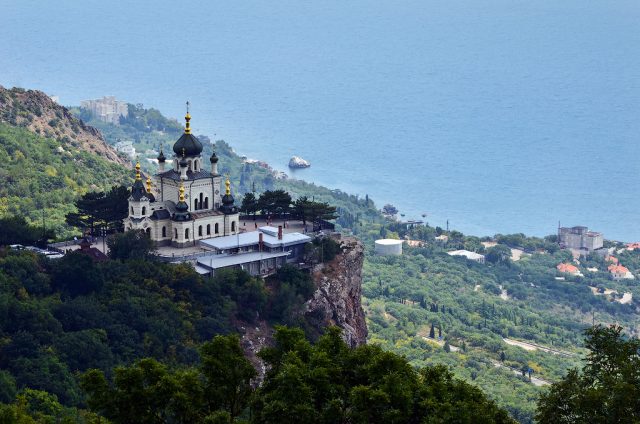
The Yusupov Palace in Koreiz is one of those rare places where history isn’t confined to plaques or glass display cases—it lingers in the air, in the way the light falls through the windows, in the quiet elegance of the rooms. Perched on the southern coast of Crimea, the palace seems to grow naturally from the landscape, as if the hills, vineyards, and cypress groves were always meant to frame it. There’s nothing ostentatious about it; instead, it carries the understated refinement of an old aristocratic estate, where luxury was measured in taste rather than excess.
Built in the late 19th century for Prince Felix Yusupov the Elder, the palace was a summer retreat for one of Russia’s most powerful families. The Yusupovs owned vast estates, factories, and palaces across the empire, but Koreiz held a special place in their affections. The architecture reflects the eclectic tastes of the era, blending Neo-Renaissance elements with Art Nouveau flourishes—a fusion of European influences and local traditions. The façade is adorned with delicate stucco work, wrought-iron balconies, and tall windows that filter the soft Crimean sunlight into the rooms beyond.
Inside, the palace retains much of its original character. The grand halls are lined with marble and oak paneling, their ceilings painted with intricate designs, while the furniture and decor were chosen to create warmth rather than cold grandeur. Every detail, from the antique fireplaces to the crystal chandeliers, feels as though it has been waiting patiently for the next guest to arrive. The library, in particular, stands out—a treasure trove of rare books and manuscripts collected by the Yusupovs over generations. Today, the exhibits also tell the story of the palace’s turbulent 20th century, when its fate mirrored that of the country itself.
After the 1917 Revolution, the palace was nationalized, like so many other aristocratic estates. It became a sanatorium, then a hospital, and during World War II, it was occupied by German forces. Local accounts suggest it was used as a command center, and after the liberation of Crimea, Soviet military leaders stayed here. In the postwar years, it hosted party officials and cultural figures, and some rooms still display photographs from that era, offering a glimpse into how the palace adapted to each new chapter of its existence.
What makes the Yusupov Palace different from other historic sites is its atmosphere. There are no rigid barriers or stern "do not touch" signs; instead, the guides weave stories not just about the past, but about how the palace has lived through different eras. The surrounding park is just as much a part of the experience. Terraced gardens descend toward the sea, where magnolias, pines, and cypresses create a sense of seclusion. Paths lead to viewpoints overlooking the coastline, and it’s easy to imagine the Yusupovs’ guests strolling here a century ago, discussing the latest news from St. Petersburg or Paris.
Koreiz and its surroundings have long been a haven for those seeking inspiration. Writers, artists, and musicians were drawn to this stretch of the Crimean coast, and the Yusupov Palace was a hub of social life. Today, it remains a fragment of that bygone era, a place where time seems to move more slowly, where beauty is found in small details. Visiting the palace isn’t just a history lesson—it’s a chance to step into a world that still feels alive, even if its colors have faded with the years.
If you find yourself in this part of Crimea, it’s worth lingering here. Walk through the park, descend to the sea, then climb back up to see the palace bathed in the golden light of sunset. In moments like these, you understand why this place holds such a quiet power. It’s not just beautiful—it feels alive, as if the past and present coexist in the same breath. That, perhaps, is the real magic of the Yusupov Palace in Koreiz: it doesn’t just preserve history, it lets you touch it.