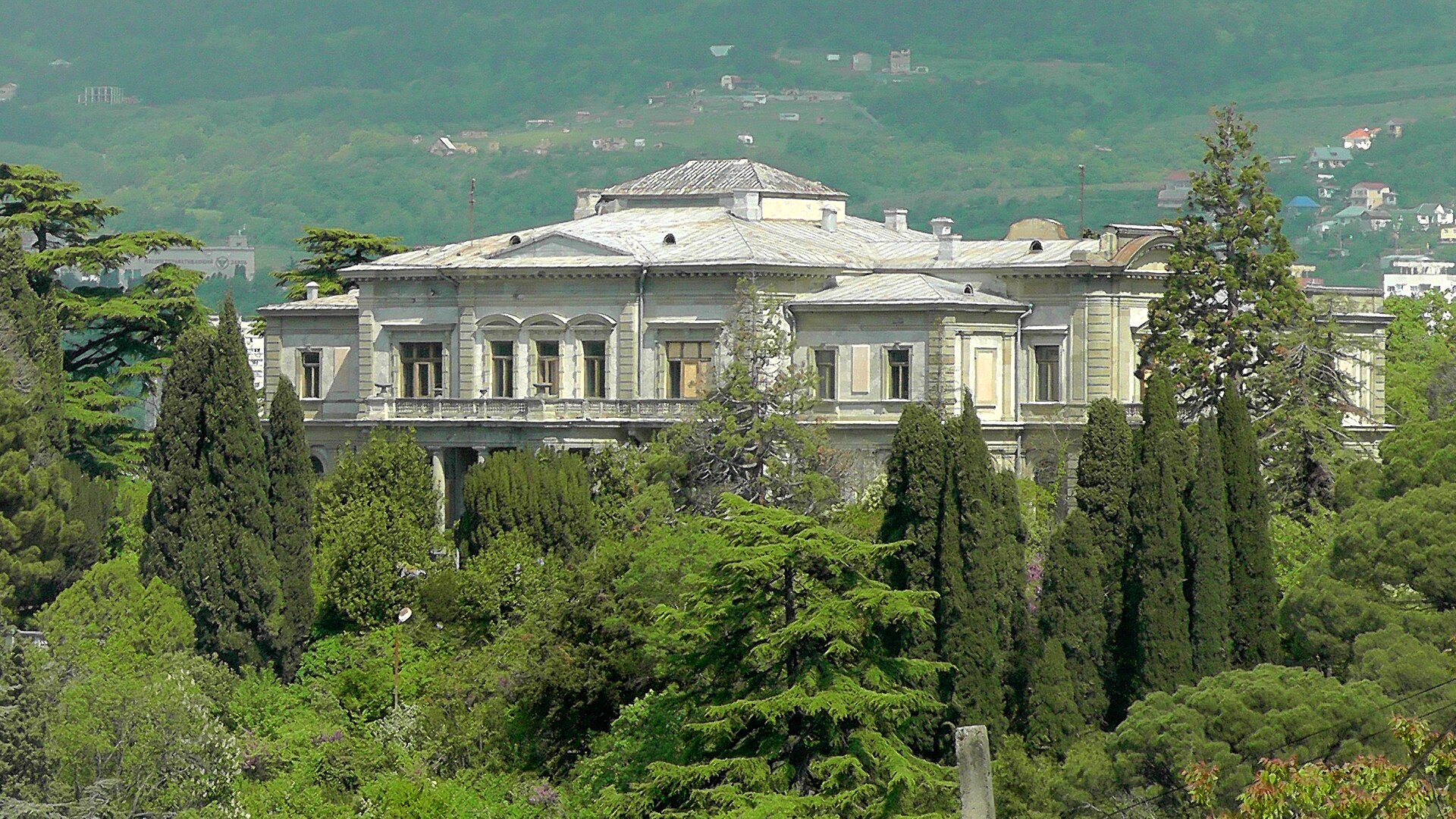
The Mordvinov Palace in Yalta is one of those rare places where time seems to have paused, preserving the spirit of a bygone era. Built in the late 19th century, it once belonged to the Mordvinov family, a name deeply intertwined with Crimea’s history. Count Nikolai Mordvinov, an admiral and statesman, was a man of remarkable influence, and his residence in Yalta was far more than a summer home—it was a reflection of his tastes, his passions, and the refined world he inhabited.
The palace’s architecture blends neoclassical elegance with the romanticism that defined many Crimean estates of the time. Its facade is adorned with columns and intricate stucco work, while tall windows allow the soft southern light to fill the rooms, creating an atmosphere that feels both grand and intimate. The surrounding park, once a source of pride for the family, is a quiet retreat filled with rare trees and flowers. Today, the rustling leaves and distant cries of seagulls are the only sounds that break the stillness, hinting at the sea just beyond the trees.
Inside, the palace once exuded understated luxury. Though much of the original decor has been lost to time, descriptions speak of fine wood furniture, antique tapestries, paintings, and books—details that shaped a space where sophistication met warmth. Mordvinov was not only a military man and official but also a patron of the arts, and his home was a gathering place for writers, musicians, and thinkers. Evenings here were spent in lively conversation, with music filling the air and ideas flowing freely.
Like many aristocratic estates, the palace faced a turbulent fate after the revolution. Nationalized and repurposed over the decades, it served various functions during the Soviet era before gradually reclaiming its role as a cultural landmark. Today, it stands as a museum, though some of its former grandeur has faded. Yet even in its current state, the building retains a quiet dignity, a tangible connection to the past.
Walking through its rooms is like stepping into history. Exhibits tell the story of the Mordvinov family, their place in Crimea’s development, and the transformation of Yalta from a quiet coastal town into a bustling resort. Old photographs and documents offer glimpses of the city as it once was, when horse-drawn carriages rolled along its streets and the Black Sea breeze carried the scent of blooming gardens.
The palace park is a hidden gem in its own right. Smaller than the famous gardens of Livadia or the Vorontsov Palace, it has an intimate charm that makes it all the more appealing. Winding paths lead to secluded benches, shaded by trees that have stood for generations. Flowerbeds, seemingly untouched by time, burst with color in the warmer months, while the air carries the faint saltiness of the nearby sea. It’s a place where one can easily lose track of time, lulled by the quiet beauty of the surroundings.
Yalta has always been a city where different eras and destinies intersect, and the Mordvinov Palace is one of those rare fragments of the past that help piece together its story. Unlike the more famous palaces along the coast, it remains relatively undiscovered, free from the crowds that flock to other landmarks. This only adds to its allure—a chance to wander through its halls in peace, imagining the voices that once filled them.
Today, the palace is far from a static museum. It hosts exhibitions, concerts, and lectures that explore Crimea’s history and culture. Sometimes, the strains of classical music—so beloved by Count Mordvinov—echo through its rooms, or contemporary artists display works inspired by its beauty. The palace feels alive, evolving with the city while still honoring its roots.
Visiting the Mordvinov Palace is more than just a history lesson; it’s a reminder of how fleeting time can be and how important it is to preserve the stories of those who came before us. In a city like Yalta, where every stone seems to hold a memory, such places are invaluable. They remind us that behind the grand facades and manicured gardens were real people—with their dreams, struggles, and legacies.