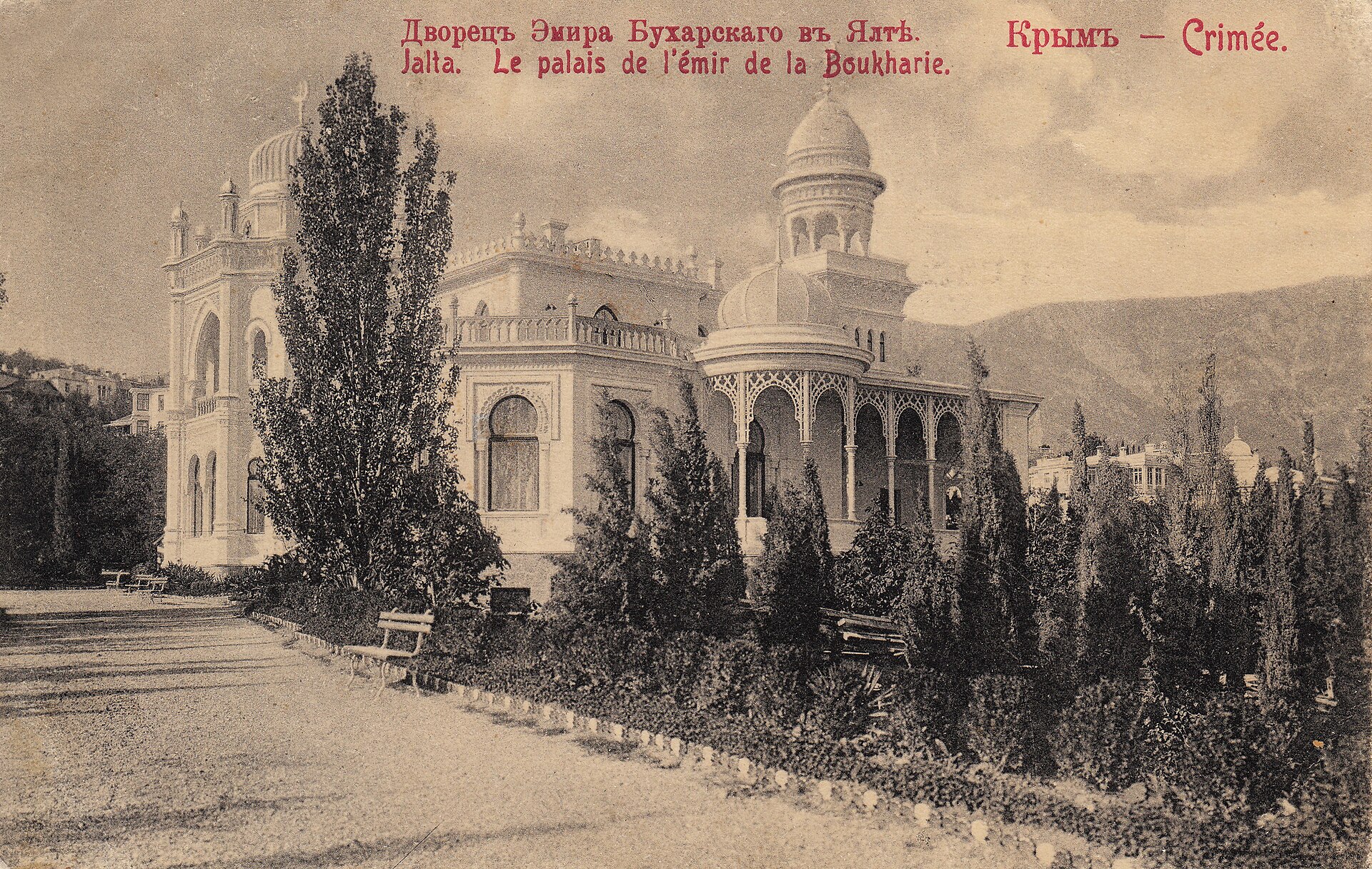
Perched on a hillside above Yalta, the Bukharan Emir’s Palace is a fragment of the early 1900s. Built when the Crimean coast attracted aristocrats and foreign dignitaries, it was commissioned by Sayyid Abdul-Ahad Khan, the last emir of Bukhara. Officially independent but a vassal of the tsar, he chose Yalta for its proximity to St. Petersburg and its escape from formality. The mild climate and discreet luxury suited a summer residence that reflected his status and identity.
Nikolai Krasnov, a Yalta-based architect, designed the palace. He blended Central Asian motifs with European classical architecture. Arched windows, carved balconies, and domes recall Samarkand or Bukhara, while the proportions remain Western. Inside, marble staircases, stained glass, and woodwork once filled the space. Today, little of that remains, but the building still feels caught between two worlds.
The palace’s history mirrors its design. Construction began in the early 1900s and finished in 1911. By then, the emir’s world was changing. The 1917 Revolution forced him into exile, and the state seized the palace. Over the decades, it served as a sanatorium, a hospital, and a guesthouse for Soviet officials. The building retained its dignity, though its later guests differed from the emir’s original visitors.
Today, the palace belongs to a sanatorium, and the interiors are mostly closed. The exterior, however, still tells a story of ambition and displacement.
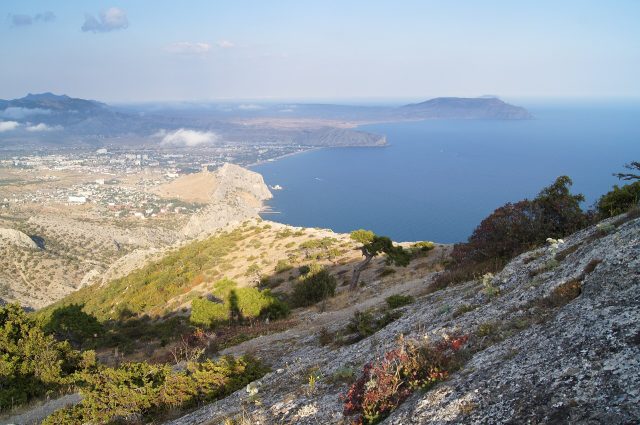
The gardens were once a showpiece, filled with rare plants, fountains, and statues. Some species have vanished, and the fountains no longer flow, but the park remains charming. From here, the view stretches over Yalta and the Black Sea. Locals walk the paths, but tourists rarely visit. The palace was never meant to be a spectacle—it was a private retreat.
This place stands out because it captures a moment when the Russian Empire was a crossroads. The emir was neither fully independent nor entirely subservient, and his palace reflects that. Unlike Livadia or Massandra, built for tsars, this was a home for a ruler who was both insider and outsider. It reveals a side of Crimea’s past where Central Asian politics, Russian ambitions, and personal desires converged.
The palace feels forgotten. The stucco is chipped, the garden overgrown, but that adds to its character. There are no crowds, no guided tours. You can stand in the garden, look at the domes, and imagine the emir’s guests walking the paths, speaking Persian or Uzbek.
For those who seek more than beaches and vineyards, the palace offers something different. It shows that this coast was a stage for history, where empires and individuals played out unexpected roles. The emir, ruling a distant land, built his summer home here—a place that was neither his nor entirely foreign. His palace became a symbol of an era already fading when it was completed.
If you visit, take your time. Walk up from the seafront, let the climb slow you down, and linger in the garden. The view is worth it, but there’s more—a quiet, human sense of history. This was where a man tried to reconcile two worlds, creating something that still feels real over a century later. It’s not Yalta’s most famous landmark, but that’s why it matters.