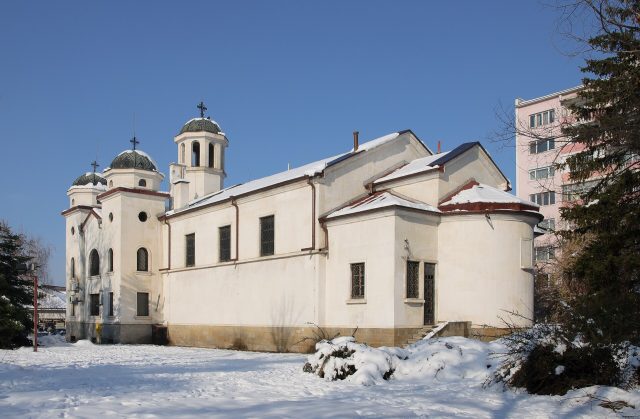
The Battenberg Palace in Târgoviște is one of those places where history feels almost tangible, as if the walls themselves could whisper stories of the past. Built in the late 19th century, it stands as a quiet witness to Bulgaria’s transition from Ottoman rule to an independent state, a period marked by both ambition and uncertainty. The palace was commissioned by Prince Alexander I of Battenberg, the first ruler of modern Bulgaria after the country regained its autonomy in 1878. His reign was short but pivotal, and the palace was meant to symbolize the new era—a blend of European influence and Bulgarian identity.
The architecture of the Battenberg Palace reflects the eclectic tastes of its time. Designed by Austrian architect Viktor Rumpelmayer, it combines elements of Neo-Renaissance and Baroque styles, with a touch of local craftsmanship. The façade is adorned with ornate details, from the intricate stone carvings to the symmetrical windows that frame the building’s elegant proportions. Inside, the rooms were once lavishly decorated, though much of the original furnishings have been lost over the decades. Still, the grand staircase and the high ceilings hint at the opulence that once filled these halls.
Târgoviște itself was an unusual choice for a royal residence. Unlike Sofia or Plovdiv, which were already established as political and cultural centers, Târgoviște was a smaller, quieter town with a long history as a medieval capital. The decision to build the palace here was partly practical—it was closer to the old royal seat of Veliko Tarnovo—and partly symbolic, a way to connect the new Bulgaria with its past. The town had been an important administrative hub during the Second Bulgarian Empire, and the palace’s construction was an attempt to revive that legacy.
Over the years, the Battenberg Palace has served many purposes. After Prince Alexander’s abdication in 1886, it was used as a military headquarters, a school, and even a museum. Each of these roles left its mark on the building, altering its interiors and sometimes obscuring its original character. During the communist era, the palace was repurposed again, this time as a cultural center, and it was during this period that some of the most significant renovations took place. The goal was to preserve the structure while adapting it to new needs, though not all changes were sympathetic to the building’s history.
Today, the palace is open to visitors, offering a glimpse into a chapter of Bulgarian history that is often overshadowed by the more dramatic events of the 20th century. The exhibits inside focus on the late 19th and early 20th centuries, with displays of period furniture, photographs, and documents that tell the story of Bulgaria’s early years as an independent nation. The collection is modest but well-curated, giving visitors a sense of the political and social currents that shaped the country during this time.
Walking through the palace grounds, it’s easy to imagine the bustle of the past—the carriages arriving at the entrance, the murmur of diplomats in the halls, the quiet footsteps of servants moving through the corridors. The gardens, though no longer as meticulously maintained as they once were, still offer a peaceful retreat. They were designed in the English style, with winding paths and carefully placed trees, providing a contrast to the formality of the palace itself.
For those interested in history, the Battenberg Palace is more than just a building; it’s a piece of a larger narrative. It represents a moment when Bulgaria was finding its place in the world, balancing tradition with modernity, and struggling to define what it meant to be a nation. The palace’s very existence is a testament to that ambition, even if the dreams of its founder were never fully realized.
Târgoviște itself is a town that rewards slow exploration. Beyond the palace, there are other remnants of its medieval past, like the ruins of the old fortress walls and the Church of St. Peter and Paul, which dates back to the 13th century. The town’s layout still reflects its history as a market center, with a central square that once buzzed with trade. Today, it’s a quieter place, but the echoes of its past are never far away.
Visiting the Battenberg Palace is a reminder of how history is layered, how each era leaves its mark on a place, and how even the grandest ambitions can be reshaped by time. It’s not the most famous landmark in Bulgaria, nor the most visited, but that’s part of its charm. Here, you can step away from the crowds and into a story that’s still unfolding, one that’s as much about the people who lived it as it is about the stones they left behind.