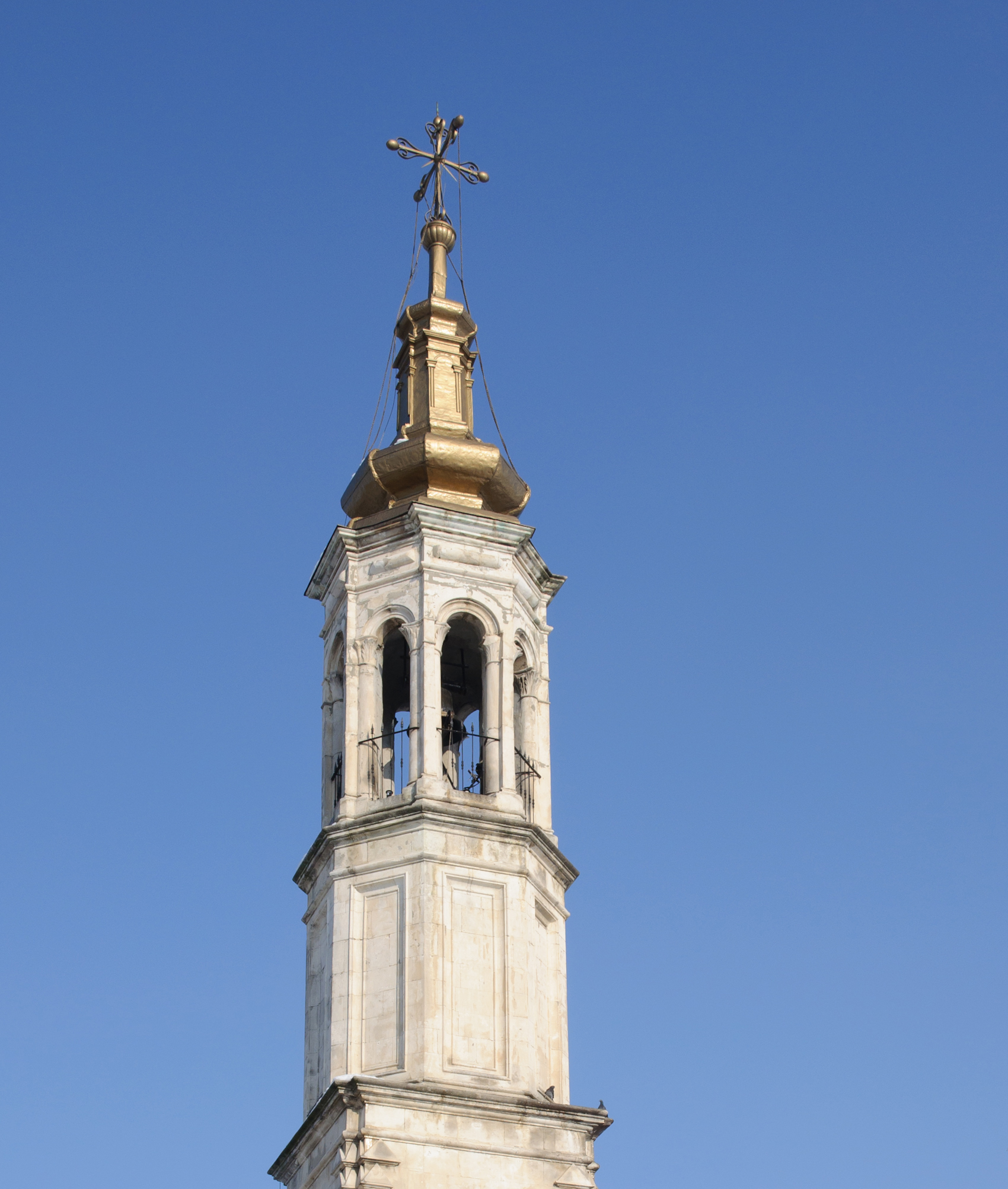
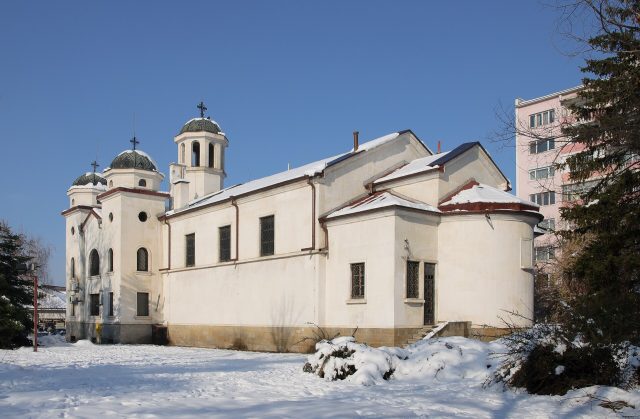
The Church of the Dormition of the Mother of God in Târgoviște is one of those quiet landmarks that blend seamlessly into the fabric of a city, yet carry centuries of history within their walls. Tucked away in the old heart of Târgoviște, it doesn’t immediately demand attention, but those who take the time to approach it will sense its enduring presence. Built in the mid-19th century, the church emerged during a period when Târgoviște was flourishing as a commercial and cultural hub in northeastern Bulgaria. The city was known for its bustling fairs, drawing merchants from across the Ottoman Empire and beyond. In this lively setting, the church became more than a place of worship—it was a gathering point where the lives of locals and travelers intersected.
The architecture of the church reflects a blend of traditional Bulgarian ecclesiastical design and elements from the late Ottoman era. Constructed from stone and brick, its sturdy walls and soaring vaults create a sense of solemnity and space. Inside, the decor is understated yet carefully crafted, with frescoes painted by local artisans. While these works may not be as renowned as those of the great icon painters of the Bulgarian Revival, they possess a charm of their own—warm, unpretentious, and deeply human. The scenes depicting the life of the Virgin Mary and Christ are rendered with a gentle lyricism, filling the interior with a quiet sense of peace.
Like the city itself, the church has weathered many historical storms. After Bulgaria’s liberation from Ottoman rule in the late 19th century, Târgoviște gradually lost its prominence as a trading center, but the church remained a cornerstone of community life. Even during the socialist era, when religious institutions faced restrictions, it continued to serve its congregation, though in a more subdued capacity. Today, it remains an active place of worship, preserving its role as a spiritual anchor. Visitors can still see old icons, some dating back to the 19th century, along with a carved iconostasis crafted by local hands. These artifacts are not just artistic treasures—they are tangible links to the generations that have passed through its doors.
The area surrounding the church is just as intriguing. The old quarter of Târgoviște is a maze of narrow streets lined with houses that typify Balkan architecture—stone ground floors topped with wooden upper levels, their balconies and shutters adorned with intricate carvings. Near the church, a small park offers a place for locals to unwind. On warm days, you might find elderly men playing backgammon, children darting along the paths, or women pausing after services to chat. The pace here is unhurried, as if time moves to its own rhythm.
The Church of the Dormition of the Mother of God is more than an architectural monument—it’s a living testament to the city’s history. Its walls echo the changes Bulgaria has undergone over the past century and a half, from Ottoman rule to independence, from economic booms to periods of decline and renewal. Yet through it all, the church has remained a place where people seek solace, strength, and hope. Services are conducted in the old tradition, with hymns and readings in Church Slavonic, creating a sense of continuity with the past.
For those interested in Bulgaria’s history, this church offers a quiet but meaningful discovery. It may not have the fame of Sofia’s cathedrals or Plovdiv’s ancient sites, but that’s part of its appeal. There are no crowds here, no rush—just stillness and the chance to feel the spirit of the place. Wandering through old Târgoviște, stepping inside the church, and then sitting on a bench in the park, you can almost imagine what life was like here a century or two ago. The city has changed, but some things endure—faith, tradition, and memory.
It’s worth remembering that the Church of the Dormition is not a museum but an active place of worship. On major holidays like the Dormition of the Mother of God or Christmas, the church is especially lively. Families gather in their finest clothes, some in traditional Bulgarian attire, lending the services a sense of solemnity and celebration. Even for those who aren’t religious, the atmosphere during these times invites reflection on timeless values—family, faith, and community.
Târgoviște is a city that doesn’t rush to reveal its secrets. It doesn’t try to dazzle visitors with grandeur or exoticism, and that’s precisely what makes it special. The Church of the Dormition of the Mother of God is one of those landmarks that helps you understand the soul of this place. It doesn’t shout its history, but if you listen closely, you can hear the whispers of the past mingling with the everyday life of the city. That’s why it’s worth lingering here, even if just for a few moments.