The House of Slaves on Gorée Island stands as one of the most poignant reminders of the transatlantic slave trade, a place where history feels both distant and uncomfortably close. The island itself, a small speck of land just off the coast of Dakar, was once a key hub in the trade network that forcibly relocated millions of Africans to the Americas. For centuries, Gorée was controlled by various European powers—Portuguese, Dutch, English, and finally French—each leaving their mark on its architecture and culture. But it was the slave trade that defined its darkest chapter, and the House of Slaves, built in the late 18th century, became a symbol of that brutality.
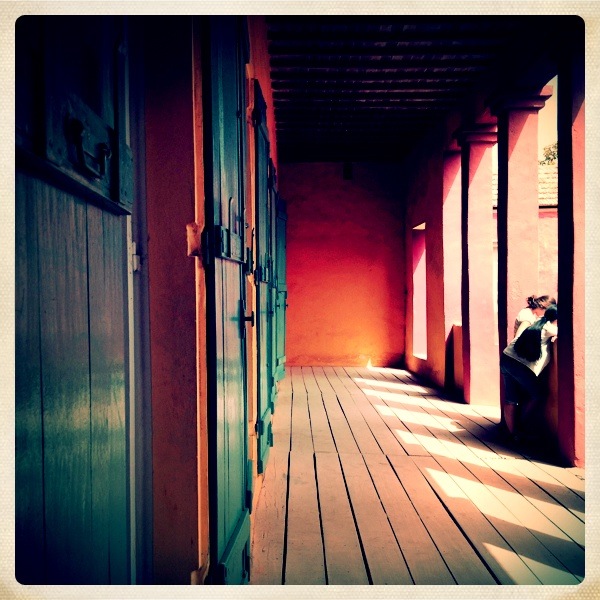
The building itself is unassuming at first glance, a two-story structure with thick walls and narrow windows, painted in a faded pinkish hue that contrasts with the deep blue of the Atlantic just beyond. Inside, the air is heavy with the weight of what once took place here. The ground floor was where enslaved people were held before being shipped across the ocean, crammed into tiny cells with little light or ventilation. The men, women, and children who passed through these rooms were treated as cargo, stripped of their names, their families, and their freedom. Some cells were reserved for those deemed too weak or rebellious, where conditions were even more inhumane.
One of the most haunting features of the House of Slaves is the Door of No Return, a narrow doorway that opens directly onto the sea. It was through this door that enslaved people were led onto boats, never to set foot on African soil again. The name itself carries a finality that lingers in the mind, a stark reminder of the irreversible separation from home. Standing at the threshold, it’s impossible not to imagine the fear and despair of those who walked through it, knowing they were leaving everything behind.
The upper floor of the house tells a different story, one of colonial power and privilege. Here, the slave traders lived in relative comfort, with spacious rooms and balconies overlooking the ocean. The contrast between the opulence of these quarters and the squalor below is jarring, a physical manifestation of the inequality that defined the era. The building’s architecture reflects this divide—elegant French colonial design on the outside, hiding the horrors within.
Over time, Gorée Island became more than just a site of suffering; it evolved into a place of remembrance and reflection. After the abolition of slavery, the island’s role shifted, and today it serves as a museum and memorial. The House of Slaves was restored in the 20th century, not to erase its past, but to preserve it as a testament to resilience. Visitors from around the world come here to pay their respects, to learn, and to grapple with the legacy of the trade that shaped so much of the modern world.
The island itself has a quiet, almost surreal atmosphere. Its cobblestone streets are lined with colorful colonial buildings, many of which have been repurposed into galleries, cafes, and guesthouses. The pace of life is slow, a world away from the bustle of Dakar just a short ferry ride away. Yet the weight of history is never far. Even in the moments of beauty—the vibrant bougainvillea spilling over walls, the sound of waves lapping against the shore—there’s an underlying sense of what once was.
For many, a visit to the House of Slaves is an emotional experience. It’s not just about seeing a historical site; it’s about confronting a chapter of history that is often glossed over or sanitized. The museum doesn’t shy away from the harsh realities, displaying chains, shackles, and other artifacts that force visitors to reckon with the brutality of the trade. At the same time, there’s a sense of dignity in how the story is told, honoring the lives of those who suffered rather than reducing them to mere statistics.
Gorée Island is also a place of cultural significance beyond its tragic past. It has long been a center of art and creativity, attracting musicians, writers, and artists who draw inspiration from its complex history. The island’s annual jazz festival, for example, brings together musicians from across Africa and beyond, blending tradition with contemporary sounds. This creative energy is a reminder that while the island’s history is painful, it is also a place of resilience and renewal.
Today, the House of Slaves stands as a powerful symbol of both the atrocities of the past and the ongoing struggle for justice. It’s a place that challenges visitors to think critically about history, memory, and the ways in which the legacy of slavery continues to shape societies around the world. Whether you come to learn, to reflect, or simply to bear witness, Gorée Island leaves an indelible impression, one that lingers long after you’ve left its shores.