The House of Diego Velázquez in Santiago de Cuba isn’t the kind of museum where history is neatly displayed behind glass. It’s something rarer—a place where time hasn’t so much been preserved as simply refused to move on. Built in the early 1500s, this is the oldest civilian structure in Cuba, a relic of the moment when Spanish conquistadors were first carving out a foothold in the New World. Though Diego Velázquez, Cuba’s first governor, never actually lived here—the house belonged to his treasurer—the name stuck, as names often do when history gets tangled with legend. What matters is that the building still stands, not as a reconstruction but as an original witness to an era when Santiago was the island’s capital and the gateway to a continent still being mapped.
The architecture tells a story of adaptation, of how European designs were bent to fit the tropics. The thick walls, made from coral stone, were meant to keep out the heat, while the small, barred windows were as much about security as they were about ventilation. The inner courtyard, with its quiet fountain, follows the Andalusian tradition of bringing nature into the home, though here the plants are lush and overgrown in a way that would have been unthinkable in Seville. Upstairs, the rooms are arranged in a line, one opening into the next, with windows overlooking the street—a practical choice in a city that was always noisy, always alive. In the 16th century, Santiago was a port where ships arrived with goods and left with gold, where deals were made and sometimes broken, and where the constant hum of commerce was punctuated by the occasional clash of swords.
Inside, the museum’s collection is modest but evocative. The rooms are furnished with objects from the 16th and 17th centuries: wrought-iron chests, earthenware jugs, dark wooden furniture that was either shipped from Spain or crafted locally in the Spanish style. There are later additions too, like the 19th-century porcelain sets that arrived long after the house had passed into new hands. But the real draw isn’t the artifacts themselves—it’s the way the house feels. The creak of the floorboards, the scent of aged wood, the way light filters through the shutters and pools on the terracotta tiles. In one room, a treasurer’s office has been recreated, complete with a desk, an inkwell, and yellowed documents. It’s easy to imagine the man who once sat there, quill in hand, tallying up the wealth of an empire that was still being built.
This house has seen it all—the rise of Santiago from a small fort to a bustling colonial hub, the arrival of enslaved Africans, the pirate raids, the wars for independence, and the revolutions that followed. Each era left its mark. The walls bear the scars of bullets from the struggles against colonial rule, and in the basement, where goods were once stored, the chains that bound enslaved people still hang. The house is a reminder that Cuba’s history isn’t a straight line but a series of layers, each one built on top of the last. It’s also a testament to the city’s resilience. Santiago has always been a place of contradictions—wealth and poverty, order and chaos, Spanish traditions and African rhythms—and this house sits at the heart of that tension.
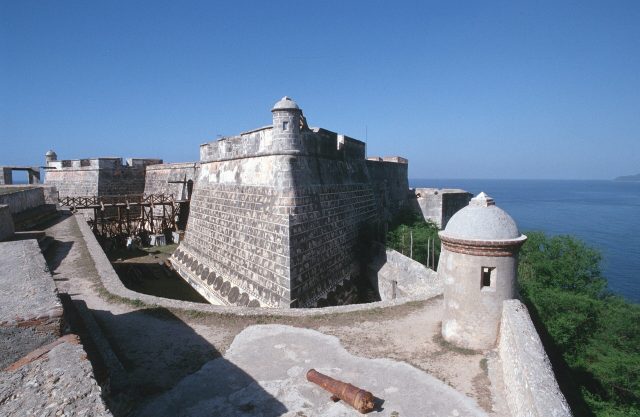
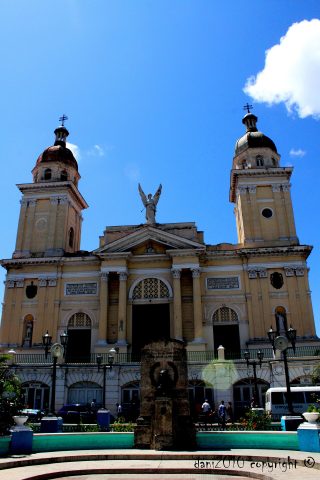
Today, the House of Diego Velázquez is tucked into the old quarter of Santiago, where the streets are narrow and the buildings lean into one another like old friends. The Plaza de Céspedes, where the city’s first town meetings were held, is just steps away, as is the cathedral where Velázquez himself is buried. The fortress of El Morro looms over the harbor, a reminder of the days when Santiago needed protection from the sea. The area is alive with the sounds of son and salsa, the calls of fruit vendors, and the murmur of locals catching up on the day’s news. The house doesn’t stand out—it doesn’t need to. It fits into the rhythm of the city, a quiet counterpoint to the energy around it.
Visiting isn’t about checking off a list of exhibits. There are no interactive displays or flashy multimedia presentations, and that’s the point. The experience is in the details—the way the fountain in the courtyard trickles, the view from the upstairs windows, the weight of history in the air. Occasionally, small exhibitions on Santiago’s past are held here, but even without them, the house itself is the main attraction. It’s a place for those who want to do more than see Cuba; they want to feel it, to step into the layers of time that have shaped the island.
Santiago is a city of contrasts, where grand colonial mansions sit beside crumbling facades and the sound of Spanish is often drowned out by the beat of African drums. The House of Diego Velázquez is part of that mosaic. It’s a reminder that Cuba’s story didn’t begin with sugar plantations or cigar factories but with the first Spanish settlers who arrived here dreaming of gold and glory. Not all of them were heroes, but they were all part of something larger, a history that’s still unfolding. This house is one of the few remaining places where you can touch the very beginning of that story.