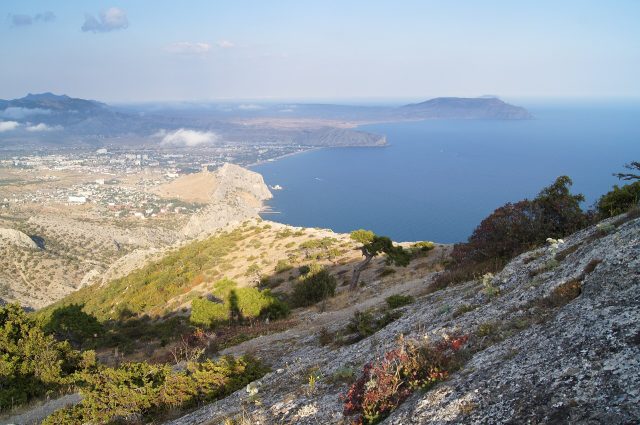
Anton Chekhov’s white dacha in Yalta is one of those rare places where time seems to have settled quietly, as if waiting for the writer to return. Built in 1899, the house became his refuge during the last years of his life, when doctors advised a warmer climate to ease his tuberculosis. Chekhov chose the spot himself, overseeing the construction with architect Lev Shapovalov, and the result was a modest but elegant home that reflected his understated tastes. The two-story building, with its whitewashed walls and simple wooden veranda, stands on a gentle slope above the Black Sea, surrounded by the garden he planted with his own hands.
Inside, the house feels almost as if Chekhov has just stepped out for a walk. His study remains exactly as it was when he worked here, with a wooden desk positioned near the window to catch the light and the view of the sea. The room is filled with the same books, photographs, and personal items that once surrounded him—details that make the space feel lived-in rather than preserved. It was here that he wrote some of his most famous works, including *The Three Sisters*, *The Cherry Orchard*, and *The Lady with the Dog*, stories that carry the quiet intensity of his later years. The house itself seems to breathe with the same restraint and depth as his writing.
What makes the museum unusual is how little has changed since Chekhov’s time. His sister, Maria Pavlovna, lived in the house until 1957, carefully maintaining its original atmosphere. Even during the German occupation of Yalta in World War II, when officers were billeted in the dacha, she managed to protect its contents. The furniture, the arrangement of rooms, even the garden paths—all remain as they were when Chekhov walked among them. This continuity gives the house a rare authenticity, as if the past isn’t just remembered here but still lingers in the air.
The garden is as much a part of the museum as the house itself. Chekhov took great pleasure in planting it, keeping a detailed diary of each addition—bamboo, eucalyptus, cedar, mulberry, and over a hundred other species. Some of the trees he planted are still standing, their gnarled trunks and sprawling branches casting dappled shade over the narrow paths that wind down the slope. The garden isn’t manicured in the way of formal estates; instead, it feels like a private retreat, a place where one could sit with a book or simply listen to the rustle of leaves and the distant sound of waves.
Over the years, the dacha became a gathering place for some of Russia’s most prominent cultural figures. Leo Tolstoy, Maxim Gorky, Ivan Bunin, Alexander Kuprin, Sergei Rachmaninov, and Fyodor Shalyapin all visited, their presence recorded in letters and memoirs. The house still holds traces of these encounters—a piano Rachmaninov played, a chair where Tolstoy sat, the easy camaraderie of writers and artists who found in Chekhov not just a colleague but a friend. Today, the modern exhibition hall next to the house expands on this legacy, with displays on Chekhov’s life, his literary circle, and the broader cultural history of the era.
Reaching the museum from Yalta’s waterfront takes about twenty minutes on foot, a gradual climb through residential streets that offer glimpses of the sea between houses. The walk is pleasant enough, though in summer the heat can make it feel longer. Those who prefer not to walk can take a local bus, which drops visitors near the entrance. The museum is closed on Mondays and Tuesdays, and in peak season, there’s often a line at the ticket office. Morning visits are best, not just to avoid the midday sun but to experience the house when it’s quietest.
Inside, the atmosphere is one of hushed reverence. Groups are kept small, and the narrow rooms don’t accommodate crowds well, which only adds to the sense of intimacy. The garden, too, is a place for quiet reflection, with its winding paths and secluded benches. A separate ticket allows access to the garden alone, a good option for those who want to linger outside without touring the house. Near the entrance, a small shop sells books, postcards, and reproductions of Chekhov’s works, though the selection is modest.
Yalta itself has other connections to Chekhov. A short distance away, in the coastal village of Gurzuf, stands another house he owned, now also a museum. But the dacha in Yalta feels like the heart of his Crimean years—a place where he found both solace and inspiration. It’s not a grand estate or a monument to fame, but something more personal: a home where a writer lived, worked, and eventually said goodbye. The house doesn’t demand attention; it simply exists, much like Chekhov’s own prose, with a quiet power that lingers long after you’ve left.