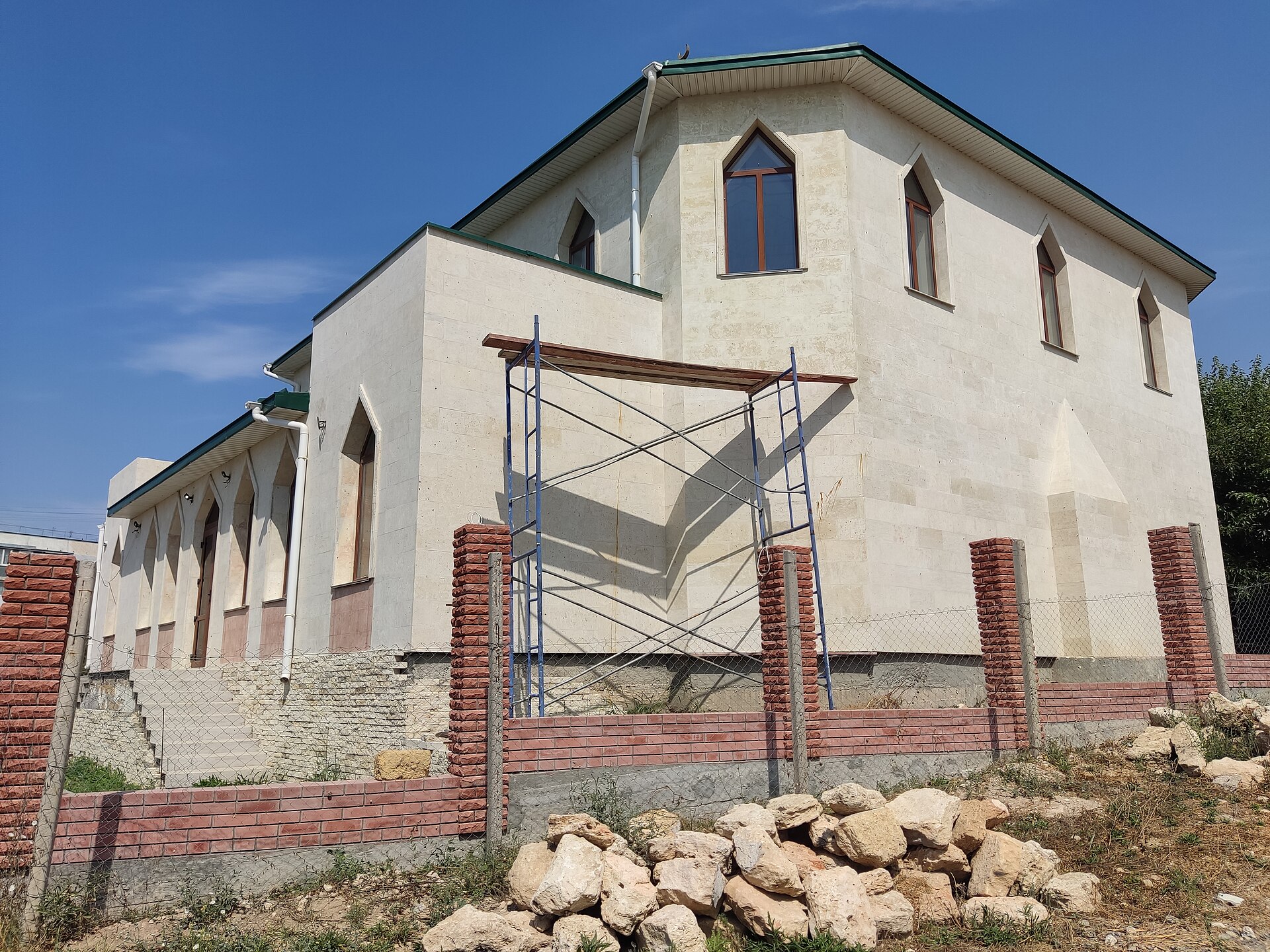
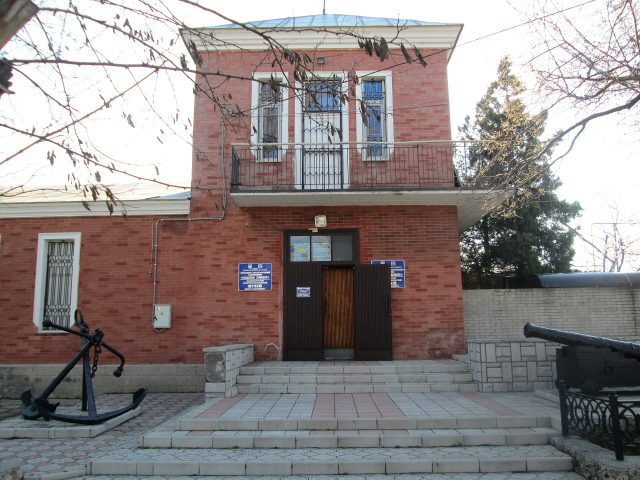
Perched along the Black Sea coast, the Yubileyny Cultural Center stands as a quiet witness to the region’s layered history. Built in the mid-20th century, it was conceived not just as a venue for performances and gatherings, but as a symbol of the era’s ambitions—a place where leisure, ideology, and community could intersect under one roof. The architecture reflects the period’s characteristic blend of grandeur and functionality, with clean lines, broad staircases, and an imposing façade that once signaled modernity to the townspeople. Over the decades, its role has shifted, mirroring the changes in the country itself, yet it remains a fixture in the coastal landscape, a space where the past lingers in the details.
The building’s design is unmistakably Soviet in its aesthetic, though softened by the subtropical climate of the Black Sea. The exterior is marked by symmetry and repetition, with large windows that were meant to flood the interiors with natural light. Inside, the main hall was once the heart of the center, hosting everything from political rallies to dance recitals, its stage witnessing countless performances that ranged from the solemn to the celebratory. The acoustics were carefully considered, a nod to the importance of sound in both official ceremonies and artistic expression. Even now, the echoes of those events seem to hang in the air, especially on quiet afternoons when the building is nearly empty.
For locals, Yubileyny has long been more than just a cultural institution. It was a place where generations marked milestones—first school concerts, graduation ceremonies, amateur theater productions. In a region where community life often revolved around shared spaces, the center became a backdrop for everyday rituals. The foyer, with its high ceilings and worn but polished floors, still carries the faint scent of old wood and paper, a reminder of the countless conversations and chance encounters that took place within its walls. Older residents might recall the days when the building buzzed with activity, from film screenings to chess tournaments, while younger visitors today see it as a relic of a different time.
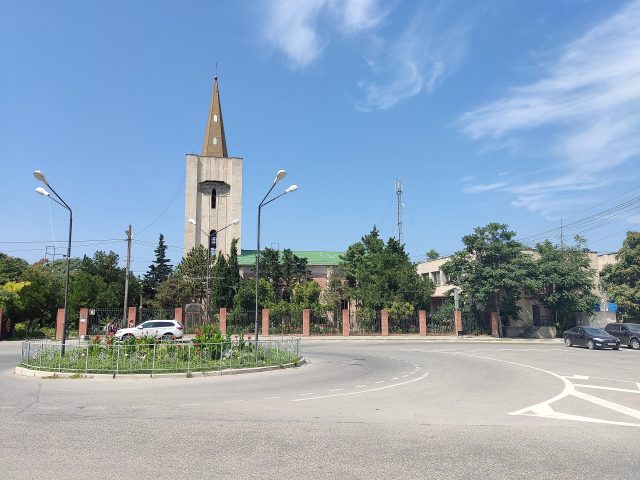
The surrounding area adds to the center’s character. The Black Sea coast here is less about postcard-perfect beaches and more about a lived-in, unpretentious charm. The streets nearby are lined with low-rise apartment blocks and small shops, their facades weathered by the salty air. In the evenings, the promenade comes alive with the hum of conversation and the occasional strains of music drifting from open windows. Yubileyny sits at the edge of this rhythm, neither entirely separate from it nor fully absorbed into the tourist-driven bustle that defines other parts of the coast. It exists in a kind of limbo, a place where the past and present coexist without much fanfare.
What makes the center intriguing is its ability to feel both frozen in time and quietly adaptive. The original purpose of such buildings was to serve as cultural hubs for the masses, but as the years passed, their role became less rigid. Today, Yubileyny hosts a mix of events—concerts, exhibitions, even flea markets—though none with the same ideological weight as before. The stage that once showcased state-approved performances now welcomes local bands and independent artists, a subtle shift that reflects broader changes in how culture is consumed and produced. The building itself has aged gracefully, its imperfections adding to its authenticity. The paint may be chipped in places, and the seating in the auditorium shows signs of wear, but these details only reinforce its sense of history.
Visiting Yubileyny is less about ticking off a landmark and more about stepping into a slice of local life. There’s no grand entrance fee or guided tour, no polished narrative about its significance. Instead, it invites curiosity on a human scale. You might wander in during a rehearsal, the sound of instruments or voices spilling into the hallway, or stumble upon an impromptu gathering in the courtyard. The staff, if you encounter them, are likely to be matter-of-fact, more concerned with the practicalities of running the place than with impressing visitors. This lack of pretension is part of its appeal—it’s a place that exists for those who use it, not for those who merely observe.
The Black Sea coast has always been a region of contrasts, where the warmth of the climate clashes with the weight of history, and where the pace of life oscillates between leisurely and urgent. Yubileyny embodies this duality. It’s a building that has seen eras come and go, yet it endures, not as a monument to any single moment, but as a living space that continues to adapt. For travelers who venture beyond the usual seaside attractions, it offers a glimpse into the everyday fabric of the region—a reminder that culture isn’t just found in museums or grand theaters, but in the places where people gather, create, and simply exist. Whether you spend an hour here or just pass by, the center leaves an impression, not through spectacle, but through its quiet persistence.