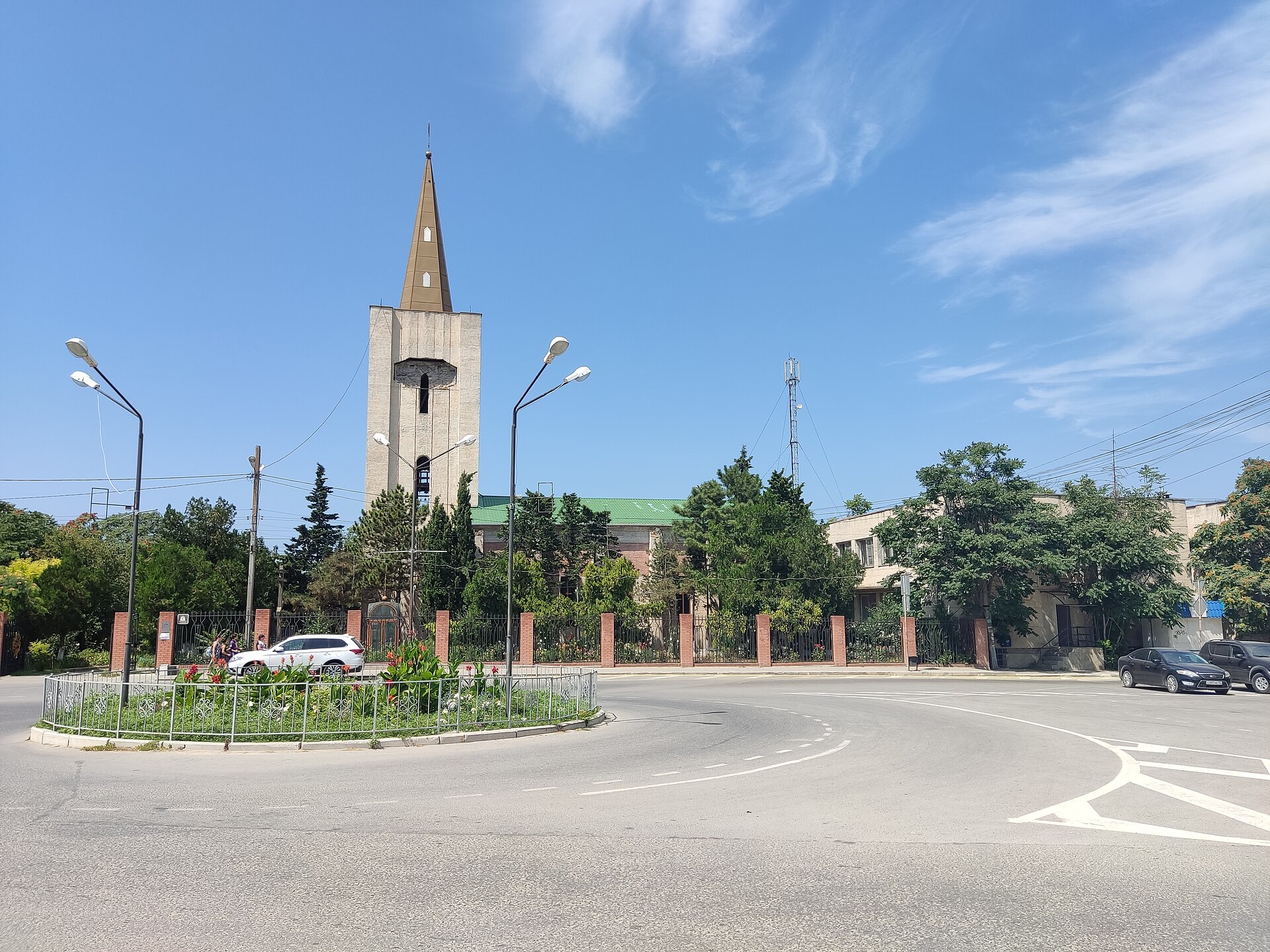
The Church of Zechariah and Elizabeth in Chernomorskoye is one of those quiet places that doesn’t demand attention but lingers in the mind long after you’ve left. Tucked away on the edge of the settlement, slightly removed from the busier streets, it feels like a guardian of a different era—one when this land was shaped by simpler rhythms. Small and white-stoned, with clean lines and unassuming details, the church blends into the landscape, as much a part of the steppe, the sea, and the low Crimean sky as the wind that sweeps across them.
Its history is woven into the story of Chernomorskoye itself, once known as Ak-Mechet. After Crimea became part of the Russian Empire in the mid-19th century, settlers from central provinces began arriving, bringing with them the need for a place of worship. For years, services were held in temporary spaces until 1899, when the stone church dedicated to the righteous Zechariah and Elizabeth was finally consecrated. The choice of patron saints wasn’t accidental—they were revered as protectors of families and children, a fitting dedication for a community largely made up of young settlers starting new lives.
The church’s architecture is straightforward and unadorned, reflecting the practical needs of its time. Built in the late 19th-century Russian Revival style common to rural areas, it features a single dome and a modest bell tower. The facades are decorated with simple brick trim, arched windows, and a plain cornice—nothing extravagant, just enough to give it character. Inside, the space is equally restrained: a wooden iconostasis, traditionally painted icons without gilding or ornate frames. Yet this simplicity creates a distinct atmosphere, one of quiet reverence where light filters through narrow windows and time seems to slow, much like in old village churches.
Like many religious sites, the church suffered during the Soviet era. It was repurposed as a warehouse, then a club, before being returned to the faithful during perestroika. Restoration took years—repairing the roof, reinforcing the walls, restoring the interior. Today, it remains an active place of worship, though services are less frequent than in pre-revolutionary times. They’re held on major holidays and the feast days of Zechariah and Elizabeth, while the doors stay open for those who wish to pray or simply sit in silence.
For the people of Chernomorskoye, the church has always been more than a house of worship. It’s been a gathering place, a witness to life’s milestones—baptisms, weddings, funerals. In its shadow, the community took shape: neighbors celebrated together, shared news, and supported one another. Though the settlement has changed and many traditions have faded, the church remains a thread connecting generations. Older residents remember attending services as children, while younger ones come to feel that link to their family’s past and the land they call home.
For visitors, the Church of Zechariah and Elizabeth isn’t a typical tourist attraction. There are no crowds, no souvenir stalls, no guided tours—just a quiet courtyard with trees, benches by the entrance, and a view of the steppe stretching toward the horizon. In summer, the air carries the scent of wormwood and salt from the distant sea, while the sound of waves drifts on the breeze. Winter transforms the scene: the white walls stand stark against a gray sky, the street nearly empty, the church even more solitary but no less striking.
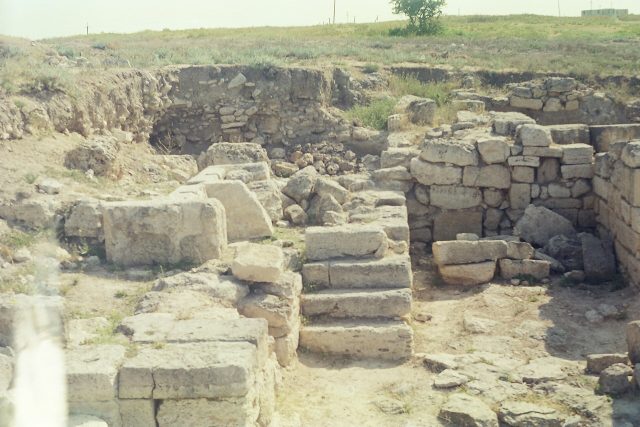
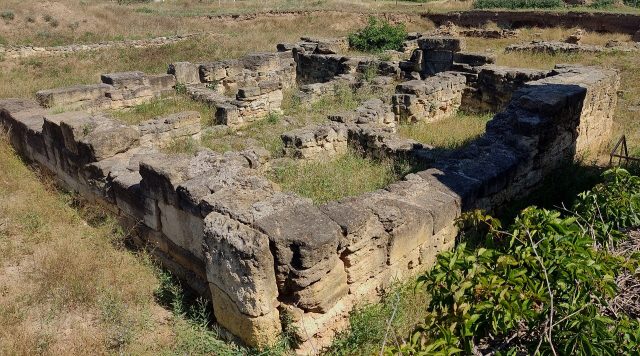
The church is also a quiet testament to the broader history of northwestern Crimea, a region that has long been a crossroads. Nomadic tribes, Turkish fortresses, and later Russian, Ukrainian, and German settlers all left their mark here. The Church of Zechariah and Elizabeth is one of the few surviving monuments to that layered past. It has endured wars, shifting borders, and the ebb and flow of people’s lives, yet it remains much as it was over a century ago—modest, unassuming, and slightly forgotten.
Today, the church carries on at its own unhurried pace. Pilgrims occasionally visit, as do history enthusiasts or curious travelers. Some come out of interest, others to light a candle for loved ones. But nearly everyone leaves with the sense that time moves differently here. Perhaps it’s the church’s position on the edge of the settlement, where steppe meets sea and past meets present. Or perhaps it’s the quiet weight of memory within its walls—of those who came before and those who will follow.