Kara-Tobe is one of those places where history feels almost tangible, rising from the earth like the ruins themselves. Perched on a low hill near the western coast of Crimea, it overlooks the Black Sea with a quiet authority, as if still keeping watch over the waters that have carried traders, invaders, and travelers for centuries. The site is an ancient settlement, though not as grand or as frequently visited as some of Crimea’s more famous archaeological treasures. That might be part of its charm—here, you can wander among the remnants of the past without the crowds, with only the wind and the occasional cry of a gull to break the silence.
The name Kara-Tobe translates roughly to Black Hill, a straightforward description that suits the place well. The hill itself is modest, but its position made it strategically valuable. Over the centuries, it was occupied by various peoples, from the Taurians—an ancient tribe that inhabited Crimea long before the Greeks—to the Scythians, who left behind traces of their presence in the form of burial mounds and artifacts. Later, during the Hellenistic period, the site became part of the Bosporan Kingdom, a state that flourished along the northern Black Sea coast and served as a bridge between the Greek world and the steppe nomads. The Greeks built a fortress here, though little of it remains today beyond the outlines of walls and the occasional fragment of pottery half-buried in the soil.
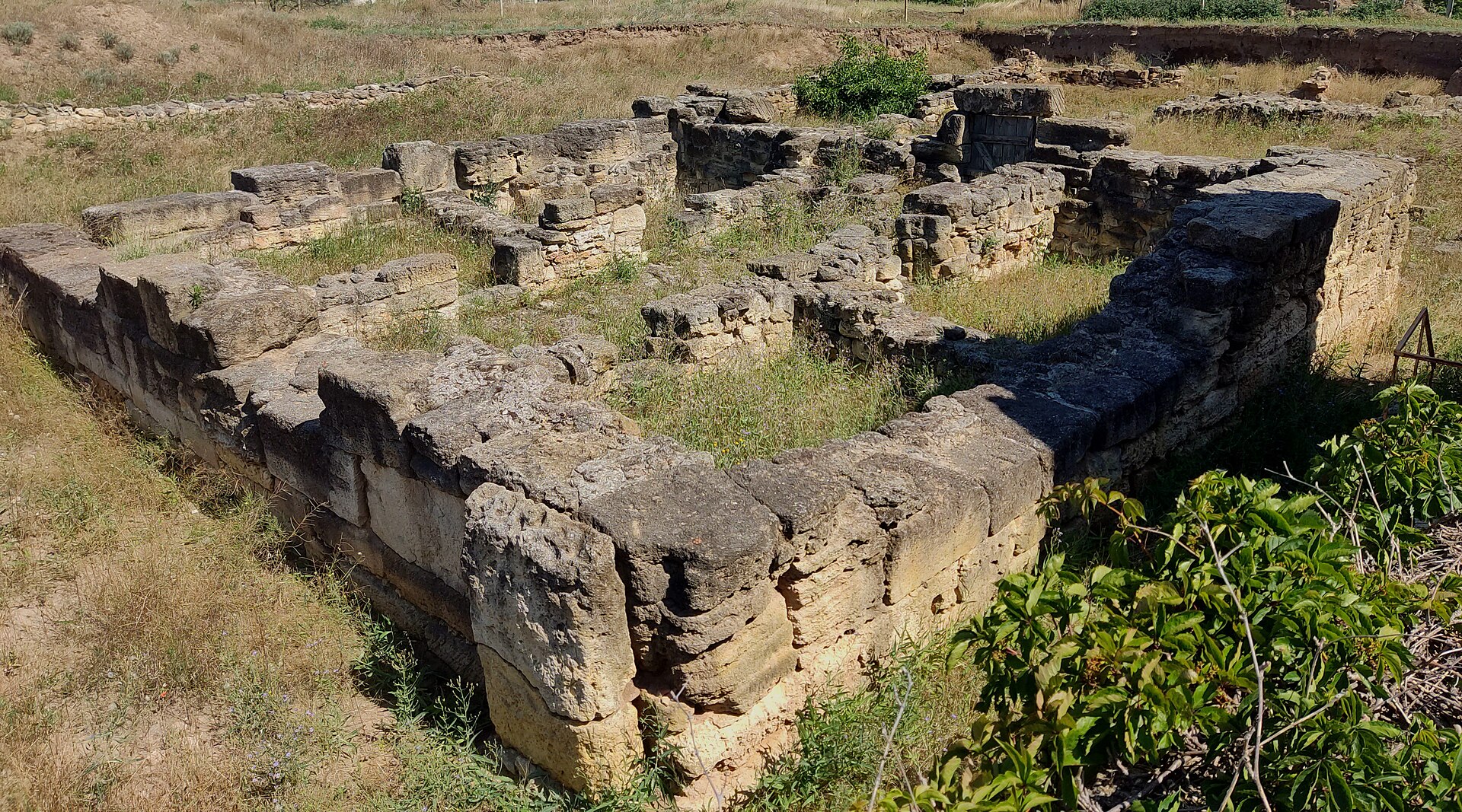
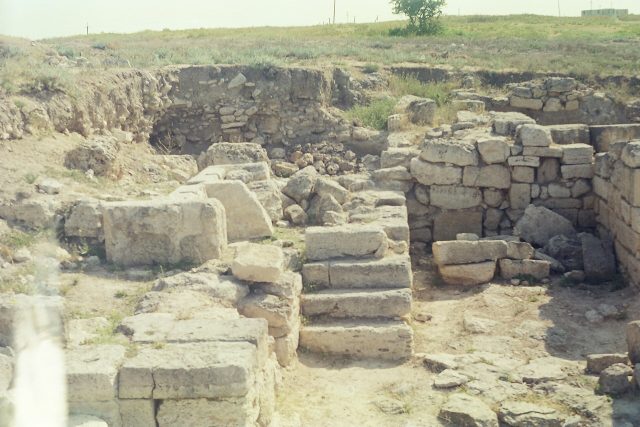
What you see now at Kara-Tobe is mostly the result of excavations that began in the 20th century and continue sporadically to this day. The site is not a reconstructed ruin but a raw, open-air museum where the layers of history are left exposed. The most visible structures belong to the late antique and early medieval periods, when the hill was part of the Byzantine Empire’s defensive network. A small basilica, its foundations still discernible, hints at the Christian presence here, while the remains of a defensive wall suggest that Kara-Tobe was more than just a religious outpost—it was a place of refuge and control. The Byzantines, like those before them, understood the importance of this spot, where land meets sea and where the horizon stretches endlessly toward the south.
Walking through Kara-Tobe, it’s easy to imagine the daily life that once unfolded here. The hill would have been a bustling, if modest, settlement, with houses clustered around the fortress and workshops producing goods for trade. The Black Sea was a vital artery, connecting Crimea to the Mediterranean world, and Kara-Tobe sat along one of its many routes. Ships would have anchored in the nearby bays, unloading wine, olive oil, and luxury goods from Greece and Asia Minor, while local products—grain, fish, perhaps even slaves—were sent in return. The settlement was never large, but its role in the regional economy was significant, a small cog in the vast machinery of ancient trade.
The decline of Kara-Tobe came gradually, as it did for many similar sites along the Black Sea coast. The rise of new powers, shifting trade routes, and the slow encroachment of the steppe all played a part. By the time the Genoese established their colonies in Crimea during the Middle Ages, Kara-Tobe had already faded into obscurity. The Genoese, with their fortified trading posts in places like Sudak and Feodosia, had little use for a half-abandoned hilltop settlement. Nature began to reclaim the site, burying the ruins under layers of earth and vegetation until they were all but forgotten.
Today, Kara-Tobe is a place for those who appreciate history in its unpolished form. There are no grand reconstructions or interpretive centers here, just the quiet persistence of the past. The hill is accessible year-round, though the best time to visit is in the spring or autumn, when the weather is mild and the light casts long shadows over the ruins. In summer, the heat can be intense, and the site offers little shade, but the views of the sea are at their most vivid, the water shimmering under the sun. Winter brings a different kind of beauty, with storms rolling in from the Black Sea and the ruins standing stark against the gray sky.
The surrounding area is worth exploring as well. The nearby village of Olenevka is a quiet, unassuming place, with a few small cafes where you can try local Crimean dishes like chebureki or lagman. The coastline here is rugged and wild, with cliffs giving way to pebbled beaches that are rarely crowded. If you’re interested in more history, the Genoese fortress in Sudak is a short drive away, its massive walls a stark contrast to the modest remains of Kara-Tobe. But for those who prefer solitude and a sense of discovery, Kara-Tobe offers something rarer—a chance to step into the past without the distractions of the present.
There’s a certain melancholy to places like Kara-Tobe, a sense of time’s relentless passage. The ruins are not grand enough to inspire awe, nor are they well-preserved enough to offer a clear picture of what once was. Instead, they exist in a kind of limbo, a fragment of history that refuses to be forgotten but also resists easy interpretation. That ambiguity is part of what makes the site compelling. It doesn’t tell a single story but invites you to piece together your own, to imagine the lives of the people who once called this hill home.
If you do visit, take your time. Sit on one of the low walls and listen to the wind. Watch the sea change color as the day wears on. Think about the countless others who have stood in this same spot, looking out at the same horizon, each with their own reasons for being here. Kara-Tobe may not be the most dramatic or the most famous of Crimea’s historical sites, but it has a quiet power all its own—a reminder that history is not just about the grand and the glorious, but also about the ordinary, the overlooked, and the slowly fading.