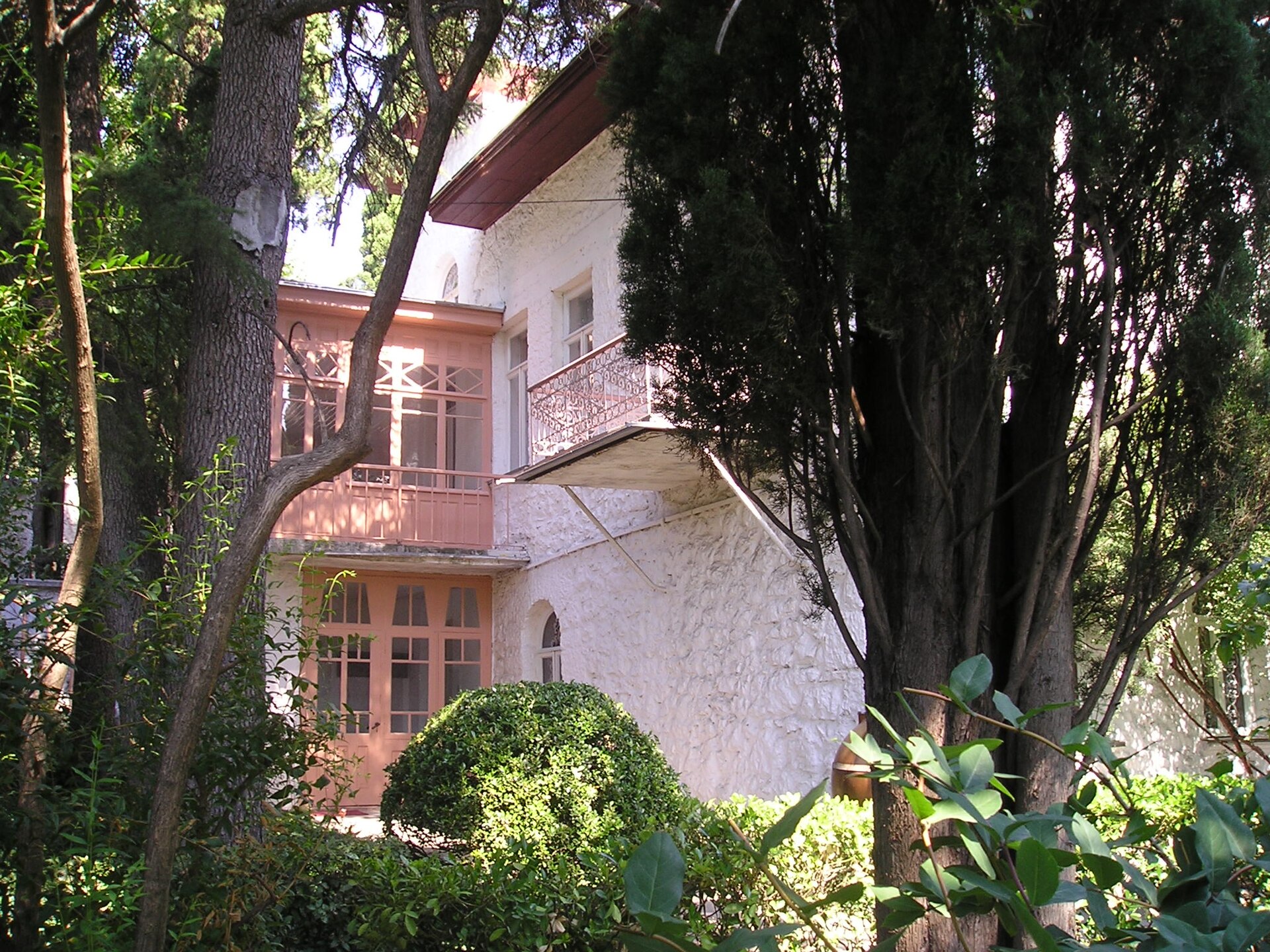
Perched on a gentle hill in Yalta, the white house with its green roof doesn’t immediately catch the eye. It nestles behind dense trees, as if designed for someone who sought solitude. This two-story villa with its veranda and small garden was where Anton Chekhov spent the last six years of his life. It wasn’t just a home but a creative refuge where he wrote *The Three Sisters* and *The Cherry Orchard*, along with dozens of short stories. Today, it’s a museum, yet the atmosphere remains much as Chekhov left it—quiet, intimate, and touched with a hint of melancholy.
The house was built in the late 19th century by architect Lev Shapovalov, who tailored the design to Chekhov’s tastes: simplicity, comfort, and harmony with nature. Chekhov himself chose the location, purchasing a plot in Autka, then a quiet suburb of Yalta, far from the bustling center. He disliked extravagance, so the house turned out modest, without ornate details but with thoughtful planning. The ground floor held the living room, dining room, and study, while the upstairs contained the bedrooms. Windows framed views of the sea, the mountains, and the garden, which Chekhov cultivated himself, planting trees and shrubs.
The study is the heart of the house. Little has changed here: the writing desk by the window, the sofa, the bookshelf, the lamp with its green shade. On the desk lie manuscripts, an inkwell, and photographs of loved ones. Chekhov worked here in the mornings, then received guests or strolled through the garden in the afternoons. He valued order, and that precision lingers in every detail—books arranged alphabetically, objects in their places. Even now, over a century later, it’s easy to imagine the scratch of a pen on paper and the murmur of the sea beyond the window.
The living room, with its high ceilings and large windows, was where Chekhov entertained. Friends, fellow writers, and admirers gathered here—Maxim Gorky, Ivan Bunin, Fyodor Shalyapin, and Alexander Kuprin among them. Around the long table, they discussed literature, politics, and art, or simply played cards and listened to music. The atmosphere was unpretentious, warm, and free of formality. Chekhov disliked grand receptions, preferring quiet evenings with those closest to him.
The garden is a story of its own. Chekhov was passionate about gardening and took charge of the plantings himself. He ordered species from across Russia and Europe, experimenting with varieties and tending to each tree. Today, the garden looks much as it did in his time, with cypresses, pines, magnolias, roses, and grapevines. Benches sit in the shade, inviting visitors to imagine Chekhov walking here with his sister Maria or guests, brainstorming ideas for new stories. The garden wasn’t just a green space but part of his creative world, a place where he found inspiration.
Personal belongings fill the house—clothing, dishes, furniture, photographs, letters. Each item offers a glimpse into Chekhov’s life, habits, and character. In the bedroom, a simple iron bed stands where he slept, and his coat hangs on the wall, as unassuming as the man himself. The wardrobe holds books from his personal library, many with notes scribbled in the margins. These details make it feel as though Chekhov has just stepped out and might return at any moment.
The museum opened in 1921, eleven years after Chekhov’s death, thanks to the efforts of his sister Maria Pavlovna, who preserved the house and its contents. She lived here until her own passing, caring for the museum and welcoming visitors. Today, Chekhov’s house is one of Yalta’s most visited sites, yet it remains free of crowds and haste. Tours are conducted in small groups, allowing everyone time to linger, sit on the veranda, or reflect.
For Chekhov, Yalta was not just a retreat but a necessity. Tuberculosis forced him to leave Moscow for the milder southern climate. Here, he continued to work and seek treatment, though the illness progressed. This house was where he spent his final years, and where, in 1904, he passed away. It stands as a monument not only to his talent but to his resilience, his ability to find beauty and meaning even in difficult times.
More than a museum, Chekhov’s house is a place where visitors can connect with the history of Russian literature. Everything here breathes with his memory—the manuscripts, the belongings, the garden, even the air seems imbued with his spirit. People come not just for the tour but to feel the atmosphere that makes this house feel alive. Perhaps that’s why they return, to once again hear the sea beyond the windows, the rustle of leaves in the garden, and the quiet voice of Chekhov, still speaking through his words.