Perched on the southern coast of Sicily, the Valley of the Temples is one of those rare places where the past doesn’t just linger—it breathes. Here, among the gentle slopes overlooking the Mediterranean, the ruins of ancient Greek temples stand as silent witnesses to a civilization that once flourished over two and a half millennia ago. This was the city of Akragas, a jewel of Magna Graecia, where philosophers debated, merchants traded, and warriors marched through streets that have long since faded into dust. Walking these paths today, you can almost hear the echoes of that lost world, carried on the warm Sicilian breeze.
The most striking of these ruins is the Temple of Concordia, a masterpiece of Doric architecture that has defied time with remarkable grace. Named after the Roman goddess of harmony, its columns still rise proudly against the sky, their golden stone glowing in the sunlight. Unlike many ancient structures, this temple survived not just the fall of empires but also the hands of those who came after—even early Christians, who repurposed it as a church in the 6th century. Its preservation is so exceptional that it ranks among the best surviving Greek temples outside of Greece itself. Standing before it, you can’t help but marvel at the skill of the builders who shaped these stones without the tools we take for granted today.
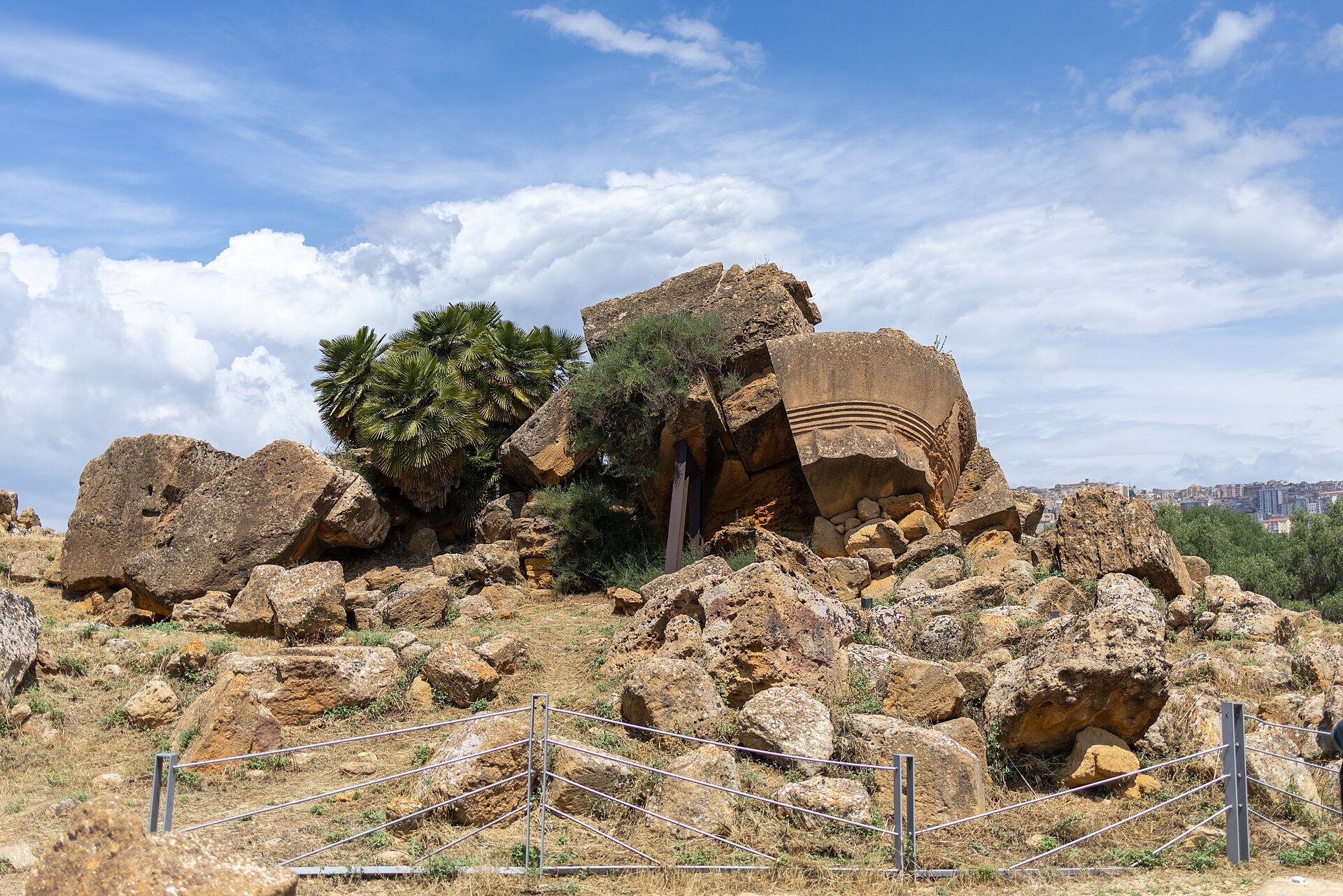
Nearby, the Temple of Hera Lacinia offers a different kind of beauty. Dedicated to the goddess of marriage and family, it sits at the edge of the valley, its partially restored columns framing a view of the sea. The temple’s location feels deliberate, as if the ancient architects wanted to connect the divine with the natural world. A short distance away lie the remains of the Temple of Olympian Zeus, once the largest Doric temple ever constructed. Though little more than scattered blocks and the haunting fragments of giant atlantes remain, these ruins still convey the ambition of their creators. The sheer scale of the stones, some weighing several tons, hints at the engineering prowess of a people who moved mountains—literally—to honor their gods.
What makes the Valley of the Temples more than just an archaeological site is the way it blends history with the land itself. Olive trees and almond groves dot the landscape, their gnarled trunks a testament to centuries of growth. In spring, the slopes burst into color as wildflowers carpet the ground, their vibrant hues contrasting with the weathered stone. The best time to visit is at sunset, when the fading light bathes the ruins in shades of amber and rose, casting long shadows that seem to stretch back into antiquity. The air grows still, broken only by the rustle of leaves and the distant murmur of the sea, making it easy to lose yourself in the quiet grandeur of the place.
Sicily has always been a crossroads of cultures, and Akragas was no exception. Founded by Greek colonists in the 6th century BC, the city later fell under Roman, Byzantine, Arab, and Norman rule. Each civilization left its mark, but the Greek legacy endured most visibly in the temples that still stand today. The Valley of the Temples is a reminder of how deeply these layers of history are woven into the island’s identity. It’s not just a relic of the past but a living symbol of the connections between peoples who, despite their differences, all called this land home.
Beyond the temples, ongoing excavations continue to uncover the everyday life of ancient Akragas. Beneath the grand monuments lie the remains of homes, workshops, and even an intricate water system, revealing a city that was as vibrant as it was powerful. These discoveries paint a picture of a place where ordinary people lived alongside the extraordinary—where markets bustled, craftsmen labored, and families gathered, all within sight of the towering temples that defined their world. It’s a humbling reminder that history isn’t just about kings and gods but about the countless lives that shaped it.
One of the most peaceful spots in the valley is the Garden of Kolymbethra, a lush oasis named after a legend that Christopher Columbus once rested here during his voyages to the New World. Whether the story is true or not, the garden feels like a bridge between eras, filled with citrus trees, pomegranates, and other plants brought from distant lands. It’s a place to sit in the shade, breathe in the scent of orange blossoms, and reflect on how much the world has changed since the days when these temples were new. The garden’s tranquility offers a counterpoint to the imposing ruins, grounding the visitor in the present while still honoring the past.
There’s something profoundly moving about standing among these ancient stones. They’ve survived wars, earthquakes, and the slow march of time, yet they still stand, bearing witness to the people who built them. It’s easy to imagine the rituals that once took place here—the processions of priests, the offerings to the gods, the voices of the faithful rising into the sky. At the same time, the ruins serve as a quiet reminder of impermanence. Empires rise and fall, cities crumble, and even the mightiest monuments eventually fade. Yet in their decay, they gain a different kind of power, one that speaks to the enduring human desire to leave a mark on the world.
Today, the Valley of the Temples is more than just a tourist destination; it’s a place where the past comes alive in unexpected ways. Throughout the year, the site hosts festivals, concerts, and theatrical performances that draw on its rich history. One of the most popular events is the Festival of Ancient Drama, where the works of Sophocles and Euripides are performed against the backdrop of the temples. Watching a tragedy unfold under the stars, with the ruins illuminated by torchlight, is an experience that blurs the line between then and now. It’s a rare chance to connect with the stories that have shaped our understanding of the world.
Visiting the Valley of the Temples is about more than just seeing an ancient site—it’s about feeling the weight of history and the quiet beauty of a place that has endured. Here, the past isn’t something distant or abstract; it’s tangible, almost alive. The stones beneath your feet have stories to tell, and the wind carries whispers of a time when this valley was the heart of a thriving city. Whether you come for the history, the architecture, or simply the chance to step away from the modern world, the valley offers something deeper—a moment of reflection, a sense of connection, and the quiet awe that comes from standing in the presence of something truly timeless.