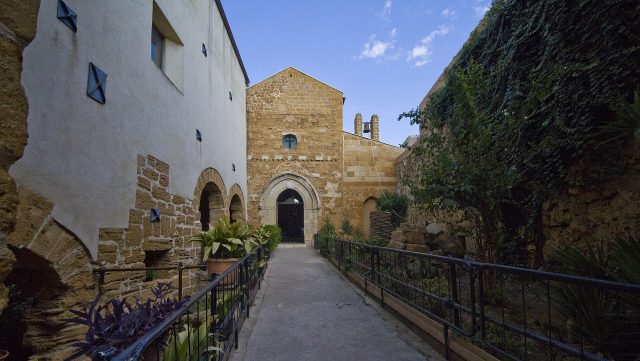
The Archaeological Museum of San Nicola in Agrigento is one of those rare places where history doesn’t just sit behind glass—it lingers in the air, in the worn stone of the building itself, in the quiet weight of objects that have survived centuries. Housed in a former Dominican monastery from the 17th century, the museum is as much a monument as the artifacts it contains. The building’s Baroque lines remain intact, with high vaulted ceilings and an inner courtyard where monks once walked in silent procession. Today, that same courtyard offers visitors a moment of stillness, a place to pause between the layers of time on display inside.
The museum was established in the mid-20th century, born from the realization that Agrigento’s archaeological treasures needed a home worthy of their significance. Before then, many finds from the Valley of the Temples and the surrounding area had been scattered—some gathering dust in storage, others disappearing into private collections, severed from the land that gave them meaning. Here, they’ve been brought together, from tiny clay figurines to towering statues, from everyday household items to sacred objects that once adorned temples and homes. The collection spans prehistory to late antiquity, but its heart lies in the 6th and 5th centuries BCE, when Agrigento was one of the wealthiest and most influential cities in the Greek world.
Among the most striking exhibits are those tied to the cult of Demeter and Persephone, goddesses whose worship was deeply rooted in Sicily. The museum holds terracotta figurines of the deities holding fruit, fragments of reliefs depicting mythological scenes, and votive offerings that reveal how the ancient Greeks saw their gods—not as distant figures, but as active participants in daily life. These objects weren’t just religious symbols; they were part of a worldview where harvests, health, and even the fate of the city depended on divine favor. Nearby, more mundane items—amphorae, oil lamps, coins—remind visitors that behind the grand temples and myths were ordinary people, living, working, and praying in ways that feel strangely familiar.
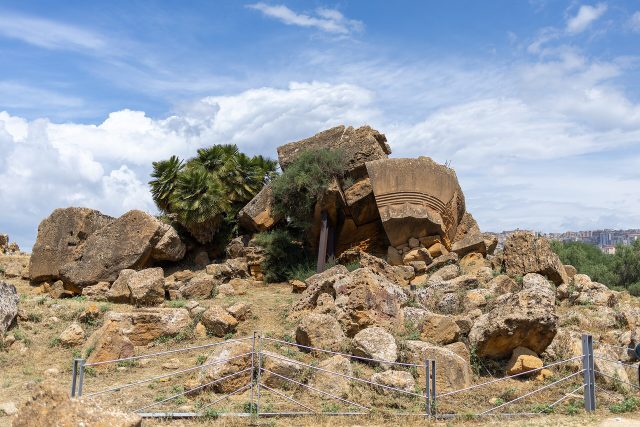
A significant portion of the collection comes from the nearby Valley of the Temples, where some of the best-preserved Greek ruins outside of Greece still stand. Here, you’ll find fragments of architectural decorations, sculptures that once adorned temple pediments, and even parts of colossal statues that once loomed over the city’s acropolis. The most famous of these is the telamon from the Temple of Olympian Zeus, a giant male figure that once supported the temple’s roof. While a reconstruction stands in the valley, the original is here, allowing visitors to study its details—the carefully rendered muscles, the folds of drapery, the expression on its face—up close. It’s a reminder of the skill of ancient craftsmen, who could make stone seem almost alive.
The museum doesn’t stop at the Greek era. Its Roman galleries offer a glimpse into Agrigentum, as the city was known under Roman rule, when it remained an important hub in the empire. Mosaics with geometric patterns, fragments of frescoes, and everyday objects like glassware and metal tools paint a picture of life in a city that had adapted but not entirely abandoned its Greek identity. The collection of tombstones is particularly telling, mixing Latin epitaphs with Greek names, a quiet testament to the cultural blending that defined the region.
One of the museum’s lesser-known but fascinating sections is its numismatic collection, featuring coins minted in Agrigento over several centuries. These small metal discs are more than currency; they’re snapshots of the city’s economic power and artistic skill. Some bear images of gods, others symbols of authority or portraits of rulers. A few are so well-preserved that you can make out fine details—the curl of Zeus’s beard, the individual grains in Demeter’s sheaf of wheat. They serve as a reminder that Agrigento wasn’t just a religious center but a thriving commercial crossroads where merchants from across the Mediterranean converged.
What makes the San Nicola Museum special isn’t just its collection but the way it presents history. The exhibits are arranged to create a sense of continuity, bridging the gap between past and present. In one room, you might find objects unearthed from residential quarters—children’s toys, kitchen utensils, even medical instruments—each one a small window into the lives of people who lived here over two millennia ago. These aren’t just relics; they’re evidence of shared human experiences—joy, struggle, illness, and the quiet routines that make up a life.
Unlike the more famous Valley of the Temples, the San Nicola Museum doesn’t draw crowds. That’s part of its charm. There’s no rush here, no jostling for the best photo spot. The visitors who come are often those with a genuine interest in history, not just ticking off another tourist attraction. The museum rewards their curiosity with a well-curated collection, thoughtful displays, and even a small library where those who want to dive deeper can lose themselves in books about ancient Sicily.
Agrigento is often called a place where antiquity feels tangible, and the San Nicola Museum is where that feeling becomes real. You don’t have to imagine what the ancient city looked like; the evidence is all around you—fragments of temples, household items, coins that passed through countless hands. The museum doesn’t try to dazzle with grandeur or spectacle. Instead, it invites reflection, offering not just a look at the past, but a connection to it. For those who come seeking more than just a photograph, it’s a place where history isn’t just seen—it’s felt.