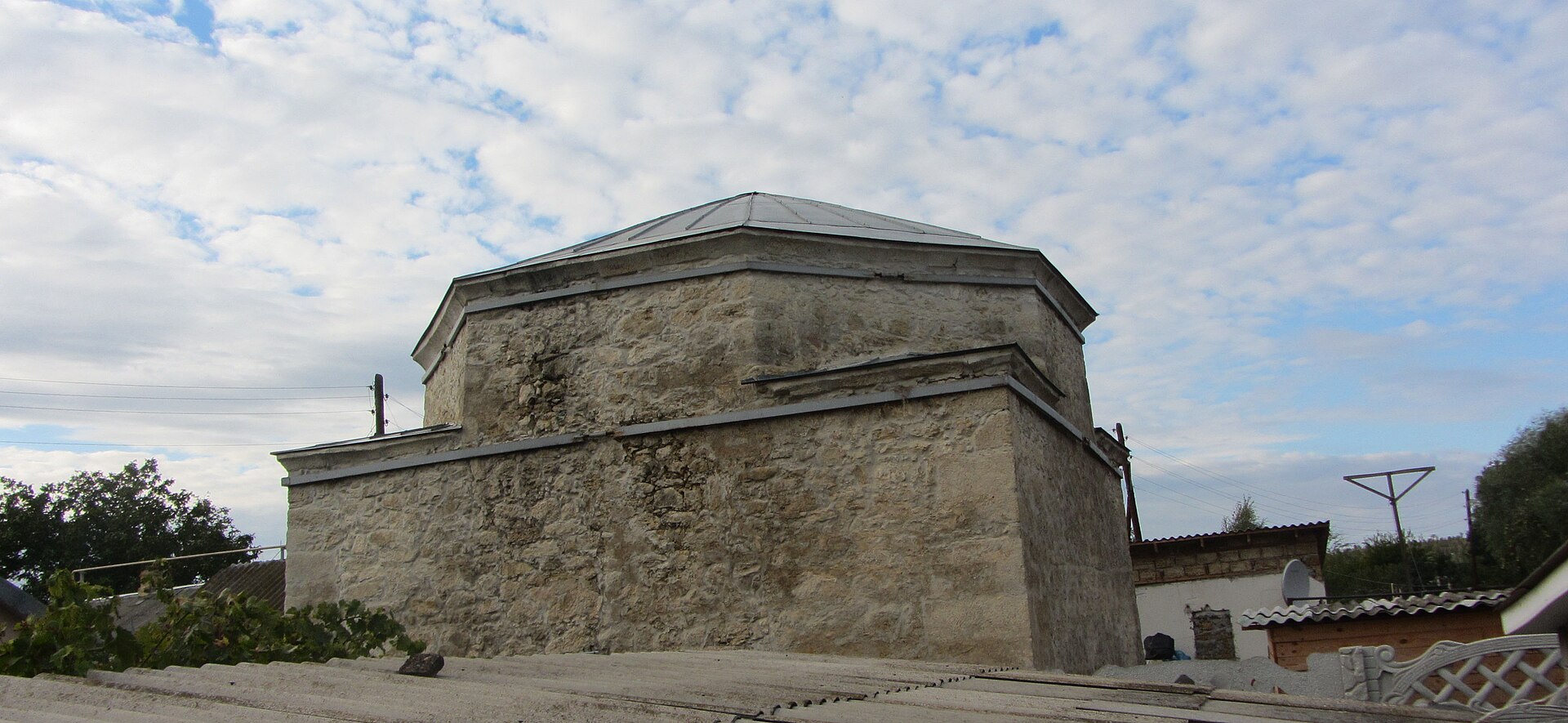
The village of Aivove sits in the foothills of Crimea. No beaches, no souvenir stalls—just lanes between houses and plum trees heavy with fruit. On the edge of the village, half-hidden by greenery, stands a small stone building. This is the dürbe of Aivove, a mausoleum that has stood for centuries without attracting notice. It doesn’t appear in travel brochures, but for those who look, it offers a connection to the past that hasn’t been polished for tourists.
Dürbes were built across Crimea during the Crimean Khanate, between the 15th and 18th centuries. They served as tombs for nobility or respected figures, though the names of those buried here are long forgotten. The Aivove dürbe is a typical example: a square building with a dome, made from local limestone that has softened into a golden hue over time. No carvings, no grand inscriptions—just stone shaped by hands centuries ago. Inside, light filters through narrow windows, creating a quiet space.
The walls are built from roughly hewn blocks, giving the structure weight. The dome lifts it slightly, as if resisting the stone’s heaviness. The entrance is a simple portal, its proportions balanced but unadorned. Over time, cracks have spread across the surface, and mortar has worn thin. These signs of age don’t weaken the building—they make it feel lived-in, as if time itself is part of its structure.
Aivove is a village that hasn’t changed much. It sits in a valley, far from Crimea’s coastal resorts. Life here moves with the seasons. A few houses, a small shop, the occasional sound of livestock—nothing more. The dürbe stands on the outskirts, watching over the village like a silent witness. For locals, it’s just part of the landscape. For visitors, it’s a reminder that history isn’t always about famous names or grand events. Sometimes, it’s about a place that has outlasted the people who built it.
The Crimean Khanate was a time of cultural growth for the peninsula. The khans ruled over a diverse population, leaving behind mosques, palaces, and mausoleums. The Aivove dürbe isn’t as well-known as the structures in Bakhchisaray, but it matters just as much. It represents a tradition of honoring the dead, one that was once common across the land. Many of these mausoleums have disappeared, but those that remain, like this one, show a world that’s mostly gone.
Visiting the dürbe is simple. No tours, no plaques, no gift shops. You walk up, touch the rough stone, and wonder about the hands that placed each block. The silence is broken only by leaves rustling or a bird calling. You might sit for a while, not because there’s much to see, but because the place makes you pause. The dürbe doesn’t ask for attention. It has stood for centuries and will likely stand for more.
Crimea is a place of layered histories—Greek colonies, Genoese fortresses, Ottoman mosques, Soviet monuments. The dürbe in Aivove is a small part of that. It shows how the peninsula has always been a crossroads, where different cultures met. The mausoleum isn’t just a relic; it’s a piece of history that still exists, even if its original purpose is forgotten. In a region that has seen so much change, the dürbe remains.
For those who come to Aivove, the dürbe offers something beyond history. It’s a chance to step away from tourist paths and see Crimea differently. No grand stories, no drama—just a building that has seen centuries pass. In a world full of things designed to impress, the dürbe’s quiet presence feels rare. It doesn’t pretend to be anything else: a small monument to the people who once lived here. Maybe that’s all it needs to be.