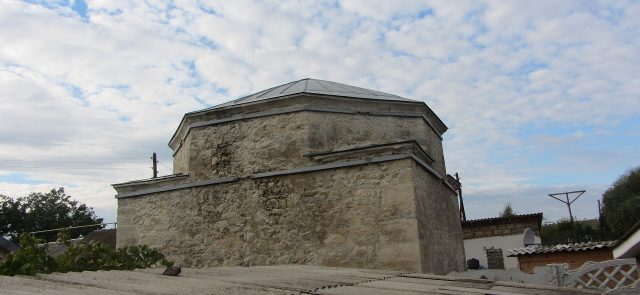
Perched on a gentle rise in the heart of a quiet Russian village, the Church of the Intercession of the Holy Virgin feels like a place where time has paused. Its whitewashed walls and weathered domes stand in harmony with the surrounding landscape—rolling fields, scattered groves, and the soft undulations of the countryside. The church is modest, with a low bell tower and roofs darkened by decades of rain and snow.
The history of the church is tied to the village itself. Plum Tree, as locals call it, began as a farming settlement in the 18th century. The church was funded by landowners and parishioners, serving as both a place of worship and the center of community life. It witnessed baptisms, weddings, and funerals, its doors open for festivals that brought people together. During the Soviet era, it survived—perhaps because the village was remote, or because those who loved it refused to let it go.
Architecturally, the church blends late classicism with traditional Russian elements. The exterior is simple, with pilasters and arched windows framing the entrance. Inside, there is no grandeur, only quiet reverence. The iconostasis remains partially intact, and faded frescoes of biblical scenes cover the walls. The church’s most treasured relic is an ancient icon of the Holy Virgin, brought here in its earliest years, though its origins are forgotten.
Today, the church still holds services, though not often. Plum Tree is small, and its congregation has shrunk, but on feast days, the building fills with voices—locals, returning residents, and travelers. For outsiders, the church is a place where the past lingers in the stillness, broken only by the rustle of leaves or the distant chime of the bell.
The village is quiet, where fields stretch toward the horizon, broken by patches of birch and pine. In summer, wildflowers scent the air, and mist settles over the meadows in the evenings. A small river winds nearby, its banks once home to water mills. Now, only stone foundations remain, and the river attracts those seeking solitude.
The Church of the Intercession endures because it holds the stories of those who passed through its doors. Generations of peasants, landowners, and priests left traces in its walls. The village is smaller now, but the church remains, a witness to time. For visitors, it offers a glimpse of a Russia that moves slowly, where the past is always near.