Durham Cathedral is one of those rare places where time seems to slow, almost as if the weight of centuries has softened the edges of the present. Perched on a rocky promontory above the River Wear, it looms over the city like a silent guardian, its stone walls bearing witness to nearly a thousand years of history. This is not just a monument of architecture but a living chronicle of England itself—where faith, power, and the quiet rhythms of daily life have intertwined for generations. Its halls have echoed with coronations and prayers, the footsteps of pilgrims and the hushed whispers of those seeking solace. Today, it remains a place where the past feels tangible, where visitors can step into a story that began long before them.
Construction began in 1093, when Norman conquerors sought to consolidate their hold over northern England. The choice of location was deliberate: the high ground above the river offered both defense and connection to the wider world. The Normans built with characteristic strength—thick walls, rounded arches, and sturdy columns—but there is a surprising grace to the design. The proportions are so carefully balanced that even the most massive elements seem to rise effortlessly. This is especially true in the nave, where light streaming through tall windows creates a sense of openness, as if the very air is charged with reverence.
At the heart of the cathedral’s spiritual significance is the shrine of St. Cuthbert, the patron saint of Northumbria. His relics were brought here in 995, long before the cathedral was built, and Durham soon became one of England’s most important pilgrimage sites. Cuthbert, a 7th-century monk and bishop, was known for his humility and compassion, particularly toward the poor. His tomb lies in the Chapel of the Nine Altars, a space that still draws those in search of comfort or inspiration. Nearby rests another relic: the head of St. Oswald, a Northumbrian king and martyr, whose legacy is woven into the region’s identity.
The cathedral is also a masterpiece of early Gothic architecture, rare in England at the time. The vaulted ceilings of the nave are a marvel, their ribbed patterns serving both structural and aesthetic purposes. These innovations, which would later influence cathedrals across Europe, were among the first of their kind. Another distinctive feature is the monks’ gallery, a narrow passageway running along the upper level of the nave. Originally designed to allow the clergy to move unseen during services, it now adds another layer of intrigue to the building’s design, hinting at the lives of those who once walked its length in silence.
In the Middle Ages, the cathedral was more than a place of worship—it was a center of learning. Its library was one of the first in England, and monks painstakingly copied and illuminated manuscripts that survive to this day. Among them is the Durham Bestiary, a medieval book depicting real and mythical creatures, now considered a masterpiece of medieval art. The cathedral’s intellectual legacy extended beyond its walls, influencing the later founding of Durham University, which inherited some of its traditions.
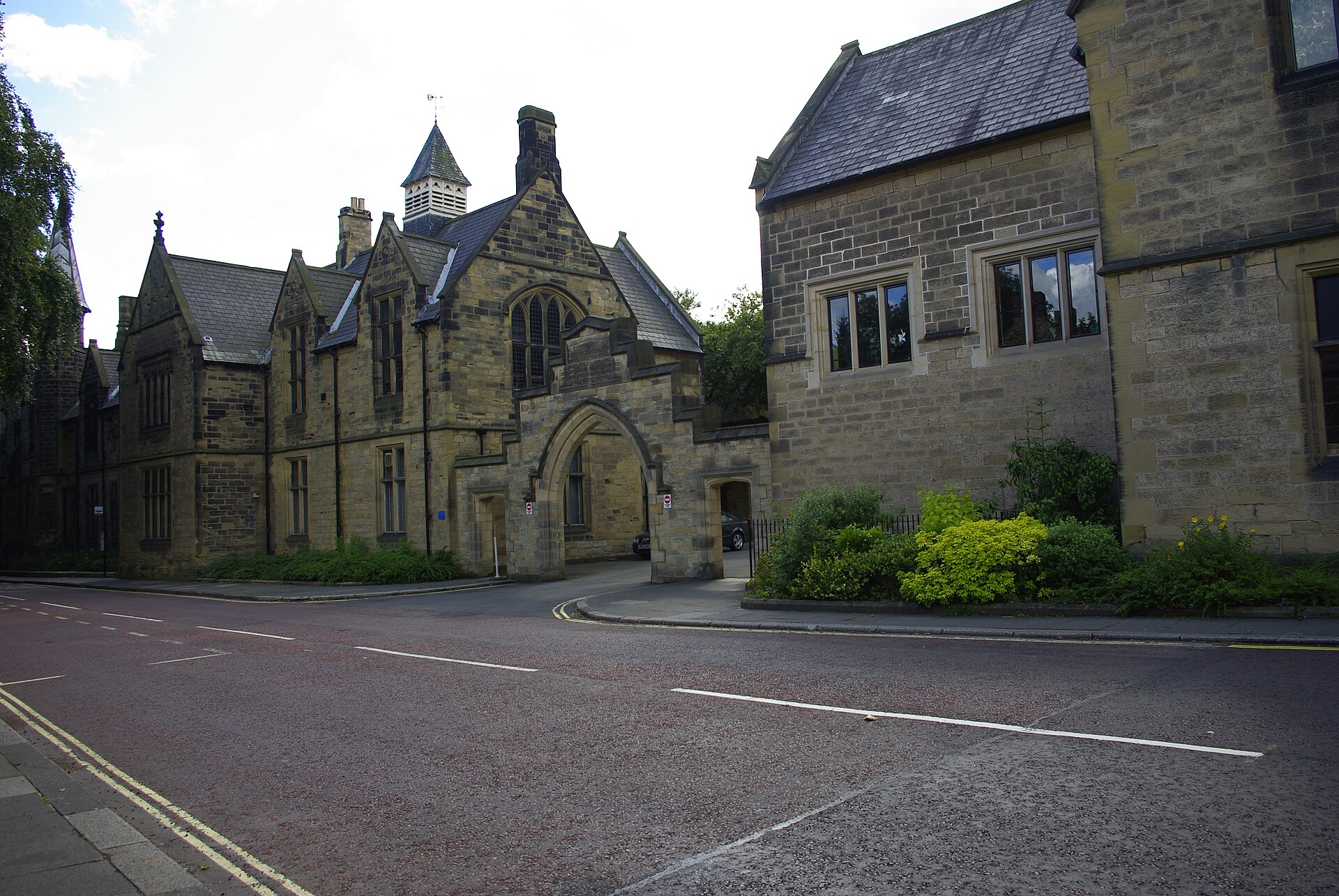
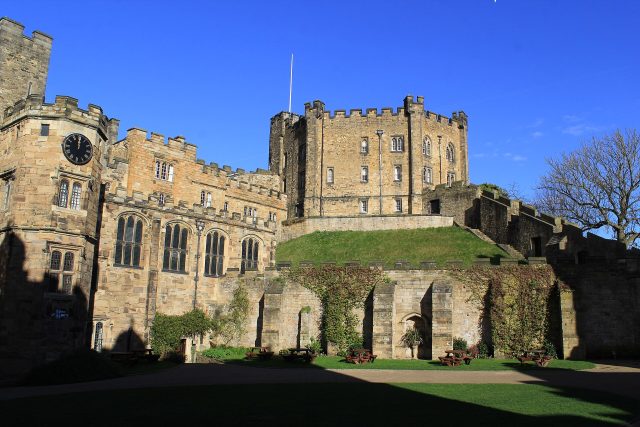
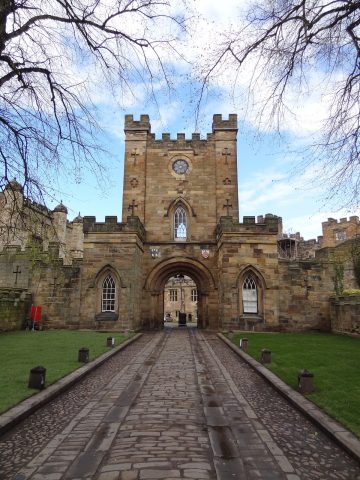
Beside the cathedral stands Durham Castle, the two forming a single architectural ensemble. Built in the 11th century as the residence of the Prince-Bishops of Durham—who wielded both spiritual and temporal power—the castle now houses part of the university. A narrow street connects the two, winding down toward the river just as it has for centuries. Walking this path, it’s easy to imagine the medieval city: the same stone walls, the same steep descents to the water, the same quiet courtyards where time seems to stand still.
The cathedral has been a constant presence in the life of Durham, shaping its identity through the ages. It has witnessed coronations and conflicts, offered refuge during wars, and served as a moral compass for generations. During the English Civil War, it was looted, and many of its treasures were lost, yet the building endured. In the 19th century, it underwent restoration, though some details were inevitably altered or lost. Despite these changes, the cathedral retains its power to evoke the past, standing as a testament to resilience and continuity.
Today, Durham Cathedral is more than a place of worship. It hosts concerts, exhibitions, and lectures, and during the Christmas season, its grounds come alive with markets and festivities. The cathedral library and archives remain open to researchers, while the crypt offers a quiet café where visitors can rest. Yet for all its activity, the cathedral’s most enduring quality is the sense of peace it imparts. Even on busy days, its vast interior feels intimate, as if each person who enters finds their own space within its walls.
A visit to Durham would be incomplete without stepping inside the cathedral. It defines the city’s rhythm, its silhouette shaping the skyline and its history infusing the streets below. Here, the past is not a distant abstraction but something alive, something that can be touched in the worn stone of a pillar or heard in the echo of footsteps across the nave. The cathedral does not demand attention; it simply offers itself, revealing its stories to those who are willing to listen. Whether you spend hours tracing the carvings on the capitals, gazing at faded frescoes, or simply sitting in silence, the experience lingers long after you leave.