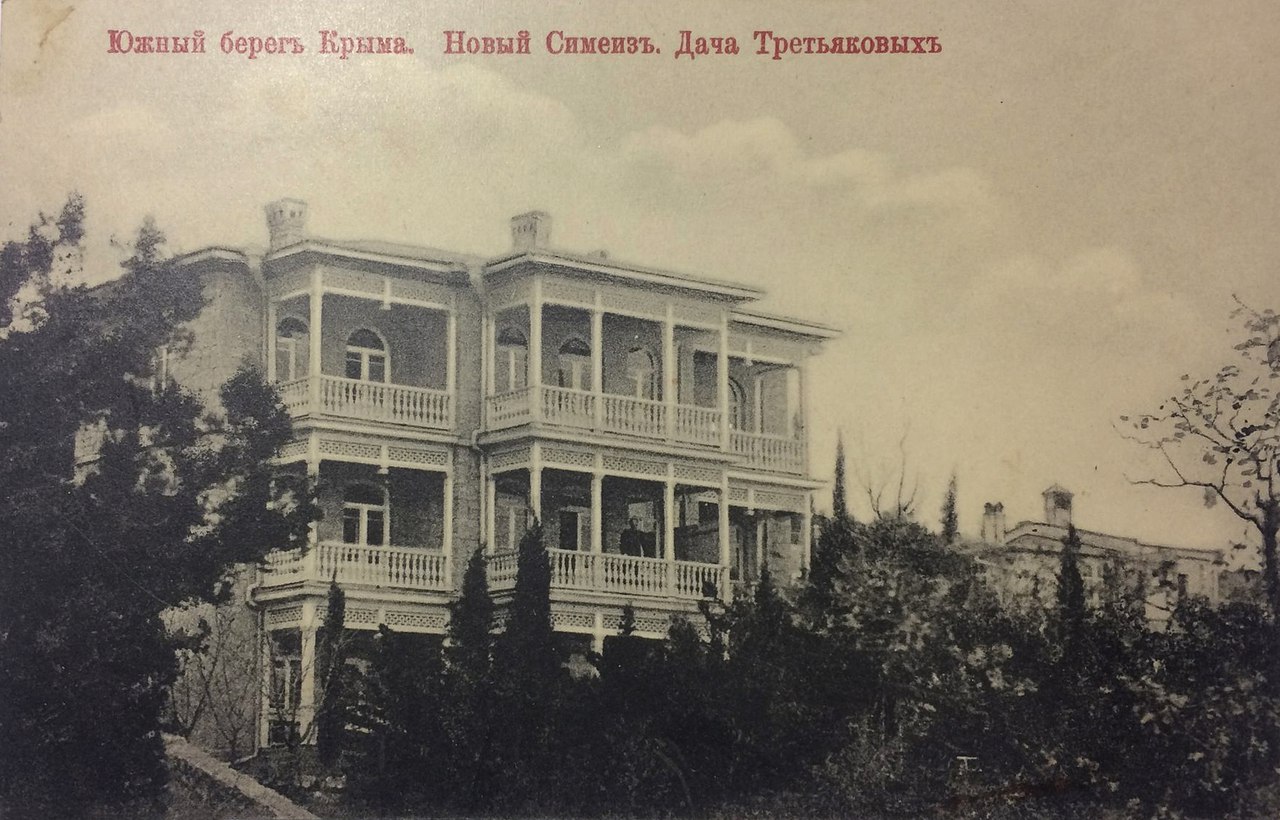
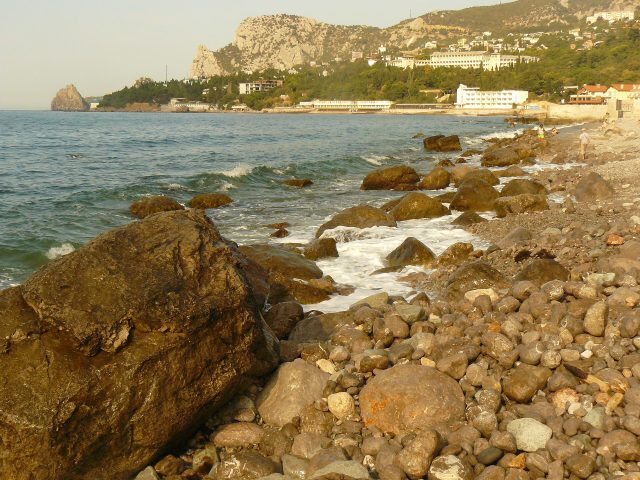
Perched on the slopes of Mount Koshka, overlooking the deep blue waters of the Black Sea, the Tretyakov Dacha in Simeiz is one of those rare places where time seems to have paused, allowing the past to linger just beneath the surface. Built in the early 20th century, this estate was once the summer retreat of the Tretyakov family, whose name is synonymous with Russian art and philanthropy. Pavel Tretyakov, the founder of the Tretyakov Gallery in Moscow, was a man who shaped the cultural landscape of his country, and this dacha was an extension of that legacy—a place where the boundaries between art, nature, and leisure blurred into something effortless and refined.
The architecture of the dacha reflects the tastes of its time, a blend of modernist elegance and neoclassical grandeur that was typical of the era’s grand estates. The building’s facade is adorned with intricate stucco work, wrought-iron balconies, and large windows that frame the sea like living paintings. Inside, the original layout still hints at the rhythms of aristocratic life: high ceilings, spacious rooms, and tiled stoves that once warmed gatherings of artists and intellectuals. The grand staircase, in particular, feels like a stage set for the conversations that must have unfolded here—discussions of literature, music, and the shifting tides of Russian society.
Simeiz in the early 1900s was more than just a resort; it was a haven for the creative elite. Writers, painters, and musicians flocked here, drawn by the mild climate, dramatic landscapes, and the sense of freedom that came with being far from the rigidities of imperial St. Petersburg or Moscow. The Tretyakov Dacha, though not frequently visited by Pavel himself, became a gathering place under the care of his daughter Alexandra and her husband, Prince Sergei Shcherbatov. The Shcherbatovs were patrons of the arts in their own right, and their home in Simeiz welcomed figures like the poet Maximilian Voloshin, the novelist Alexander Grin, and even the legendary opera singer Feodor Chaliapin. The dacha was more than a house—it was a salon where ideas flowed as freely as the Crimean wine.
The revolution of 1917 changed everything. Like so many private estates, the Tretyakov Dacha was nationalized, and its fate became tied to the shifting priorities of the Soviet state. Over the decades, it served as a sanatorium, a rest home, and a place for workers to recuperate. These new roles preserved the building from outright neglect, but they also erased much of its original character. The interiors were reconfigured, decorative details were lost, and the once-manicured park grew wild. Yet even in its altered state, the dacha remained a quiet monument to a vanished world, a reminder that Crimea had once been a playground for the artistic and intellectual elite.
Today, the Tretyakov Dacha stands as a regional architectural landmark, though its future is uncertain. The building is still part of a functioning sanatorium, and access is limited. Time has not been kind to it—the stucco is crumbling, the paint is faded, and the gardens have long since reverted to nature. But even from the street, it’s easy to imagine the life that once filled these rooms: the clink of tea glasses on the terrace, the murmur of voices drifting through open windows, the sound of a piano playing in the evening. The dacha is a relic, but it’s not a dead one. It carries the echoes of the people who passed through its doors, leaving behind traces of their conversations, their laughter, and their dreams.
Simeiz itself has changed, yet it retains a certain timelessness. The old villas, the winding streets, the jagged rocks rising from the sea—all of it feels suspended between past and present. The Tretyakov Dacha is part of that continuity, a thread connecting the Crimea of today with the Crimea of a century ago. Walking along the waterfront or hiking up the trails of Mount Koshka, it’s impossible not to wonder about the lives that unfolded here, the stories that were told, and the art that was inspired by this place.
In recent years, there’s been a growing interest in preserving Crimea’s historical legacy, and the Tretyakov Dacha has not been forgotten. There’s talk of restoration, of bringing the building back to its former glory. Whether that will happen remains to be seen, but the possibility alone is enough to spark the imagination. Perhaps one day, the dacha will once again be a place where people gather, where the past is not just remembered but brought to life. For now, it remains a silent witness to an era that shaped not just Simeiz, but the broader story of Russian culture. And in its quiet way, it continues to tell that story to anyone who cares to listen.