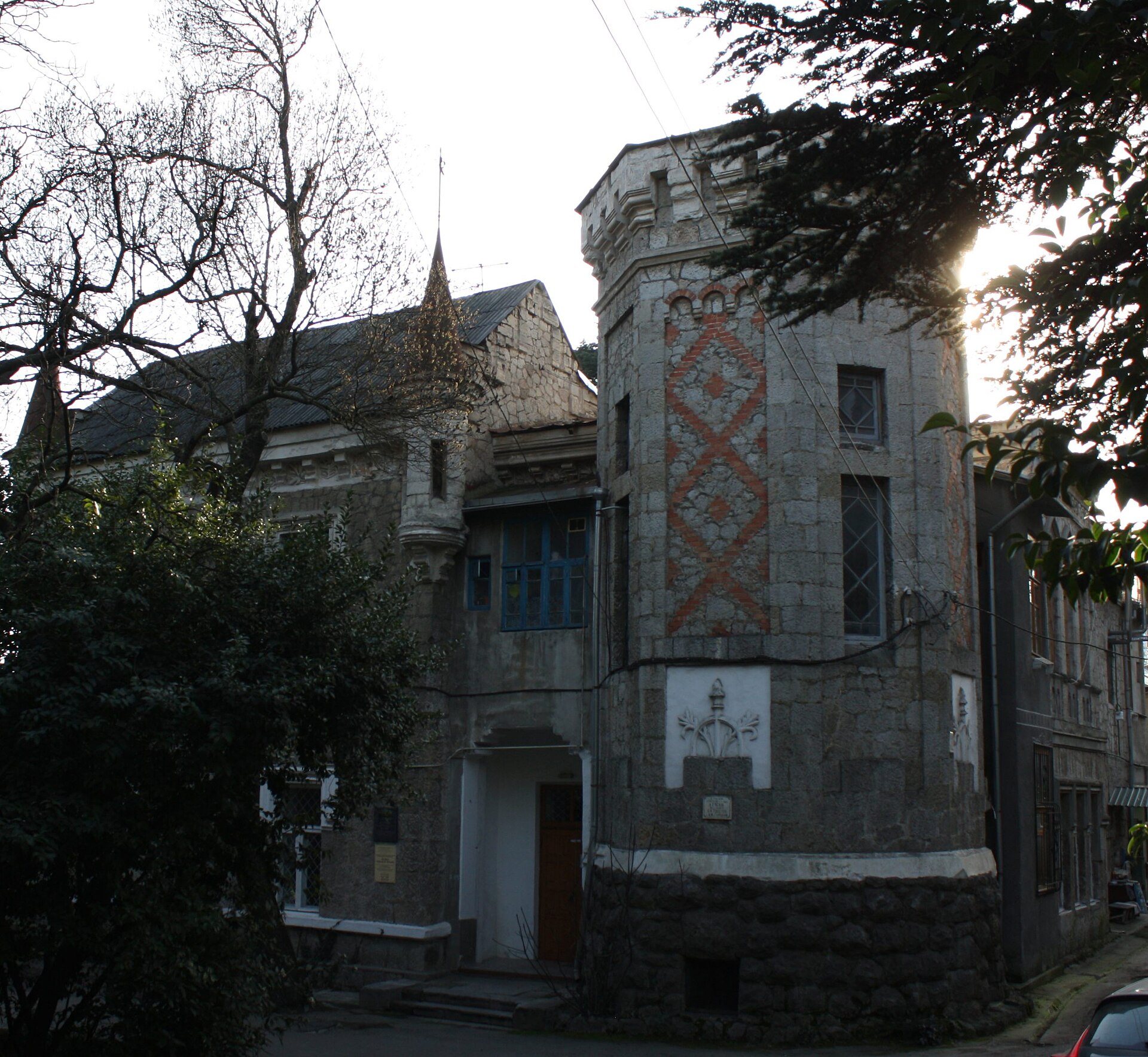
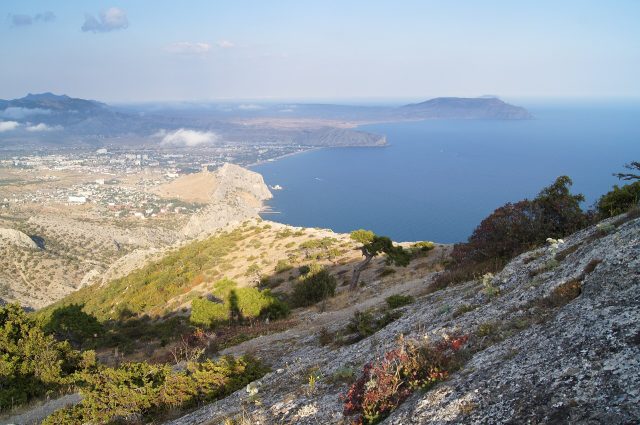
Omur Dacha sits on a hillside in Yalta, built in the early 1900s when the Crimean coast drew Russia’s elite—aristocrats, artists, and industrialists escaping the capital. The villa doesn’t compete with Livadia or Vorontsov’s palaces. Instead, it offers something quieter: a private home where architecture and nature blend. The house clings to the slope, its stone walls covered in vines, its balconies framing sea views unchanged for over a century.
The design follows Crimean villas of the era: thick walls for summer heat, tall windows for breezes, and a tiled roof that has endured storms. Delicate stucco adorns the façade, though time has worn some of it away. Around the house, an old garden sprawls, its paths lined with pines and cypresses. Once part of a larger estate, the garden now feels intimate, its shaded walks holding traces of long-gone guests.
Inside, high ceilings, fireplaces, and wooden paneling once created warmth. Wide terraces provided space for tea as the sun set. Today, the villa is privately owned, and access is rare. But from the street, you can picture the lives here—the clink of glasses, the rustle of dresses, conversations about art or politics.
Yalta became a fashionable resort in the late 19th century when the Russian nobility discovered its mild climate. Omur Dacha emerged during this boom, built by someone with taste and means—a merchant or official who wanted a retreat by the sea. It was never a palace, just a place to escape.
The Revolution changed everything. Private villas were seized, repurposed as sanatoriums or apartments. Omur Dacha likely shared this fate, its rooms divided, its purpose shifting. Today, patches of peeling paint and mismatched repairs remain, but the house still stands, bearing witness to Yalta’s transformations—from imperial glamour to Soviet pragmatism.
The villa isn’t a tourist hotspot. It doesn’t appear on postcards or in guidebooks. Most visitors walk past without noticing. But if you wander Yalta’s backstreets, it’s a quiet discovery. The house sits on a narrow lane, away from crowded promenades, its presence unassuming yet compelling. There’s a sense of stories half-told, of a slower pace of life.
The garden, though smaller now, still feels like a sanctuary. In spring, roses bloom along the paths, their scent mixing with salt air. In summer, cicadas hum from dawn till dusk. From the upper terrace, you can see the distant mountains, their peaks softened by haze. It’s easy to see why someone a century ago chose this spot—a place where the sea is always in view, where the light is golden, where the world feels distant.
Omur Dacha isn’t a monument or a protected heritage site. But it matters. It’s part of Yalta’s layered history, a reminder that the city wasn’t always about sunbathing and nightlife. Long before it became a Soviet sanatorium hub or a tourist destination, it was a place for healing, creating, living. The villa’s walls have seen empires rise and fall, yet they stand firm, their quiet dignity contrasting with flashier landmarks.
If you’re in Yalta, explore beyond the obvious. Walk up from the seafront, past modern hotels and neon signs, into the older, quieter streets. That’s where you’ll find Omur Dacha, along with other villas that have seen better days but still hold charm. They won’t impress with gold leaf or marble, but they offer something rarer: a glimpse into the city’s soul. In their worn facades and overgrown gardens, you can almost hear echoes of another era—when Yalta was more than a destination, but a way of life.