Perched on the southern coast of Crimea, where the Black Sea meets the foothills of the Crimean Mountains, the Karasan estate feels like a quiet secret tucked away from the more crowded resorts of Yalta or Alushta. Partenit, the small settlement where it stands, has long been a place of retreat—first for ancient Greeks, then for Russian aristocrats, and now for those who wander off the beaten path in search of something unhurried and authentic. The estate itself is a relic of the late 19th century, built when Crimea’s coastline was transforming into a playground for the wealthy, yet it carries none of the ostentation of its more famous neighbors. Instead, Karasan feels like a private world, where time moves differently, shaped by the rhythm of the sea and the rustling of century-old trees.
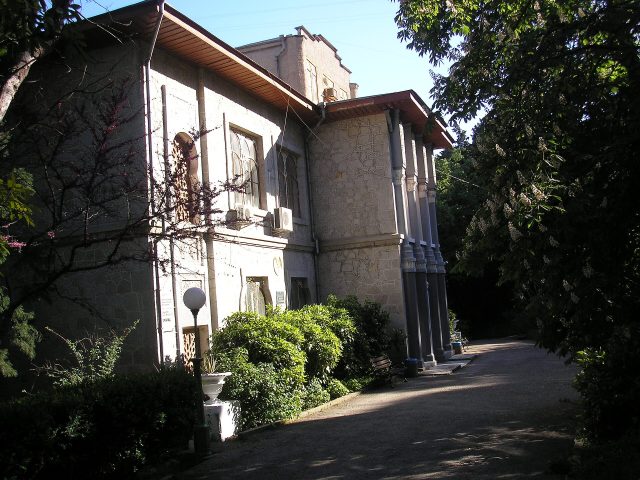
The estate was commissioned by the Russian industrialist Nikolai Dmitrievich Stakheev, a man whose name is now largely forgotten but whose taste for understated elegance still lingers in the architecture. Unlike the grand palaces of Livadia or Massandra, Karasan was never meant to impress with scale or opulence. Its main house, a two-story structure with a modest but graceful facade, blends seamlessly into the surrounding park, as if it grew from the landscape rather than being imposed upon it. The design is a mix of styles—elements of Art Nouveau softened by local Crimean influences, with arched windows, intricate woodwork, and a sense of harmony that feels almost accidental. The interiors, though not open to the public in their entirety, are said to retain much of their original character, with high ceilings, parquet floors, and the kind of details that suggest a life lived with quiet refinement.
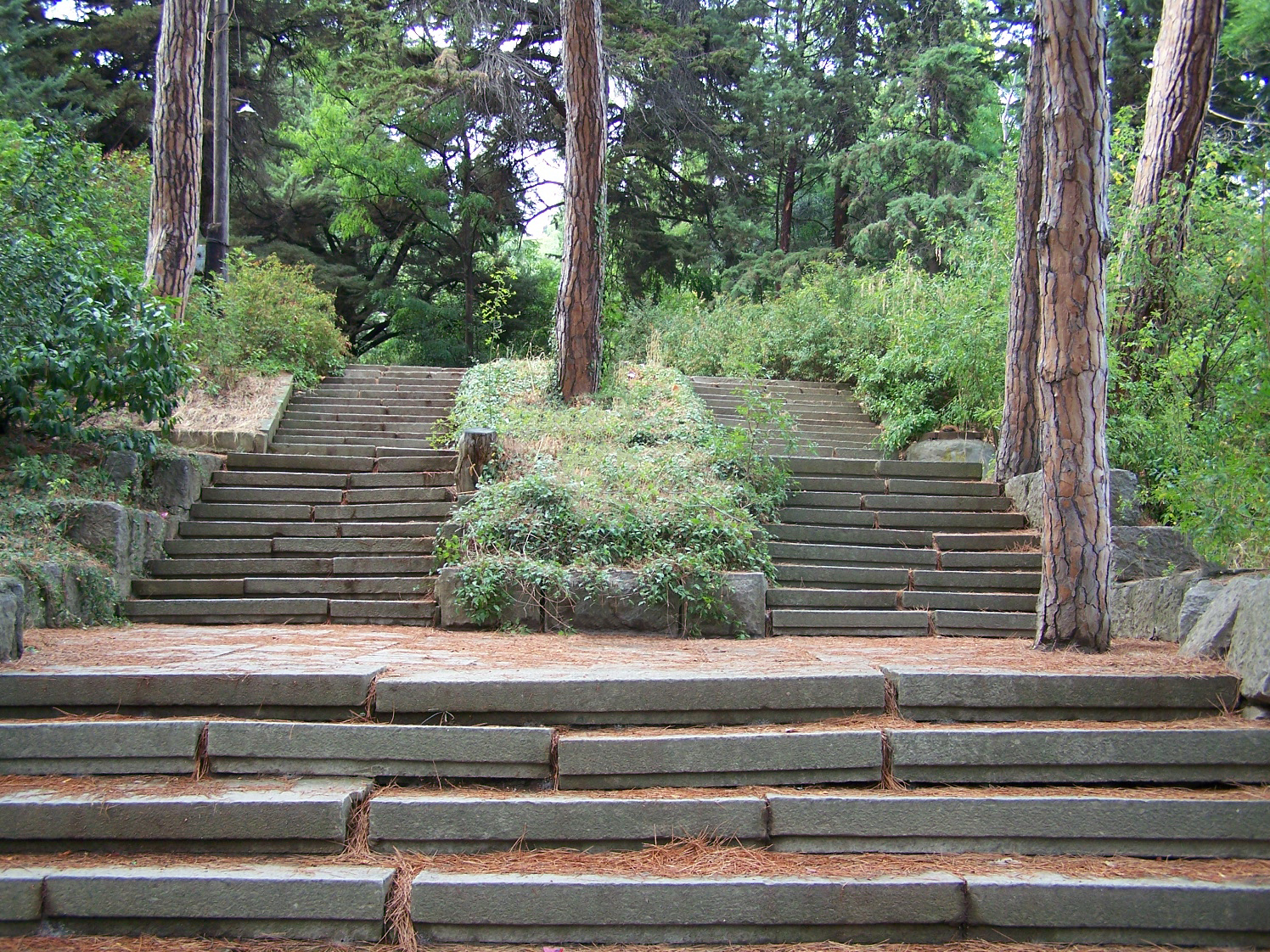
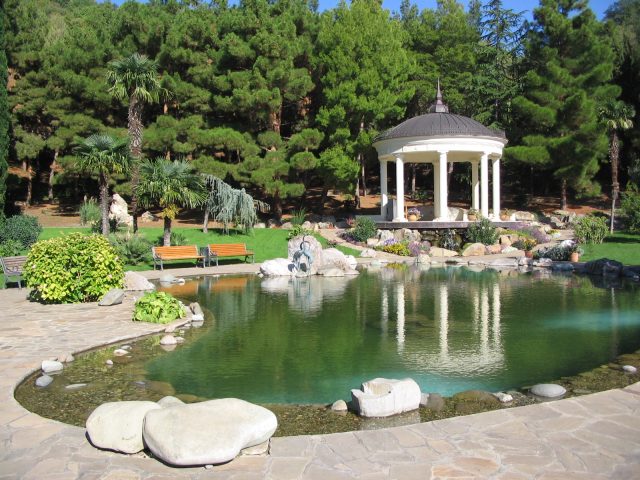
What makes Karasan truly special, however, is not the house itself but the land around it. The estate sits on a gentle slope descending toward the sea, and its park—one of the oldest and most carefully preserved in Crimea—is a masterpiece of landscape design. Planted in the late 1800s, it was conceived as a living catalog of the world’s flora, with species brought from across Europe, Asia, and even North America. Today, the park is a tangle of paths winding beneath towering pines, cypresses, and cedars, their branches filtering the sunlight into shifting patterns on the ground. There are magnolias that bloom in late spring, their waxy white flowers filling the air with a sweet, heavy scent, and rare palms that somehow thrive in Crimea’s mild winters. In autumn, the park turns into a blaze of color, with maples and oaks painting the hillsides in reds and golds. The sea is always visible from somewhere in the park, its presence a constant reminder of why this place was chosen in the first place.
The history of Karasan is as layered as the landscape. After Stakheev’s death, the estate changed hands several times, each owner leaving their mark in subtle ways. In the early 20th century, it became a sanatorium, a place where the ailing came to recover in the clean sea air, and later, during the Soviet era, it was repurposed as a rest home for writers and artists. The names of those who stayed here are not widely known, but the atmosphere of quiet creativity still lingers. There’s a sense that the place has always been a refuge—not just from the world, but from the noise of one’s own thoughts. Even now, when the estate functions as a cultural and recreational center, it retains that quality of retreat. Visitors come not for grand tours or Instagram moments, but for the chance to wander the paths, sit by the sea, and feel, if only for a few hours, as if they’ve stepped into another time.
The sea at Karasan is different from the one in the more tourist-heavy parts of Crimea. Here, the coastline is rocky and uneven, with small pebble beaches tucked between outcrops of limestone. The water is clear and cold, even in summer, and the currents can be strong, so swimming is often more of a bracing dip than a leisurely float. But that’s part of the appeal. There’s a wildness to this stretch of shore, a sense that nature hasn’t been entirely tamed. In the mornings, the mist often clings to the water, blurring the line between sea and sky, and by afternoon, the sun turns the waves into a shimmering expanse of blue. The best spot to take it all in is from one of the park’s terraces, where benches are strategically placed to offer views of the sea framed by the branches of ancient trees.
Beyond the estate, Partenit itself is a place that rewards slow exploration. Unlike the bustling towns further along the coast, it has no grand promenades or souvenir shops. Instead, it’s a quiet village where life moves at the pace of the seasons. The local market, held a few times a week, is a good place to pick up fresh figs, Crimean wine, or the kind of simple, hearty food that’s been eaten here for generations. There are a few small cafes where you can sit with a cup of strong Turkish coffee and watch the world go by, and if you’re lucky, you might stumble upon a local festival or a gathering of musicians playing traditional Crimean Tatar songs. The village is also a gateway to the surrounding hills, where hiking trails lead through forests and past ancient ruins, offering glimpses of a landscape that has changed little over the centuries.
Karasan is not a place you visit for a quick photo op or a checklist of sights. It’s the kind of estate that reveals itself slowly, in the details—the way the light falls through the trees in the late afternoon, the sound of the sea echoing through the park, the quiet conversations of other visitors who, like you, seem to have come here to escape something. There’s no grand narrative here, no dramatic history of battles or royal intrigues. Instead, it’s a place of small, almost imperceptible beauty, where the past feels present in the way the wind moves through the leaves or the way the house seems to breathe with the rhythm of the tides. It’s the kind of place that stays with you long after you’ve left, not because of anything specific you saw or did, but because of the way it made you feel—like you’ve touched something timeless, if only for a moment.