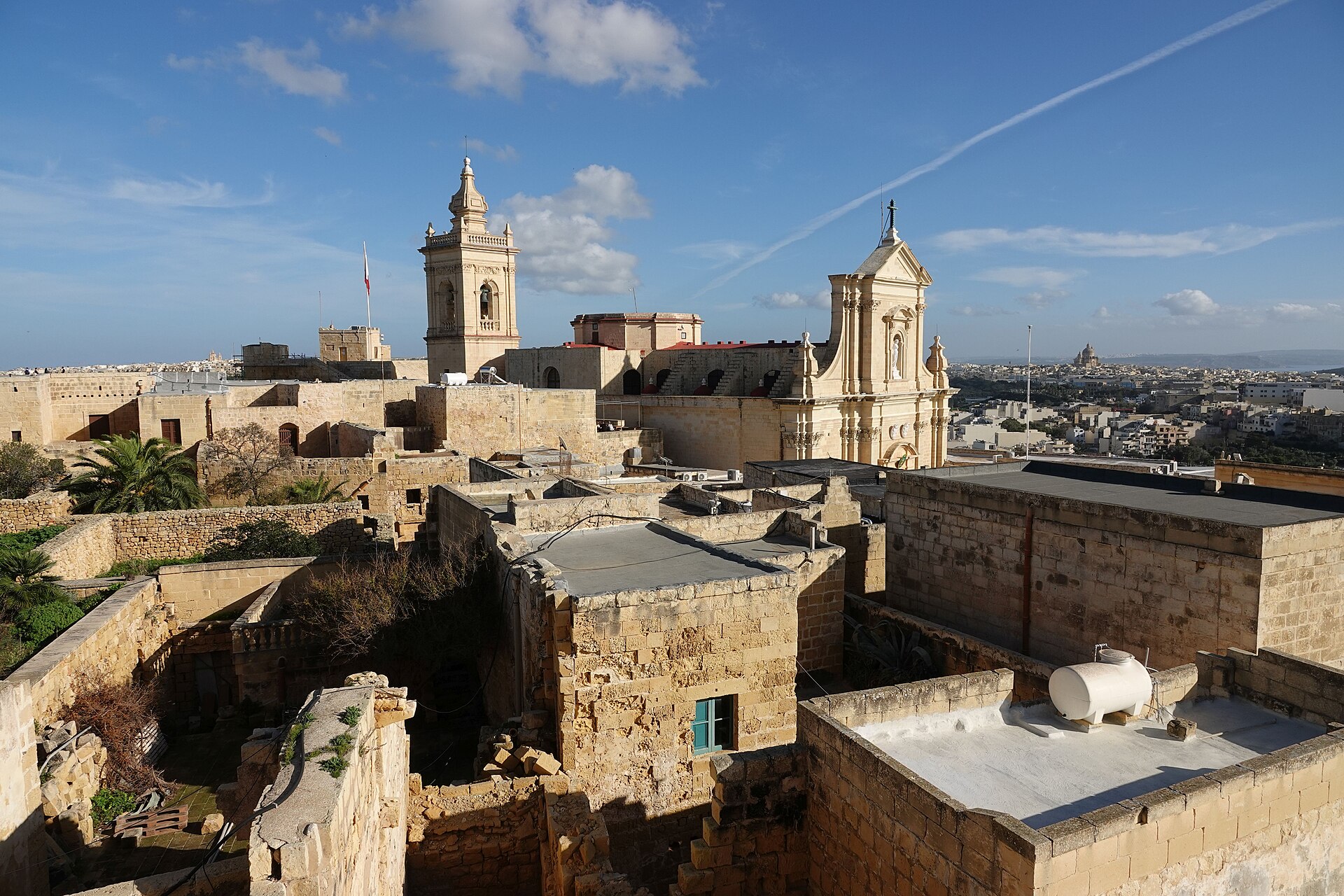
The Citadel of Gozo, known locally as *Il-Kastell*, stands as the ancient heart of Victoria, a town that feels like an island within an island. To reach it, you walk up through the narrow streets from the main square, where the modern world gradually gives way to something older, something built to last. The fortress looms ahead, its massive stone walls rising above the town, a silent guardian that has watched over Gozo for centuries. From its bastions, the view unfolds in every direction—red-tiled roofs clustered below, patchwork fields stretching across rolling hills, and beyond them, the endless blue of the Mediterranean, where sea and sky blur into one. It’s easy to imagine how life here once depended entirely on these walls, how they shielded families from pirates and invaders, how the very survival of the island hinged on their strength.
The history of the Citadel stretches back to the Bronze Age, when the hill was first fortified, though little remains of those earliest days. Phoenicians and Romans later recognized its strategic value, but it was the medieval period that shaped the fortress into what it is today. The turning point came in the 16th century, after a devastating Ottoman raid that left Gozo nearly depopulated, its people carried off into slavery. The Knights of Malta, who ruled the islands at the time, saw the need for a stronger defense. They rebuilt the Citadel from the ground up, reinforcing its walls, digging deep moats, and constructing bastions designed to withstand sieges. Inside, they ensured everything necessary for survival was within reach—wells for water, granaries for food, a church for faith, and even a prison for those who broke the law.
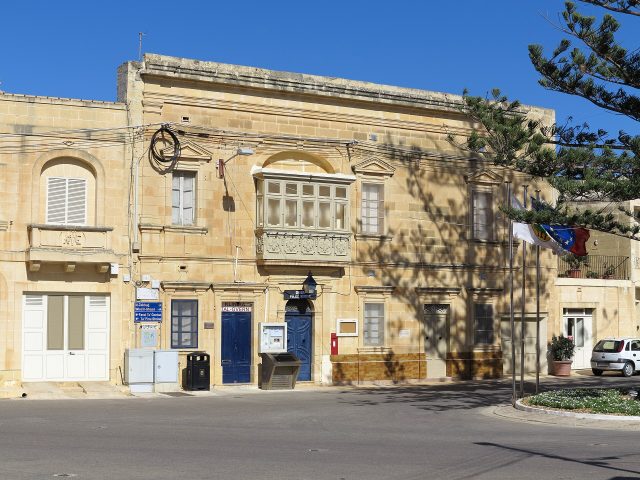
Stepping through the gates, you enter a place where time moves differently. The streets are narrow and uneven, paved with worn limestone that has been smoothed by generations of footsteps. The houses, many with their traditional wooden balconies, lean slightly, as if tired from centuries of standing. Some have been restored, their facades scrubbed clean, while others bear the marks of time, their shutters faded and their walls patched with mismatched stone. Unlike the crowded tourist spots elsewhere on the island, the Citadel feels quiet, almost forgotten. The only sounds are the occasional echo of footsteps, the distant cry of gulls circling overhead, and the wind whispering through the alleys. A few families still live here, their presence a reminder that this isn’t just a relic of the past—it’s a living place, however slowly it breathes.
At the center of the Citadel stands the Cathedral of the Assumption, its white facade a striking contrast against the fortress’s gray stone. Built in the late 17th century on the site of an older church, it dominates the skyline with its graceful columns and dome. Inside, the ceiling is a masterpiece of illusion—a flat surface painted to look like a soaring vault, a trick of perspective that still fools the eye. The locals take pride in pointing out that the dome isn’t real, that what appears three-dimensional is merely the work of a skilled artist. Nearby, a small museum holds fragments of Gozo’s past: Roman coins, medieval pottery, and everyday objects that tell the story of the island’s people. Each piece feels like a quiet conversation with history, a glimpse into lives that were lived within these walls.
Not far from the cathedral, the old prison offers a stark reminder of the fortress’s darker role. One of the few surviving medieval prison systems in Europe, its cells are little more than rough-hewn chambers carved into the rock. The walls are covered in graffiti—names, dates, crude drawings—left by prisoners over the centuries. Some were criminals, others debtors or political dissidents, all trapped in the same grim space. In one cell, the etchings of Maltese knights can still be seen, a reminder that even those who enforced the law could find themselves on the wrong side of it. The air here feels heavy, as if the weight of all those lost years still lingers.
The Citadel isn’t just a place to visit—it’s a place that comes alive with the rhythms of the island. Throughout the year, festivals and traditions breathe new energy into its ancient stones. In August, the Medieval Festival transforms the fortress into a scene from another era, with jousting tournaments, period music, and dancers in elaborate costumes. During Christmas, the cathedral’s nativity scene draws crowds, its intricate figures and soft candlelight creating a moment of quiet reflection. These events aren’t just performances; they’re a way for the people of Gozo to keep their history close, to remind themselves of where they’ve come from.
As the sun sets, the Citadel takes on a different character. The last visitors drift away, and the fortress is left to the fading light. Lanterns flicker along the walls, casting long shadows across the stone. If you climb to the bastions then, you’ll see Victoria spread out below, its lights twinkling like stars fallen to earth. The sea glows silver under the rising moon, and the air is cool and still. It’s in these moments that Gozo’s reputation as an island of tranquility makes sense. The Citadel, with its centuries of stories, feels like a place where time has settled into a slower, gentler pace.
Today, the fortress remains more than just a tourist attraction—it’s a symbol of Gozo itself. It holds the memories of the island, the triumphs and tragedies of those who lived within its walls. Walking through its streets, you can’t help but wonder about the countless lives that have passed through here, the hopes and sorrows that these stones have witnessed. Though it no longer serves as a fortress in the traditional sense, its purpose has evolved. Now, it guards something less tangible but just as vital: the spirit of Gozo, its traditions, and the quiet, enduring beauty of a place that has always been more than the sum of its history.