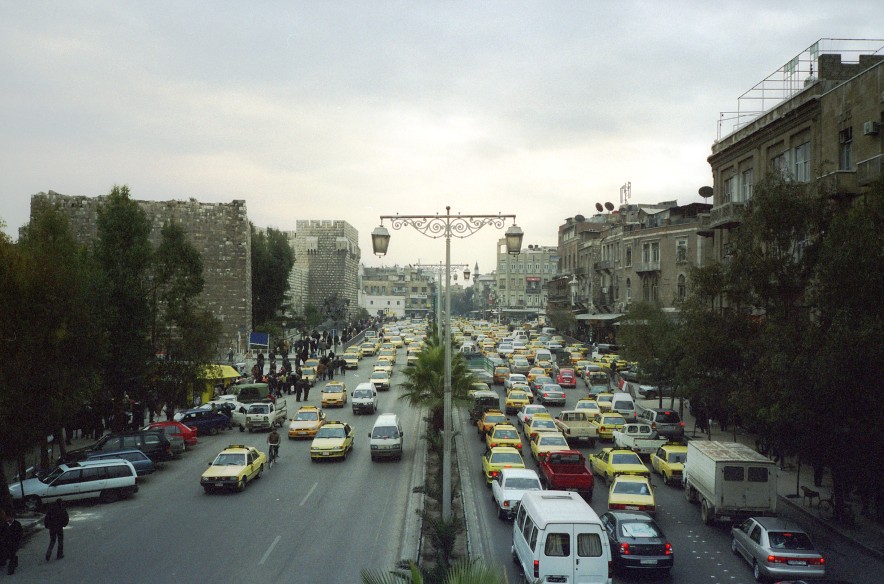
The Citadel of Damascus stands at the heart of one of the world’s oldest continuously inhabited cities, a silent monument to centuries of power, conflict, and resilience. Its massive walls and towers rise above the labyrinthine streets of the old city, a reminder of an era when control over this fortress meant dominion over the entire region. Built on layers of earlier fortifications, the citadel has watched over Damascus long before the city became the cultural and political crossroads it is today.
Though its earliest recorded construction dates to the 11th century under the Seljuk ruler Tutush ibn Alp Arslan, the site’s history stretches much further back. Archaeological evidence suggests that this ground was occupied as far back as the Bronze Age, later serving as a Roman and Byzantine stronghold. Over time, each ruling power left its mark, turning the citadel into a patchwork of architectural styles—where medieval Arab military design meets later Ottoman modifications. The result is a structure that feels less like a single building and more like a living record of the city’s evolution.
The citadel reached its golden age under the Ayyubids, when Damascus became a critical stronghold in the fight against the Crusaders. Saladin and his successors transformed it into an impregnable fortress, capable of withstanding prolonged sieges. Beyond its military function, the citadel was a self-sufficient world within walls—home to palaces, granaries, prisons, and even underground tunnels and cisterns that ensured water supplies during the harshest sieges. Some of these subterranean passages still exist, though most remain off-limits, their secrets preserved beneath the stone.
What defines the citadel’s architecture is its uncompromising practicality. The thick stone walls, narrow arrow slits, and strategically placed towers were built for defense, not aesthetics. Yet even in this fortress of war, there are glimpses of refinement—carved doorways, decorative arches, and fragments of mosaic work hint at the rulers who once lived here, balancing the need for security with the desire for grandeur. The contrast between the citadel’s brutal functionality and its occasional flourishes makes it all the more compelling.
After the Ayyubid dynasty fell, the citadel remained a vital part of Damascus. The Mamluks and later the Ottomans used it as an administrative hub and military base. Under Ottoman rule, it housed Janissary garrisons and, in later years, a prison. By the 19th century, as Damascus became a provincial city within the empire, the citadel’s strategic importance waned. The last military units left in the early 20th century, and since then, it has stood as a historical monument rather than an active stronghold.
Today, walking through the citadel’s inner courtyard feels like stepping into another time. The remnants of palaces, a mosque, bathhouses, and even a small market evoke the bustling life of the Crusader era or the reign of the Mamluk sultans. The main tower offers one of the best views of the old city—its narrow alleys, minarets, and flat-roofed houses stretching out below, a scene that has changed little over centuries. There’s a quiet intimacy to the place, as if the walls are whispering stories to those who pause long enough to listen.
Not all of the citadel is open to visitors. Some sections have suffered from neglect and conflict, while others are undergoing restoration. Yet even in its current state, the fortress leaves a lasting impression. Unlike more famous Middle Eastern citadels, it doesn’t draw crowds, which only adds to its atmosphere—serene, contemplative, almost forgotten. It’s a place where history feels tangible, where the weight of the past lingers in the cool shade of its arches and the worn stones underfoot.
More than just a relic of military architecture, the Citadel of Damascus is a symbol of the city’s endurance. It has survived sieges, conquests, and shifting empires, standing as a testament to Damascus’s role not only as a center of trade and culture but as a prize fought over by some of history’s greatest powers. Today, as the city slowly rebuilds, the citadel remains a steadfast landmark—a place where the past and present intersect, and where the stories of those who came before are still very much alive.