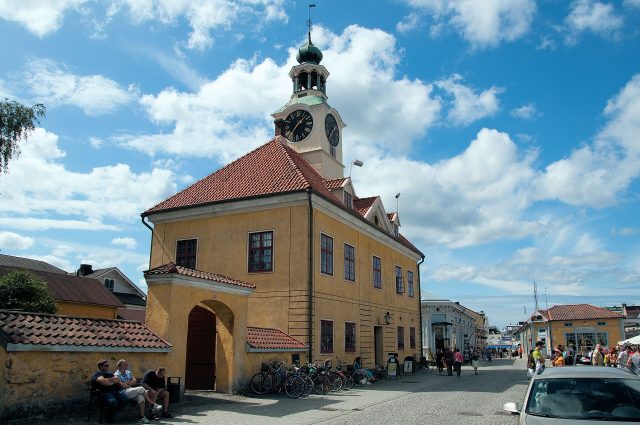
Perched on a gentle rise in the heart of Old Rauma, the Church of the Holy Trinity has watched over the town for more than five centuries. Its sturdy stone walls stand in quiet contrast to the surrounding wooden houses, their warm red-brown facades softened by time and weather. Unlike many of Finland’s medieval churches, this one has survived wars, fires, and the slow erosion of centuries largely intact. Inside, there is no gilded opulence—just the quiet dignity of Gothic vaults and the subtle elegance of later additions, preserved almost exactly as they were when first built.
The architecture tells a story of shifting eras. The original structure, raised in the fifteenth century, bears the hallmarks of Gothic design: pointed arches, slender windows, and sturdy buttresses that once supported a roof far heavier than today’s. By the seventeenth century, tastes had changed. A new bell tower rose in the restrained Protestant style, while the interior gained wooden galleries and a richly carved Baroque pulpit. The roof itself is a marvel of practicality—its steep pitch sheds snow effortlessly in winter, while in summer, the dark tiles shimmer with a bluish sheen under the pale northern light. Inside, tall windows filter the daylight, casting a soft glow over whitewashed walls that have seen generations come and go.
Rauma has always been a town of traders, its fortunes tied to the Baltic Sea. The Church of the Holy Trinity was more than a place of worship—it was a landmark for Hanseatic merchants, a gathering point for fishermen, and a silent witness to the ebb and flow of power. When Sweden ruled Finland, the church became a symbol of resistance to Catholic influence, its Protestant leanings reflecting the changing tides of faith. Remarkably, some of its fifteenth-century frescoes survived the Reformation, when countless religious images were whitewashed or destroyed. The surviving paintings are simple, almost naive in their execution, yet striking in their detail—Biblical scenes rendered with a directness that feels both ancient and immediate.
The interior is uncluttered. Wooden pews lead the eye toward the altar, where a nineteenth-century triptych stands as the focal point. There are no grand tombs or marble monuments, just a handful of memorial plaques and the occasional flicker of candlelight. The organ, installed in the late 1800s, fills the space with a deep, resonant sound when played. On quiet afternoons, the only noise might be the creak of floorboards or the distant murmur of visitors.
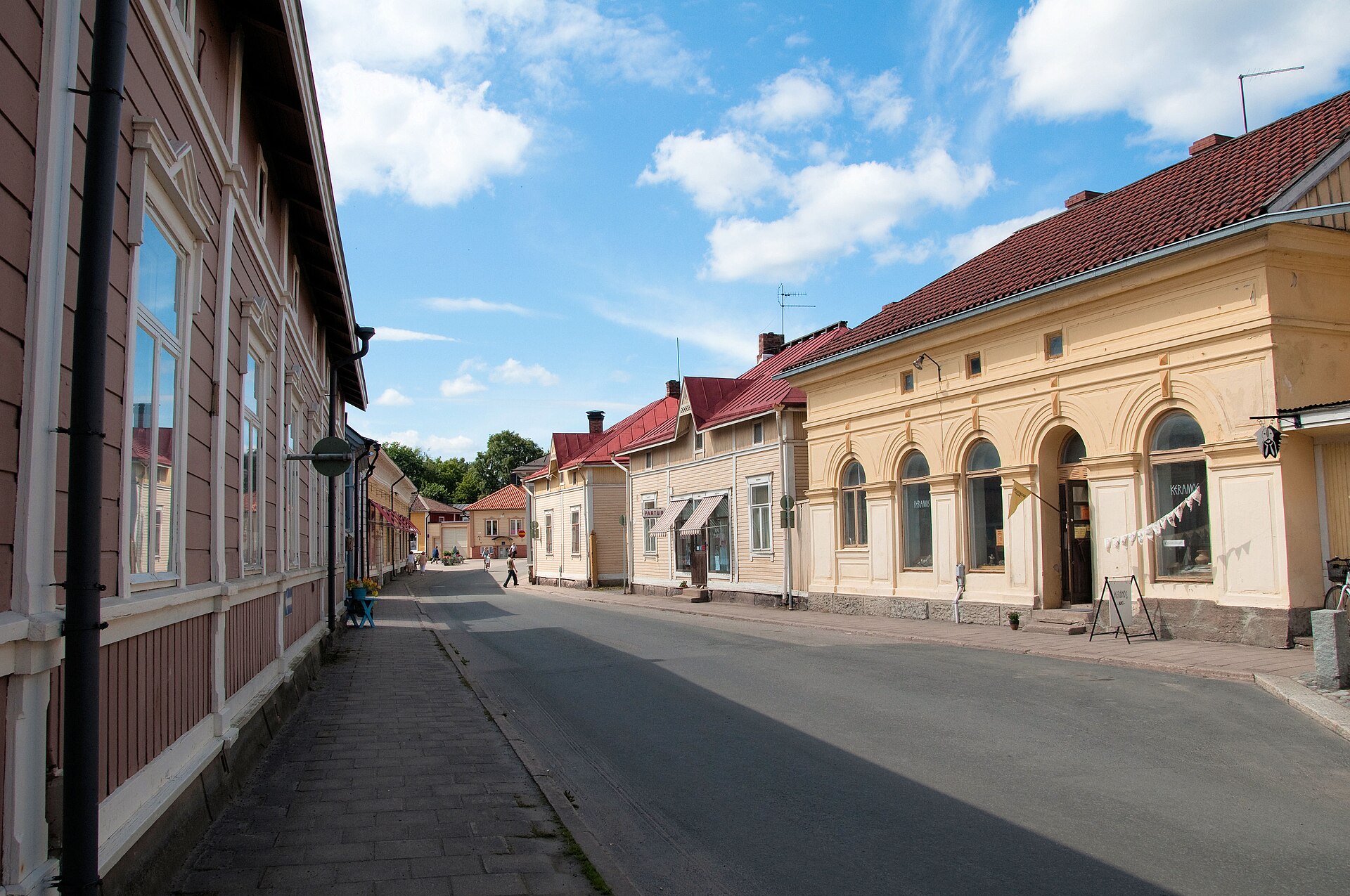
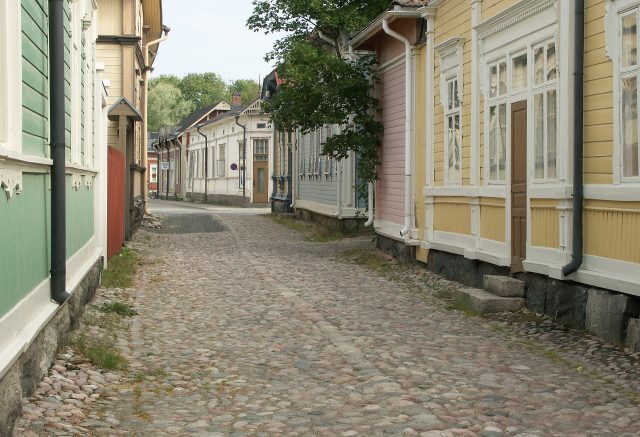
The church remains a living part of Old Rauma. On Sundays, hymns and the swell of the organ spill into the streets, drawing locals and visitors alike. In summer, tourists wander in from the UNESCO-listed old town, where narrow cobblestone lanes wind past houses with intricate wooden trim and small shops selling handmade crafts. The atmosphere is one of timelessness—an impression only strengthened by the way the church blends seamlessly into its surroundings, as if it has always been there.
Winter transforms the place entirely. Snow drifts over the roof and piles against the stone walls, while inside, the air is warm with the glow of candles and the hum of the old heating system. The crowds thin, leaving space to notice details that might otherwise go unremarked: the blackened beams overhead, the worn patches on the pews, the way the light slants through the windows in the late afternoon. Occasionally, a Christmas concert fills the space with the scent of pine and the sound of traditional carols, a reminder that this is still a place of gathering, not just a relic.
What makes the Church of the Holy Trinity special is its lack of pretension. There are no museum labels, no interactive displays—just stone, wood, and the quiet accumulation of history. It doesn’t try to impress or dazzle; it simply endures, much like the town around it. For those who take the time to sit in one of the pews and look around, it offers something rare: a direct connection to the past, unfiltered and unadorned. It’s not a grand cathedral or a tourist attraction in the usual sense—just an old church, still very much alive.