Jelgava is one of those places that rarely makes it onto the average traveler’s itinerary, overshadowed by Riga’s vibrant streets or the Baltic coast’s sandy beaches. Yet tucked away in what was once the heart of the Duchy of Courland, this quiet city holds one of Latvia’s most unusual churches. The Holy Trinity Church doesn’t fit the mold of the region’s typical sacred architecture—no soaring Gothic spires, no austere Orthodox domes. Instead, it stands as a quiet testament to the layers of history that have shaped this corner of the Baltics, blending Baroque grandeur with neoclassical restraint and even hints of medieval fortification. Built in the 18th century, it was more than just a place of worship; it became a symbol of the transformations sweeping through this small but influential duchy.
The church’s story is inseparable from that of Courland itself, a modest yet significant state that existed from the 16th to the 18th century. It was commissioned by Duke Ernst Johann Biron, a man whose name is often linked to the intrigues of the Russian imperial court, where he served as a favorite of Empress Anna Ioannovna. For the design, Biron turned to Bartolomeo Rastrelli, the Italian architect best known for his opulent work in St. Petersburg. But in Jelgava, Rastrelli created something far more intimate—a building meant to reflect the status of the ducal residence without overwhelming its modest scale. The result was a structure that balanced ambition with restraint, a fitting metaphor for Courland’s own place in history.
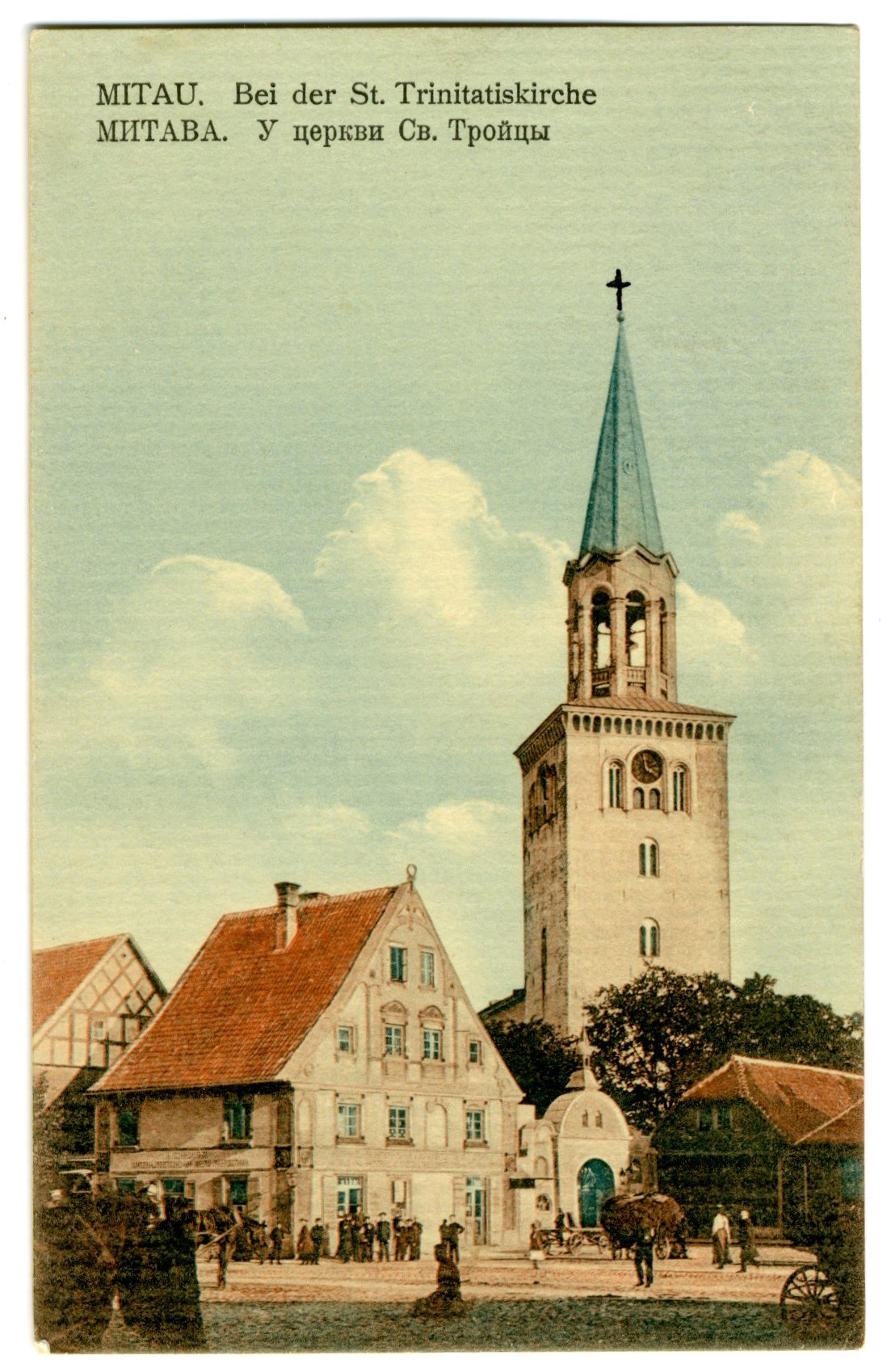
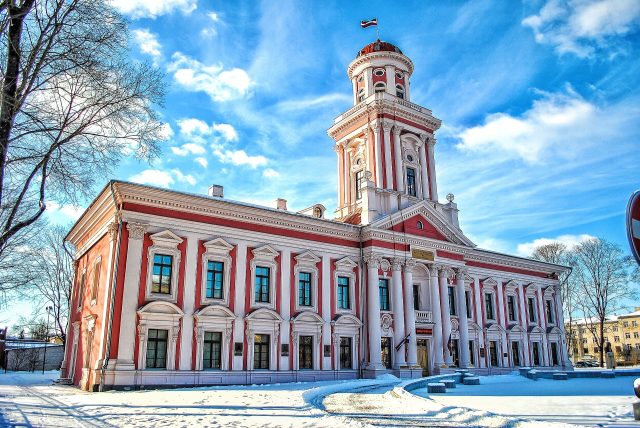
From the outside, the church commands attention without being imposing. Its facade is a study in contrasts: the clean lines of neoclassical pilasters and pediments meet the ornate flourishes of Baroque detailing—elaborate stucco, cartouches, and sculptural elements that add a touch of drama. The bell tower, rising above the surrounding rooftops, is striking but not overpowering, a subtle nod to the grander cathedrals of Europe. Originally, the church was meant to be part of a larger complex that included the ducal palace, but those plans never fully materialized. Today, it stands slightly apart, framed by a park and the faded elegance of nearby historic buildings, a quiet reminder of the city’s former prominence.
Inside, the church retains much of its 18th-century character, though time and circumstance have left their mark. The main altar, a masterpiece of Baroque craftsmanship, gleams with gilded carvings and paintings, among them a depiction of the Holy Trinity that draws the eye. The interior is a lesson in harmony—high vaulted ceilings, large windows that bathe the space in soft light, and understated yet refined decoration create an atmosphere of serene dignity. The choir loft, once home to an organ, and the intricately carved wooden pews, still bearing the patina of age, offer glimpses into the church’s past. It’s a space that feels both grand and intimate, a place where history lingers in the details.
Like Jelgava itself, the church has weathered its share of upheavals. After Courland was absorbed into the Russian Empire in the 19th century, the church lost its status as a court chapel and became a simple parish church. The 20th century brought further trials: during World War I, the building suffered damage from shelling, and in the Soviet era, it was repurposed for secular uses—warehouses, workshops, even a gym. It wasn’t until the late 20th century that restoration efforts began to peel back the layers of neglect, gradually returning the church to its original splendor. Today, it serves as both an active place of worship and a quiet monument to the past, open to those who wish to step inside and linger for a while.
Jelgava often feels like a city caught between worlds—between Riga and the coast, between Latvia and Lithuania, between the weight of history and the rhythm of modern life. The Holy Trinity Church embodies that in-betweenness. It doesn’t demand attention like Riga’s grand Dome Cathedral, nor does it retreat into obscurity like a rural chapel. It simply exists, a steady presence in a city where time moves at its own pace. For those who take the time to visit, it offers a glimpse into a chapter of Baltic history that isn’t often told—the story of a small duchy that once played a role far larger than its size.
There’s no need for elaborate planning to visit the church. It sits in the heart of Jelgava, a short walk from the main square and the former ducal palace. The surrounding park is a pleasant place to wander afterward, and in warmer months, it often hosts concerts and festivals that add a touch of liveliness to the historic setting. The church itself doesn’t feel like a museum; it’s a living space where services are still held, where the echoes of hymns and prayers blend with the quiet rustle of visitors exploring its halls. That sense of continuity is what makes it memorable—not just as an architectural curiosity, but as a place where the past and present coexist.
For anyone with an interest in Baltic history, the Holy Trinity Church is a compelling starting point for exploring Jelgava. The city, once the capital of a duchy, still holds traces of its former significance—crumbling castle ruins, stately old mansions, and streets that whisper of a more prosperous era. But this church, built at the behest of one of the region’s most enigmatic rulers, remains the most vivid reminder of a time when Courland was a player in its own right on the European stage. The grandeur of that era may be long gone, but the church endures, a quiet witness to the ebb and flow of history.