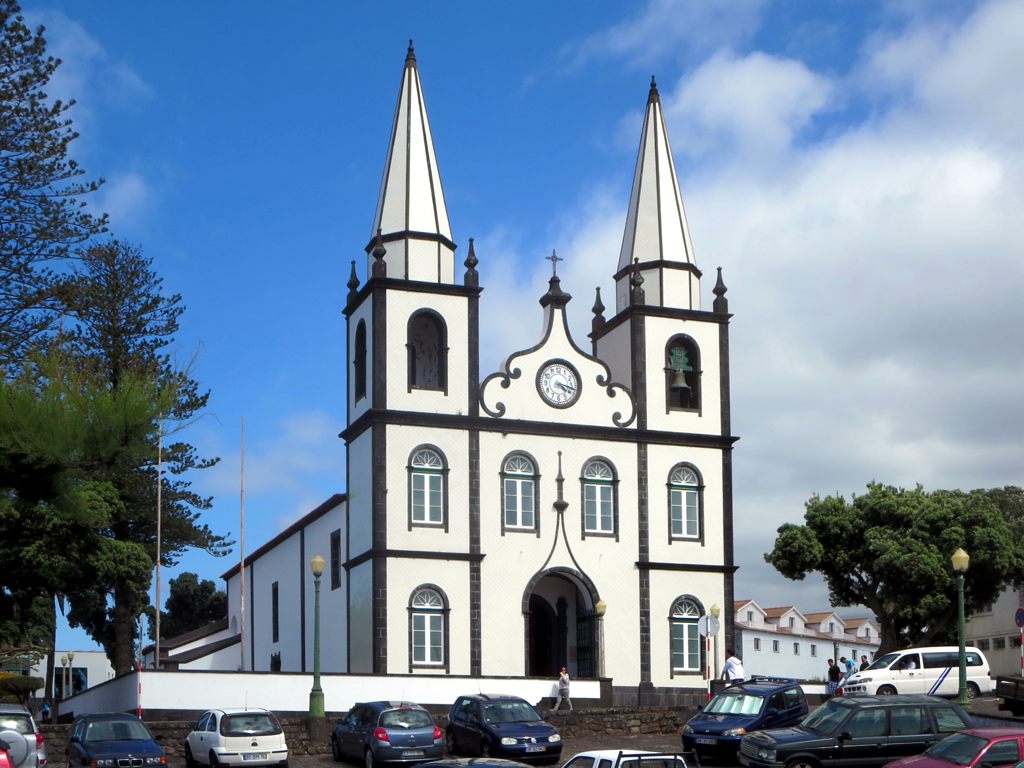
The Church of Saint Mary Magdalene in Madalena is a quiet place on Pico Island where time seems paused, preserving the spirit of centuries past. It sits in the town's heart, surrounded by low houses with black basalt walls, a signature of the Azores. From the outside, the church appears unassuming—whitewashed walls, a simple pediment, and a bell tower with two bells. This simplicity makes it feel like part of the landscape, shaped by the sea and the volcano.
The church dates to the 16th century, when Portuguese settlers first arrived on Pico. The earliest records mention it in 1542 as a small chapel. As Madalena grew, so did the building, expanding over time. Its current form took shape in the 18th century, reflecting the restrained influence of Baroque architecture on these remote islands. Inside, wooden pews, a simple altar, and a few old icons fill the space. What matters here isn’t grandeur, but the stillness, broken only by the wind outside.
The church has long been Madalena’s center.
Locals gathered for services, festivals, baptisms, and weddings. In the 19th century, when Pico was a whaling hub, sailors prayed here before setting out to sea, and their families prayed for their safe return. Whaling is gone, but its memory remains. Nearby, a museum displays old harpoons and boats, and the church sometimes hosts exhibitions on the island’s maritime history.
The church’s architecture is typical of rural Azorean churches—thick volcanic stone walls that keep the interior cool in summer and warm in winter, a simple gabled facade with a small window above the entrance, and a bell tower attached to the side. Inside, wooden beams stretch across the ceiling, carved by local craftsmen long ago, while the floor is made of stone slabs worn smooth by time. The altar has gilded carvings, but even these are understated. In the side niches stand statues of saints, with Saint Mary Magdalene, the town’s patron, taking a place of honor.
The church is part of daily life in Madalena. It hosts major religious celebrations—Christmas, Easter, and the feast day of Saint Mary Magdalene in July. On these occasions, the square fills with people, music plays, and meals are shared outdoors. In summer, tourists visit to understand local culture. Even then, it never feels crowded. The island moves at its own pace.
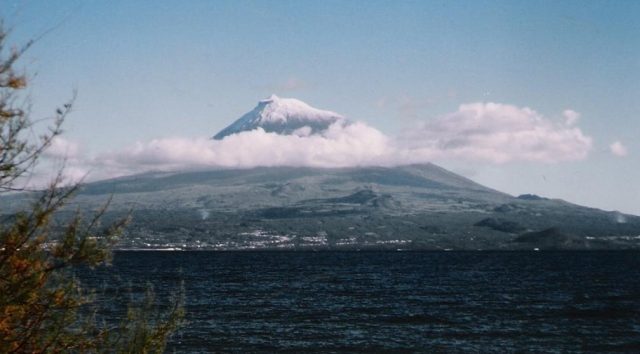
The area around the church is worth exploring. From here, you can see Faial, which on clear days appears close enough to make out the houses in Horta. Ferries shuttle between the islands, and if you climb the small hill behind the church, you can watch them glide across the water. Madalena has no busy waterfronts—just calm, and the church embodies that.
For those who come to Pico for its history, this church offers something special. It’s not like the grand cathedrals of Lisbon or Porto. There are no crowds of tourists, no rush—just the wind, the sea, the cry of gulls, and the feeling that time moves differently here. That’s why the locals love it. It’s not just a building; it’s part of their lives, their memories, their island.