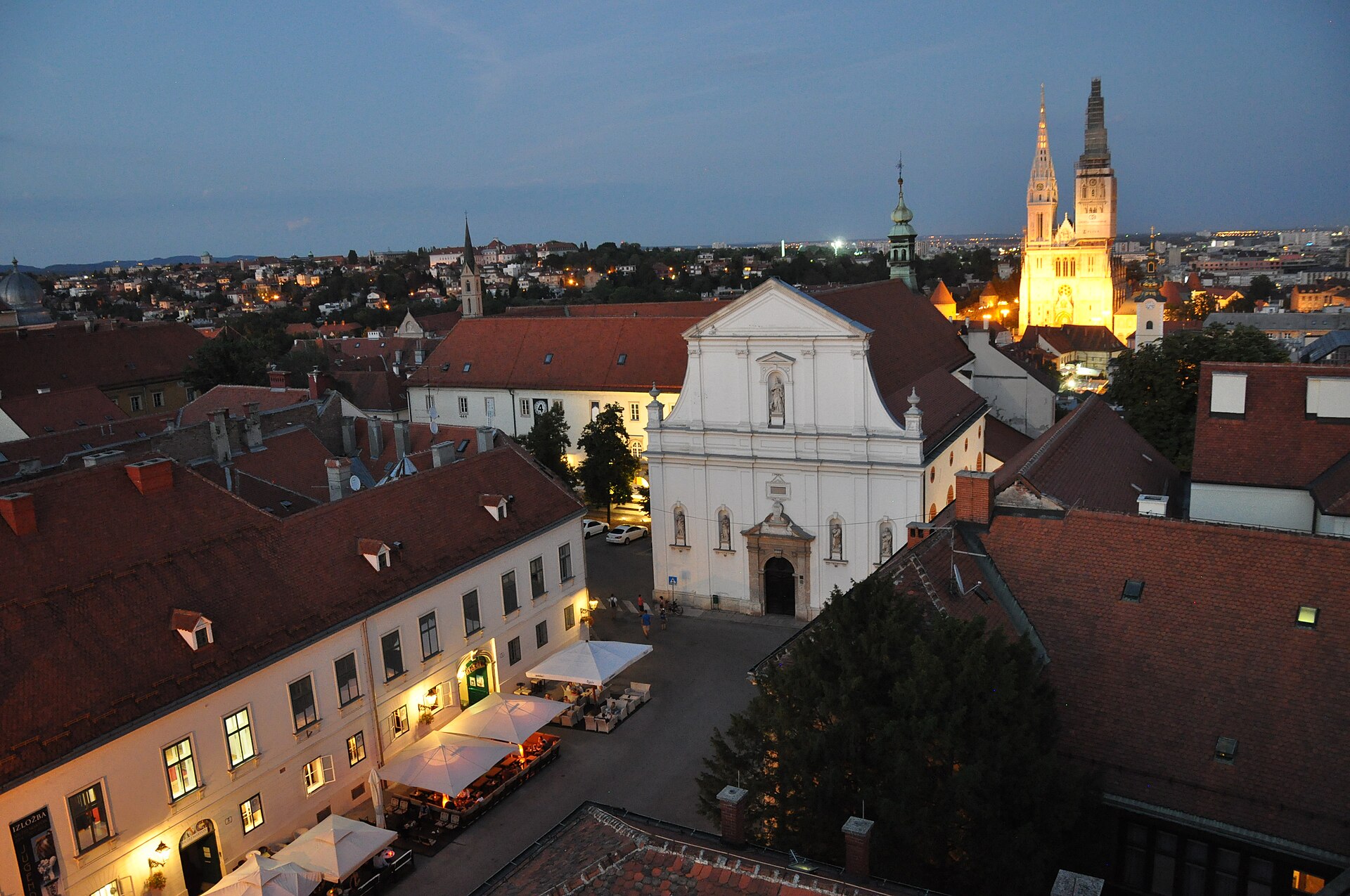
St. Catherine’s Church in Zagreb is one of those rare places that feels untouched by time. Tucked away in the heart of the Upper Town, it stands on a quiet square where the cobblestones and surrounding buildings seem to whisper stories of centuries past. Built in the early 17th century, the church is more than just a place of worship—it’s a cornerstone of Croatian Baroque architecture, a testament to the influence of the Jesuits who brought their grand vision of art and faith to Zagreb.
From the outside, the church appears unassuming, especially when compared to the more ornate structures that would later rise in the city. Its pale stone facade is simple, almost austere, yet there’s a quiet elegance to it. The main entrance is framed by a modest portal adorned with reliefs, and above it, a small pediment adds a touch of grace. But step inside, and the contrast is striking. The interior is a world of opulence, where high vaulted ceilings, gilded altars, and intricate frescoes create an atmosphere of reverence and awe.
The centerpiece is the main altar, dedicated to St. Catherine of Alexandria. Crafted with illusionistic painting techniques, it gives the impression of marble columns and saintly figures coming to life under the soft, shifting light. Flanking the altar are side chapels, each with its own history and artistic significance. One honors St. Ignatius of Loyola, the founder of the Jesuit order, its walls adorned with scenes from his life. Another houses the relics of St. Francis Xavier, the missionary whose legacy is deeply tied to the Jesuits. These spaces aren’t just decorative—they’re narratives in stone and paint, telling stories of faith and devotion.
The frescoes that cover the ceilings and walls are among the church’s most breathtaking features. Painted in the 18th century by the Italian artist Francesco Robba, they transform the vaults into a celestial canvas. Biblical scenes, allegories of virtue, and depictions of saints unfold with such dynamism that the figures seem to float in midair. The most mesmerizing is the composition in the dome, where angels and saints spiral upward in a swirling dance, drawing the eye toward the heavens. Sunlight filters through the tall windows, catching the gold leaf and vibrant hues, creating a shimmering effect that makes the paintings feel alive.
St. Catherine’s is deeply woven into Zagreb’s history. The 17th century was a time of growth for the city, and the arrival of the Jesuit college—of which the church was a part—marked a turning point. The college became a hub of learning and culture, attracting scholars, artists, and architects who shaped the city’s identity. The church itself was more than a place of prayer; it was a showcase of the Jesuits’ power and influence, a symbol of Zagreb’s ambition to stand among Europe’s great cities. In an era when the city was small but determined, St. Catherine’s became one of its defining landmarks.
Over the centuries, the church has weathered its share of hardships. Earthquakes, fires, and wars have left their marks, yet each time, it was restored, its original spirit preserved. In the 19th century, under Austro-Hungarian rule, the church remained a vital part of Zagreb’s life, hosting not just religious services but also concerts, lectures, and public gatherings. After Yugoslavia’s dissolution in the 20th century, it regained its role as both a spiritual and cultural center, drawing visitors who come as much for its art and history as for its sacred atmosphere.
Today, St. Catherine’s is more than just an architectural monument—it’s a living space where the past and present coexist. Services are still held here, the sound of the organ echoing through the nave, while the silence of the walls is broken only by the soft footsteps of visitors. Unlike many tourist sites, there’s no rush, no crowd. You can stand in the middle of the aisle, tilt your head back, and lose yourself in the frescoes, trying to decipher their symbolism. Or you can sit on one of the wooden pews and listen to the way sound travels through the high vaults, as if time itself has slowed.
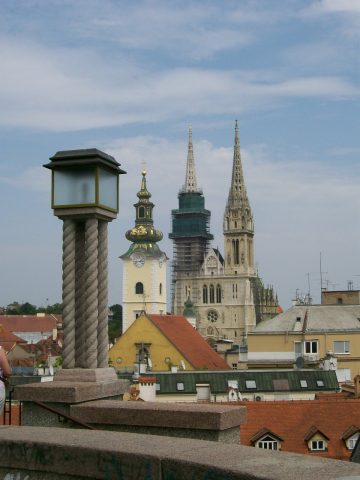
Outside, a small garden offers a peaceful retreat from the city’s hustle. In warmer months, it’s a place to sit and take in the view—the rooftops of the Upper Town, the spires of other churches, the green hills that cradle Zagreb. It’s easy to imagine life here centuries ago, when the church was a daily presence in people’s lives, not just a landmark but a part of their world. St. Catherine’s isn’t just an ornament to the city; it’s a reminder that history isn’t just about dates and events, but about the people who built it, the faith that inspired them, and the beauty they left behind.
Visiting St. Catherine’s is a chance to connect with Croatia’s past, to understand how its culture took shape and what ideas drove its creators. There’s no grand spectacle here, no over-the-top flourishes—just a sense of harmony and balance. That might be why it feels so compelling. It doesn’t demand attention; it simply exists, offering something different to everyone who walks through its doors. For some, it’s a place of prayer. For others, it’s an open-air museum. And for a few, it’s just a quiet corner where the world slows down, and for a moment, you can breathe.