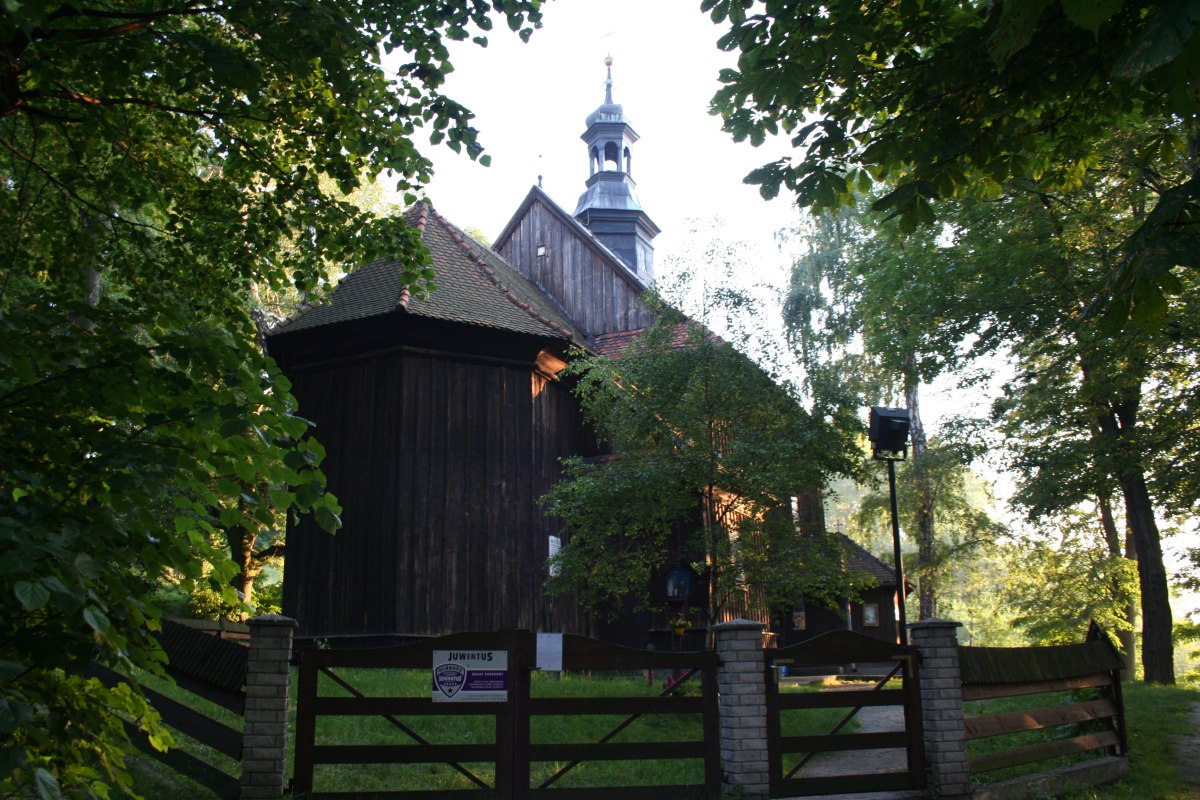
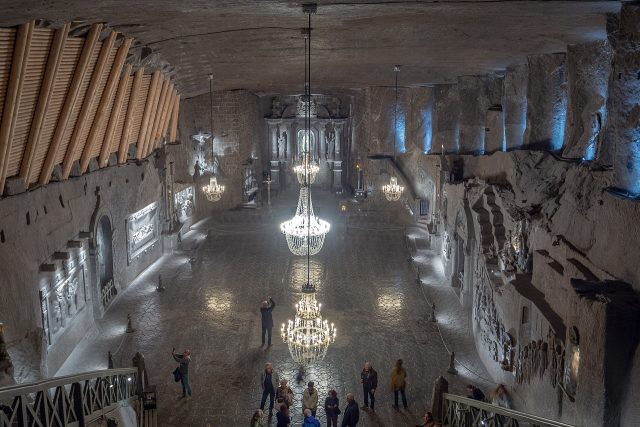
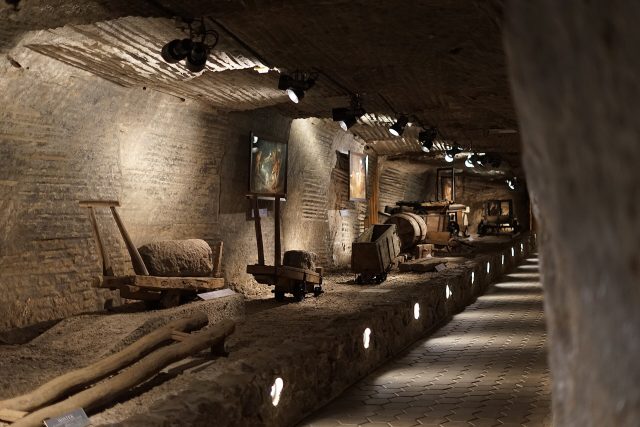
Perched on a gentle hill overlooking the quiet streets of Wieliczka, the Church of St. Sebastian feels like a place where time has settled into stillness. Built in the early 16th century, it stands as a quiet witness to the town’s history, its red-brick walls holding stories of faith, resilience, and the everyday lives of those who once gathered within them. Wieliczka is best known for its sprawling salt mine, a marvel of human ingenuity, but this small church offers something different—a sense of continuity, a connection to the past that feels intimate rather than grand.
The architecture is unassuming yet striking, a blend of late Gothic simplicity and the subtle elegance of Renaissance influences. The exterior is marked by its clean lines, the pointed arches of its windows, and the sturdy buttresses that give the structure its quiet strength. Inside, the space opens up with a surprising sense of light, streaming through tall windows that soften the stone walls. The main altar, a later Baroque addition, contrasts with the Gothic framework, a reminder of how tastes and styles evolved over the centuries. It’s a place where history isn’t just preserved but layered, each era leaving its mark without erasing what came before.
Wieliczka’s story is inseparable from salt. Founded in the 13th century, the town grew around its mines, which shaped its economy, its culture, and even its identity. The Church of St. Sebastian was more than just a place of worship—it was a sanctuary for miners and townsfolk alike, a refuge in a world where hardship was never far away. St. Sebastian, the patron saint of archers and a protector against plague, was a figure of particular devotion in medieval Europe, when outbreaks of disease could devastate communities overnight. It’s easy to imagine why the church was dedicated to him, a symbol of hope in uncertain times. Over the years, it became a gathering place not just for prayer but for the practical matters of daily life, where decisions were made and bonds were strengthened.
The interior of the church holds small but telling details. Faded frescoes cling to the walls, their colors muted by time but still hinting at the skill of the artists who painted them. The wooden pews, worn smooth by generations of hands, bear intricate carvings that speak to the craftsmanship of local woodworkers. The organ, installed in the 18th century, is modest in size but rich in sound, its notes filling the space with a solemn beauty. Scattered throughout are memorial plaques and tombstones, each one a tribute to the people who shaped Wieliczka’s history. These aren’t the grand monuments of kings or conquerors but the quiet markers of lives lived in service to the town, a reminder that history is made up of ordinary people as much as extraordinary events.
Beyond the church, a small park unfolds, its paths winding beneath old trees that cast dappled shadows on the ground. From here, the view stretches over Wieliczka, the rooftops and spires of the town giving way to the rolling hills beyond. It’s a place where locals come to walk, to sit, to escape the pace of modern life for a little while. In the summer, the park hosts small concerts and gatherings, the church’s doors thrown open to music and laughter. In winter, the scene is quieter, the air crisp, the church’s interior warm with candlelight and the scent of incense. There’s a sense of timelessness here, as if the seasons pass without leaving a trace, the same as they have for centuries.
What makes the Church of St. Sebastian special isn’t its size or its grandeur but its authenticity. It’s not a place that demands attention or crowds of tourists; instead, it offers something rarer—a moment of stillness, a chance to step away from the noise of the world. For the people of Wieliczka, it’s a touchstone, a place where they can pause and remember what endures. The church has seen wars and plagues, prosperity and hardship, yet it remains, unchanged in its essential purpose. It’s a place where the past isn’t just remembered but lived, where the act of lighting a candle or sitting in silence connects you to those who came before.
Today, the church is still very much alive. Services are held regularly, and visitors are welcome to step inside, whether to pray, to admire the architecture, or simply to soak in the atmosphere. There are no ropes or barriers, no strict rules about where you can go or what you can touch. It’s a place that feels lived-in, not like a museum exhibit but like a home that has been shared with the public. That openness is part of its charm, a reminder that some things—faith, community, the quiet rhythms of daily life—don’t need to be preserved behind glass to remain meaningful.
For those visiting Wieliczka, the Church of St. Sebastian is a detour worth taking. It’s a short walk from the town center, up a gentle slope lined with houses that seem to belong to another era. The streets are quiet, the pace unhurried, and the church itself feels like the natural endpoint of the journey. It’s a place to catch your breath, to look out over the town and think about how much has changed—and how much has stayed the same. In a world that moves too fast, it’s a reminder that some things are meant to endure, not as relics of the past but as living parts of the present.