Deep beneath the quiet town of Wieliczka, just outside Kraków, lies a world carved entirely from salt. The Wieliczka Salt Mine is one of those rare places that feels suspended in time, where the weight of history presses against you not as a burden, but as something alive. For over seven hundred years, miners have hollowed out these tunnels, turning what was once a practical necessity into something far greater—a testament to human endurance, creativity, and the quiet magic of labor. Today, the mine is a museum, though not in the way most people understand the word. Here, the walls themselves are the exhibit, their layers telling stories of trade, faith, and artistry in a language older than the written word.
The mine’s origins trace back to the Middle Ages, when salt was more than just a seasoning—it was survival. Without it, food spoiled, economies faltered, and entire communities risked starvation. Wieliczka, with its rich deposits, became a cornerstone of medieval commerce, its salt traded across Europe like liquid gold. The miners who worked here were no ordinary laborers; they were craftsmen, shaping the earth with little more than picks and sheer determination. Over centuries, their work expanded into a sprawling underground network, stretching over three hundred kilometers in places. Only a fraction of that is accessible today, but even that small portion feels vast, a labyrinth where every turn reveals something new.
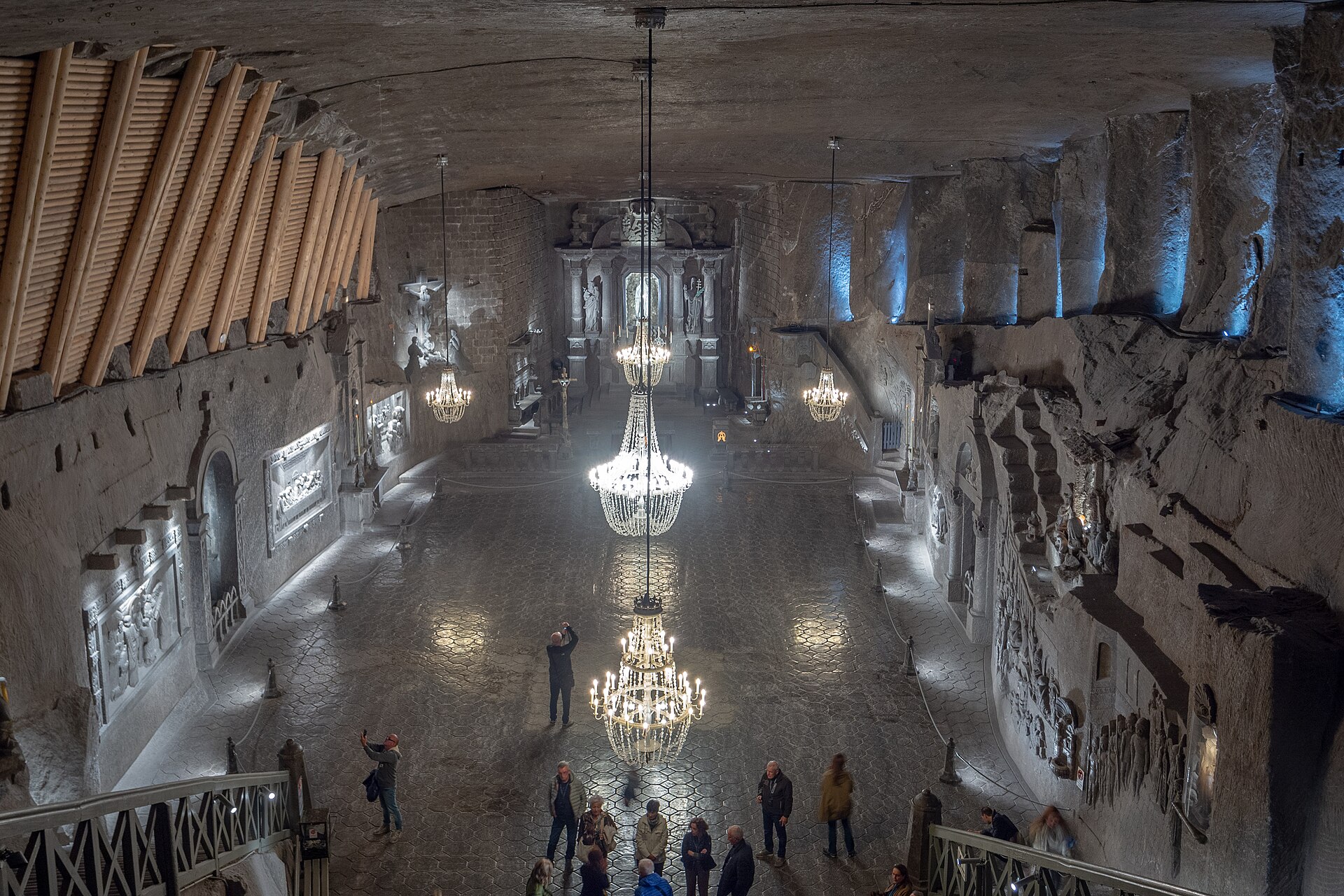
What makes Wieliczka extraordinary is not just its scale, but the way it was built. There’s a deliberate beauty to the underground chambers, as if the miners weren’t just extracting salt, but sculpting it. The walls glow with a soft, pearlescent sheen, polished smooth by centuries of hands and tools. Wooden beams, miraculously preserved despite the damp, crisscross the ceilings like the ribs of some great subterranean beast. And then there are the carvings—figures of saints, miners, and mythical creatures, all hewn from the same salt that once fed kingdoms. The most breathtaking of these is the Chapel of St. Kinga, a cathedral carved entirely from salt. Chandeliers, altars, even the floor—everything shimmers with a faint, otherworldly light. Mass is still held here, and standing in that quiet space, it’s easy to forget you’re hundreds of meters underground.
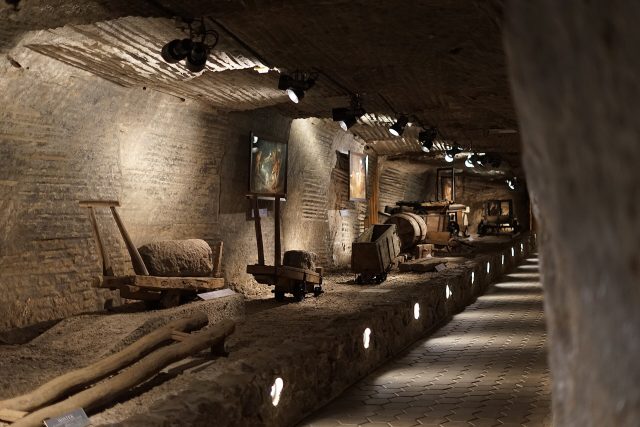
The mine has never been static. In the 19th century, steam engines were introduced, followed by electric lights that transformed the tunnels into a glowing maze. Today, visitors descend via wooden staircases or a modern elevator, but the sense of stepping into another world remains. Along the way, saltwater lakes reflect the dim lights like mirrors, and the air carries a sharp, mineral tang that some believe has healing properties. The deeper you go, the more the mine reveals its layers—not just of salt, but of time. Old mining tools sit alongside newer machinery, a reminder that this place has always been in motion, adapting even as it preserves.
Legends cling to Wieliczka like the salt dust that coats its walls. The most famous involves Princess Kinga, a Hungarian noblewoman betrothed to a Polish duke. As the story goes, she threw her engagement ring into a salt mine in her homeland, only for it to reappear in a lump of salt mined in Wieliczka. Whether true or not, the tale has become part of the mine’s identity, woven into its chapels and carvings. It’s one of those places where history and myth blur, where every shadow seems to hold a story waiting to be told.
For many, visiting Wieliczka is less about sightseeing and more about immersion. There’s no rush here, no crowds jostling for the best view. Instead, there’s a hush, broken only by the distant drip of water or the creak of wooden planks underfoot. Some chambers host classical concerts, the music swelling against the salt-carved walls in a way that feels almost sacred. Small exhibits scattered throughout the mine offer glimpses into the lives of the miners—tools worn smooth by generations of hands, maps of tunnels that no longer exist, and even a chance to try your own hand at chiseling salt. It’s a rare kind of museum where the past isn’t just observed, but felt.
What lingers after a visit to Wieliczka isn’t just the memory of its beauty, but the sense of something enduring. This is a place where human hands have shaped the earth, not for conquest, but for survival, art, and faith. The mine has outlasted wars, empires, and economic shifts, yet it remains humble in its grandeur. There’s no pretension here, no attempt to impress—just the quiet certainty of a place that has always been exactly what it needed to be. That’s why people return, not just to see it again, but to remember what it feels like to stand in the presence of something truly timeless.