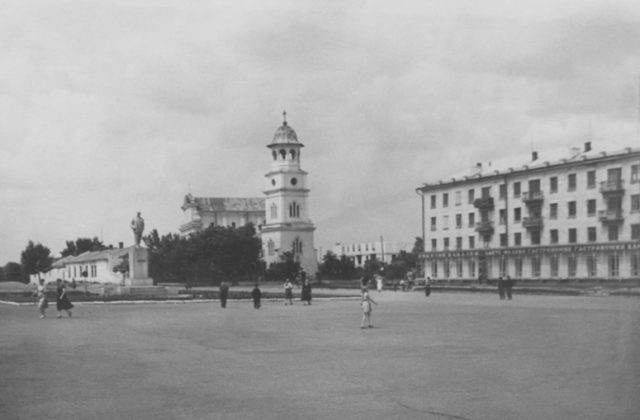
Nestled in the quiet northern reaches of Moldova, the village of Rudy moves at a pace set by the seasons rather than the clock. There are no bustling streets or crowds of visitors here, just the gentle rhythm of rural life—birdsong in the morning, the rustle of leaves in the afternoon breeze, the distant lowing of cattle at dusk. At the heart of the village stands the Church of St. Nicholas, a modest yet enduring presence that has watched over Rudy for generations. It isn’t grand like the cathedrals of Chisinau or the ornate monasteries of the countryside, but its unassuming beauty lies in its quiet authenticity, a place where time seems to slow just enough to let you breathe.
Built in the 19th century, when this land was part of the Russian Empire, the church follows the traditional design of Orthodox parishes of the era. Its low, sturdy walls are made of local limestone, weathered over time into a soft golden hue that blends seamlessly with the surrounding landscape. A single dome rises above the roof, crowned with a simple cross, while the interior remains understated yet carefully crafted. The iconostasis, painted by local artisans, bears the marks of age and devotion, its colors slightly faded but no less striking. The flickering light of oil lamps casts a warm glow over the icons, some of which have been here since the church’s earliest days. There is no gilded opulence or marble grandeur, just a sense of quiet reverence that feels more genuine than the polished facades of more famous houses of worship.
The church has always been more than just a place of prayer. For well over a century, it has been the soul of Rudy, a gathering point where the village’s joys and sorrows played out within its walls. Baptisms, weddings, and funerals marked the milestones of life here, while the church itself stood as a steadfast symbol through the upheavals of history. When wars swept through the region, when governments changed hands, when economic hardships left their mark, the people of Rudy found solace in this small sanctuary. Even during the Soviet era, when religious life was suppressed, the church remained a quiet refuge. Services continued, though discreetly, and the faith of the villagers endured, passed down through whispered prayers and stubborn hope.
One of the church’s most distinctive features is its bell tower, a small but unmistakable landmark that has guided travelers along the winding roads of northern Moldova for generations. The sound of its bells once carried across the fields, calling the faithful to prayer and marking the passage of time in a place where hours were measured by the sun and the seasons. On clear days, the chimes could be heard in neighboring villages, a reminder of the bonds that connected these quiet communities. Today, the bells ring less frequently, drowned out by the hum of modern life, but on feast days and holidays, their peal still fills the air, a sound that feels both timeless and deeply familiar.
Behind the church lies an old cemetery, where generations of Rudy’s residents rest beneath simple headstones. There are no elaborate monuments here, just weathered crosses and stones, some so old that the names have worn away, leaving only the faintest traces of the lives they once marked. Moss and lichen cling to the graves, softening the edges of time, while wildflowers push up through the earth in spring, adding a touch of color to the quiet green space. Walking among the graves, it’s impossible not to feel the weight of history—the farmers, craftsmen, and mothers who once knelt in the church, who worked these lands, who built the homes that still stand in the village. The cemetery and the church exist in harmony, two halves of the same story, where the past is never truly gone.
These days, the congregation is smaller than it once was. Younger generations have moved to cities in search of work and opportunity, while those who remain are often too busy with the demands of daily life to attend services as regularly as their parents and grandparents did. Yet the church still comes alive on major holidays—Easter, Christmas, and the village’s patronal feast day—when the pews fill with people, some of whom have traveled from afar to be here. The air hums with conversation, laughter, and the sound of hymns sung in voices that have known these melodies for decades. The scent of incense mingles with the aroma of freshly baked bread and honey cake, a sensory reminder of traditions that refuse to fade.
For those who visit Rudy on an ordinary day, the church remains open and welcoming. There are no strict rules, just a quiet request for respect—no loud voices, no rushing, no disruption of the peace that has settled over this place like a second skin. Inside, the light filters through narrow windows, illuminating the icons and the worn wooden benches. Outside, the churchyard is shaded by ancient linden and maple trees, their branches swaying gently in the breeze. In summer, their leaves offer cool respite from the sun; in autumn, they carpet the ground in gold, a fleeting but beautiful reminder of the cycles that govern life here.
The Church of St. Nicholas is not a tourist attraction in the conventional sense. There are no guided tours, no gift shops, no grand narratives about its place in history. Instead, it is something far more personal—a living piece of Rudy’s past, a place where the stories of the village are etched into every stone, every brushstroke of the icons, every name on the headstones. It doesn’t demand attention or admiration; it simply exists, as it has for over a hundred years, offering a moment of stillness in a world that moves too fast.
Perhaps that’s why those who find their way here often return. There’s no need for grand gestures or elaborate explanations. The church doesn’t promise enlightenment or spectacle, just a quiet space to sit, to reflect, to remember. In a time when so much of life is measured in likes and shares and instant gratification, places like this feel almost radical in their simplicity. They remind us that some things—faith, memory, the slow passage of time—cannot be rushed. And maybe, just maybe, that’s enough.