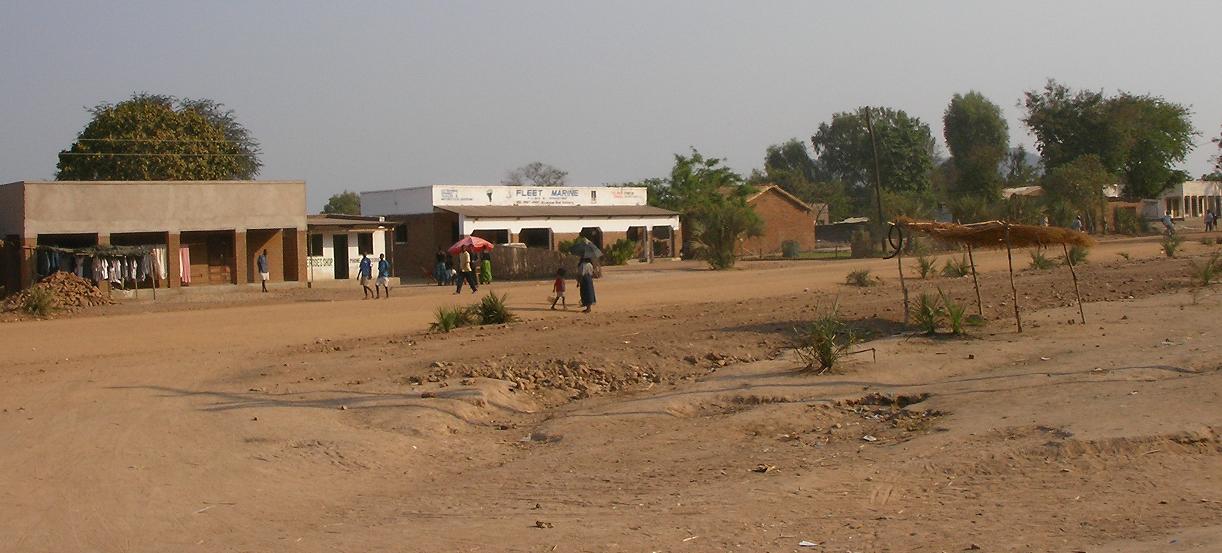
Monkey Bay is one of those quiet places where life moves at the pace of the wind and the water. Nestled along the shores of Lake Malawi, the town feels suspended between the gentle hills and the lake’s endless blue, where palm trees sway and fishing boats drift near the shore. It’s not a place that demands attention, but rather one that quietly holds its own, like an old baobab or a weathered jetty where fishermen mend their nets. Among its streets stands St. Michael and All Angels Church—a building so much a part of the landscape that it’s easy to overlook. Yet that’s what makes it stand out. There’s nothing grand about it, just a simple, slightly worn structure that carries the spirit of a time when Malawi was still Nyasaland, and European missionaries were beginning to leave their mark on the African interior.
Built in the early 20th century, when the region was under British rule, the church was constructed during a period when Monkey Bay served as a port. Goods, people, and ideas passed through here—traders, colonial officials, and missionaries all left traces of their presence. Christianity took root slowly, and this small church became one of its earliest symbols. Local stone and timber were used in its construction, with a corrugated iron roof to keep out the rains. The building was made to last, and though the paint has peeled and the wooden pews have darkened with age, it still stands firm. It’s a reminder of an era when craftsmanship mattered more than speed, and when faith was woven into daily life.
The architecture is straightforward—a rectangular structure with a modest bell tower crowned by a cross. Inside, the space feels airy, with light streaming through tall windows and softening the whitewashed walls. The altar is simple, free of gilding or decoration, but the walls tell stories. Old photographs and plaques bear the names of those who once worshipped here, a mix of locals, Europeans, and Indian traders who settled in Monkey Bay in the mid-20th century. The church has always been a place where different lives intersected, and that sense of connection lingers in the quiet corners and worn wooden benches.
Outside, a small cemetery surrounds the church, its graves dating back a century or more. Some are marked only by simple crosses, while others have no headstones. In Malawi, cemeteries aren’t enclosed by high walls, and this one is open to the elements—the wind rustling through the grass, the sun casting long shadows in the late afternoon. Children sometimes play nearby, their laughter blending with the sounds of the town. Death here feels like part of the natural order, as much as the lake or the hills.
St. Michael and All Angels is still an active church, though the congregation is smaller than it once was. Services are held on Sundays, attended mostly by locals for whom the church has long been a familiar presence. Tourists rarely visit—Monkey Bay isn’t known for grand sights. The town moves to the rhythms of the lake: fishing boats bobbing at the shore, a market selling fruit and brightly colored fabrics, a handful of cafés serving fresh tilapia. The church fits into this landscape, as if it has always been here, as much a part of the scenery as the water itself.
In recent decades, the church has taken on a new role. It’s become a community hub, hosting concerts by local musicians, craft fairs, or gatherings where people come together to talk, share stories, or sit in silence. There’s no fanfare—just a sense of quiet connection. Monkey Bay doesn’t have theaters or museums, so the church, almost by default, has become a place where people gather, whether for music, conversation, or reflection.
The area around the church is worth exploring. From the slight rise where it stands, there’s a clear view of Lake Malawi—vast, blue, and shimmering under the sun. On windy days, the water ripples; in the distance, mountains fade into the horizon. Mornings often bring a soft mist over the lake, slowly burning away as the sun climbs higher. Locals say the lake is the heart of Malawi, and from this spot, it’s easy to see why. There’s a sense of timelessness here, a feeling that the world moves slower, and that the land and water have their own rhythm.
St. Michael and All Angels isn’t the kind of place that leaves a dramatic first impression. It doesn’t tower over the landscape or dazzle with details. Instead, it reveals itself slowly—to those who sit on one of its wooden benches on a quiet morning, or who linger as the sun sets over the lake and the first stars appear. That’s when its true character becomes clear. In a world that’s always changing, this small church endures, not because it’s grand or famous, but because it holds something deeper: a sense of continuity, of lives lived and stories told, of a place where time moves differently. It’s where the past and present coexist without effort, and where the simplest things—light through a window, the sound of footsteps on wooden floors—can feel like a connection to something lasting.