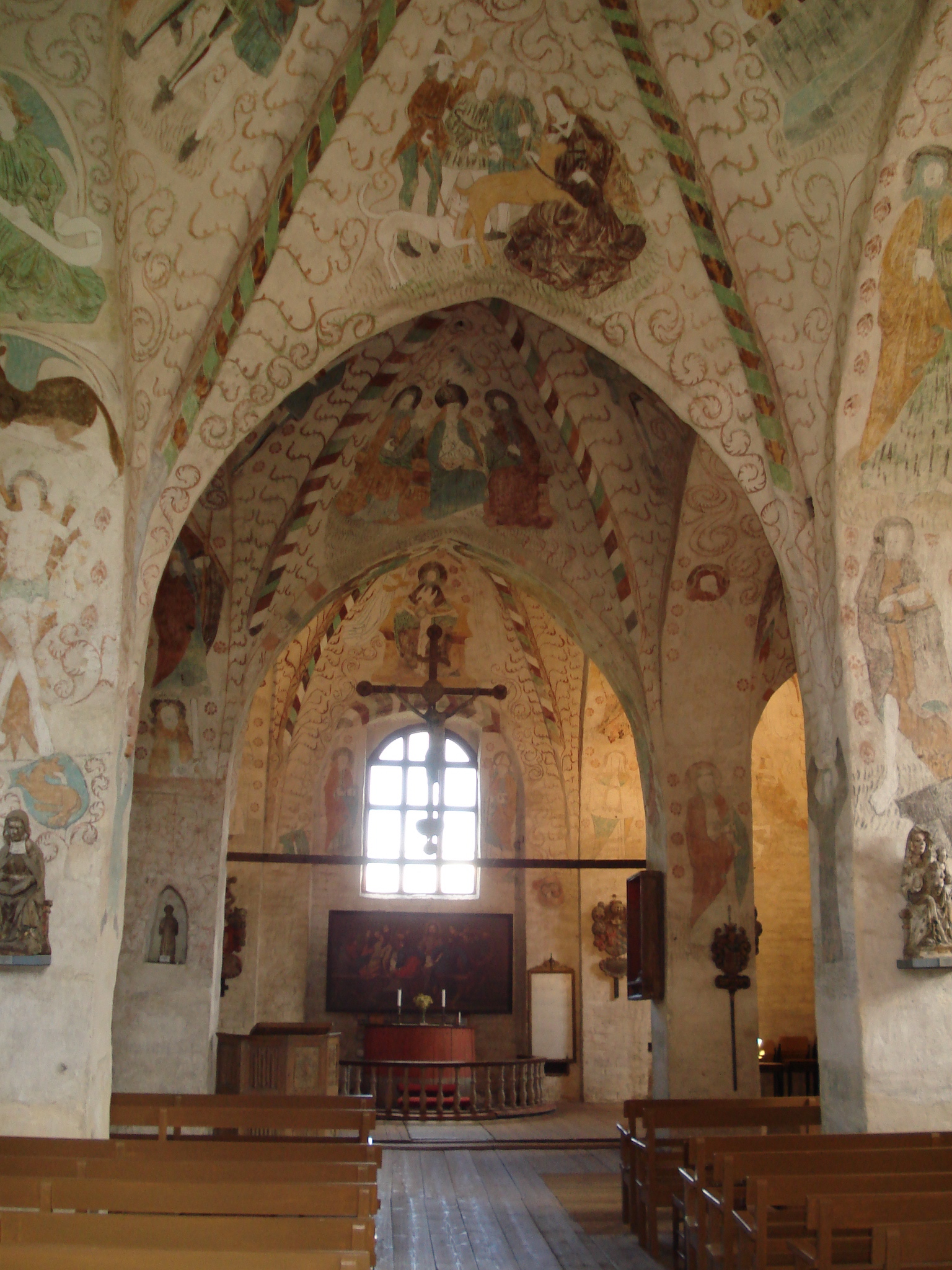
Old Rauma is a place where time seems to have settled into a quiet rhythm, and the Church of the Holy Cross stands as one of its most enduring landmarks. Built in the 15th century, this medieval church is a silent witness to the town’s past, when Rauma was a bustling hub of the Hanseatic League, its fortunes tied to trade and the sea. The church itself is unassuming from the outside—its gray granite walls and weathered roof speak of centuries of wind and weather—but step inside, and the space opens up with a sense of quiet grandeur. The high vaulted ceilings and sturdy columns create an atmosphere of solemnity, stripped of unnecessary ornamentation. There’s a simplicity here that feels deliberate, as if every stone and beam was placed with purpose, inviting reflection rather than distraction.
The church’s most striking feature is its collection of medieval frescoes, some of the best-preserved in Finland. Painted in the late 15th century, these murals unfold across the walls and ceilings in muted yet vivid hues, depicting biblical scenes with a raw, almost storytelling energy. They were never meant to be mere decoration; they were a visual sermon for a congregation that lived in a world where faith was woven into daily life. Over the centuries, fires and restorations have taken their toll, and some of the frescoes are now fragments of what they once were. Yet even in their incomplete state, they offer a glimpse into the artistic and spiritual life of the time, a reminder of how people once saw the divine in the world around them.
Rauma’s history is inseparable from that of the church. Founded in the 14th century, the town grew wealthy through trade, its ships carrying goods across the Baltic to cities like Lübeck and Tallinn. The Church of the Holy Cross was more than a place of worship—it was a gathering point for merchants, a venue for civic discussions, and a sanctuary in times of hardship. The decisions made within these walls shaped the town’s future, and the prayers offered here carried the hopes of generations. Though Rauma’s role as a trading power has faded, the church remains a symbol of continuity, a thread connecting the past to the present.
The 19th century brought restorations that sought to return the church to its original appearance. Some lost elements, like parts of the frescoes and the altar, were carefully reconstructed, but the work was done with restraint, ensuring the building retained its authenticity. Unlike many historic sites that become museum pieces, the Church of the Holy Cross has never stopped being a place of worship. Services are still held here, and the rituals performed within these walls have changed little over the centuries. In summer, the church draws visitors not just for its architecture but for the chance to experience a service that feels timeless, a moment of stillness in a world that moves too quickly.
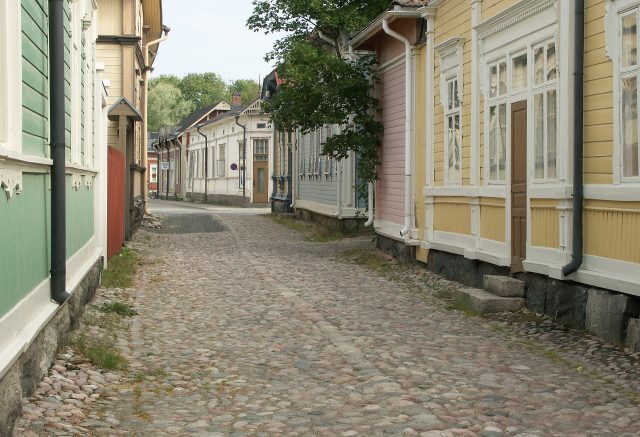
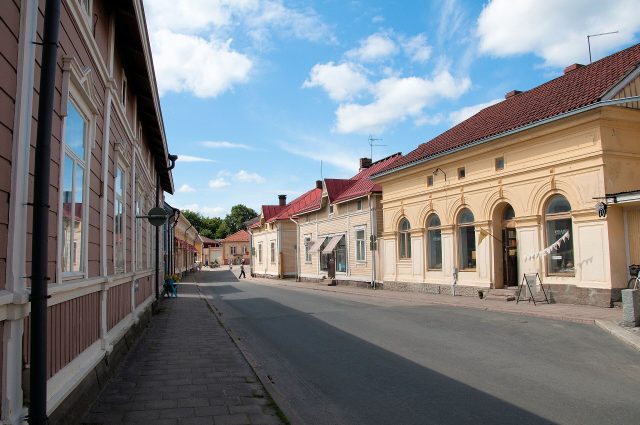
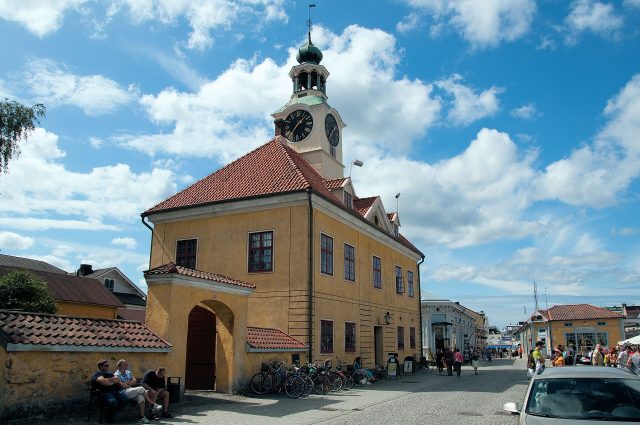
The church is just one part of Old Rauma, a UNESCO World Heritage site that begins just beyond its doors. The town’s narrow cobblestone streets and wooden houses, with their intricate carvings and steep gables, are a living testament to its past. Walking through these streets, it’s easy to imagine the lives of the merchants and craftsmen who once called this place home. In summer, the town comes alive with markets where local artisans sell their wares, and cafés serve traditional Finnish dishes. Winter, though, brings a different kind of magic—fewer visitors, longer shadows, and a quiet that makes the church feel even more like a refuge.
What makes the Church of the Holy Cross special is the way it makes history tangible. There’s a weight to the air inside, as if the walls have absorbed the voices of those who have prayed here over the centuries. It’s not just a tourist attraction; for many locals, it’s a place that holds personal memories, a link to their own family histories. In a world where so much changes so quickly, the church stands as a reminder that some things endure—through wars, fires, and the passage of time.
Visiting the church is a chance to step into the past without leaving the present behind. There’s no rush here, no crowds jostling for the best view. You can spend an hour or more inside, studying the frescoes, listening to the silence, or simply sitting on one of the wooden benches, letting the quiet settle around you. When you finally step back outside, the old town awaits, its streets and houses telling their own stories. That’s the magic of Rauma—it’s a place that hasn’t just preserved its history but has let it breathe, so that every corner feels alive with the past.