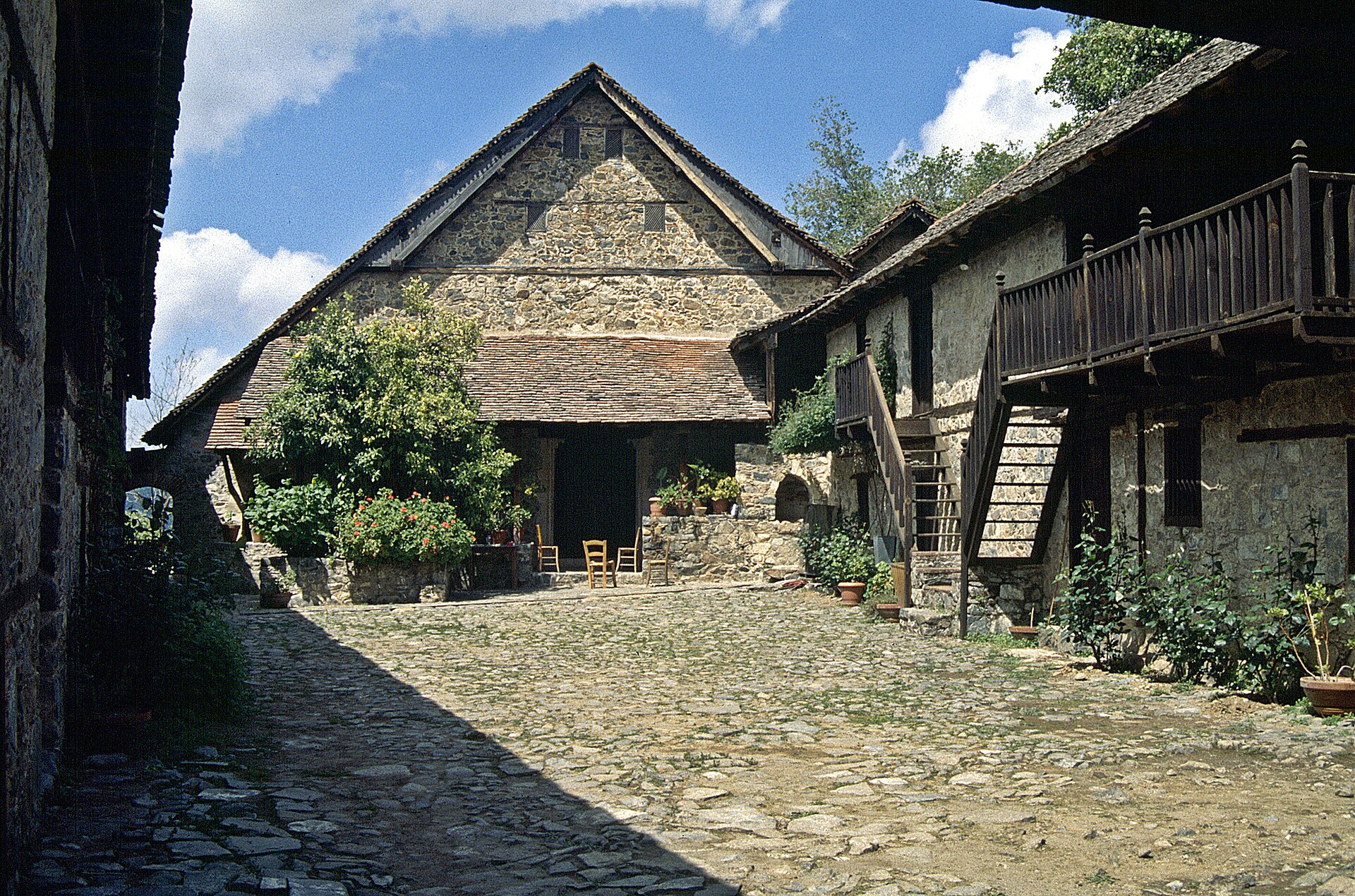
Nestled in the foothills of the Troodos Mountains, the village of Moutoullas feels like a world apart from Cyprus’s bustling coastal resorts. The air here carries the scent of pine and wild thyme, and the pace of life slows to match the quiet rhythm of the hills. Tucked among the stone houses and narrow lanes stands the Church of Saint John Lampadistis, a place that seems untouched by the passage of time. Its unassuming exterior gives little hint of the treasures within—a legacy of Byzantine art and faith that has endured for nearly a thousand years.
The church dates back to the 11th century, a time when Cyprus was a vital outpost of the Byzantine Empire, bridging Europe and the Middle East. Monasteries and churches flourished across the island, serving as spiritual and cultural strongholds. Saint John Lampadistis, the church’s namesake, was a local ascetic who lived in the 12th century. According to tradition, he was known for his healing miracles and his role in protecting the village from raids. After his death, his relics became a revered shrine, and his legacy has been woven into the fabric of the community ever since. Even today, pilgrims visit the church to honor his memory, drawn by the stories of his life and the quiet sanctity of the place.
From the outside, the church is modest—a small, single-naved building with rough stone walls and a tiled roof that blends seamlessly into the village. But step inside, and the space transforms. The walls are adorned with frescoes painted in the Byzantine tradition, their vibrant colors and intricate details spanning several centuries, from the 12th to the 16th. The scenes depict familiar biblical stories—the life of Christ, the saints, and the angels—but also rarer compositions, like the Miracle at Chonae or Jacob’s Ladder. Each painting tells a story, not just of faith, but of the artists who created them and the people who have prayed before them over the centuries.
Among the frescoes, a series dedicated to Saint John Lampadistis stands out. In one, he is depicted in monastic robes, holding a book; in another, he heals the sick. The pigments have faded in places, but the images remain remarkably well-preserved, a testament to the skill of the artists and the care taken to maintain them. The church has weathered earthquakes, invasions, and fires, and in the 16th century, it underwent partial reconstruction. Yet the restorers were careful to preserve the original style, ensuring that the frescoes retained their harmony and historical integrity.
The interior of the church feels timeless. Sunlight filters through narrow windows, casting a soft glow over the stone walls and illuminating the faces of the saints. The floor is paved with old tiles, worn smooth by generations of footsteps, and the wooden iconostasis, though not as ancient as the frescoes, carries the weight of tradition. In summer, the thick walls keep the space cool, while in winter, when snow dusts the mountains, the church offers warmth and shelter. There’s a sense of stillness here, as if the centuries have settled into the very stones.
Moutoullas is not a place for those seeking excitement or crowds. The village moves at its own unhurried pace, its narrow streets lined with stone houses and old fountains fed by mountain springs. The Church of Saint John Lampadistis is the heart of the community, a place where life’s milestones are marked—baptisms, weddings, and farewells. For the villagers, it is more than a historical monument; it is a living connection to their past, a reminder of the generations who have walked these same paths.
In recent years, the church has begun to attract visitors, though not in overwhelming numbers. Unlike the more famous monasteries of the Troodos Mountains, it remains off the beaten path, a quiet refuge for those who seek authenticity over spectacle. There are no guided tours or souvenir stalls here, just the chance to sit on a wooden bench, take in the frescoes, and listen to the silence. Outside, the surrounding hills are dotted with vineyards and olive groves, and other ancient churches lie hidden among the trees, waiting to be discovered.
The Church of Saint John Lampadistis is more than a relic of the past; it is a testament to the enduring power of faith and art. There is nothing grand or ostentatious about it, and that is precisely what makes it special. In a world that often feels rushed and commercialized, this small church offers something rare: a moment of quiet reflection, a glimpse into history, and the sense that some things, no matter how fragile, can last forever. For some, it may be just another stop on a journey, but for others, it will be a place that lingers in the memory long after they’ve left.