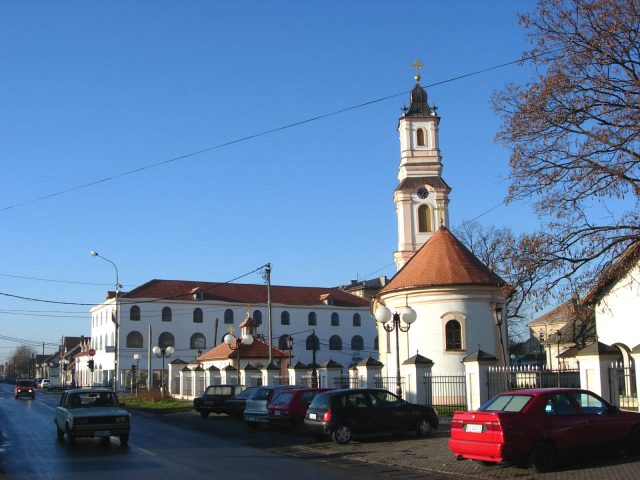
Saint George’s Church in Topčider is one of those rare places in Belgrade where history isn’t just remembered—it lingers in the air, in the quiet rustle of leaves, in the way the light falls through the trees. Tucked away in Topčider Park, a green oasis that has long been a retreat from the city’s hustle, the church stands as a quiet witness to Serbia’s turbulent 19th century. Built in the early 1800s, when the country was shaking off centuries of Ottoman rule, it was more than a place of worship. It was a statement—a small but deliberate step toward defining what a free Serbia might look like.
The church’s architecture reflects the era’s contradictions. Its whitewashed walls and modest proportions blend traditional Serbian Orthodox design with the restrained elegance of neoclassicism, a style that was gaining ground across Europe at the time. There’s nothing grandiose about it; the building doesn’t demand attention, but it holds it effortlessly. Inside, the space feels intimate, almost personal. The iconostasis, carved with care, and the frescoes, painted in the muted tones of Serbian religious art, speak of a time when craftsmanship was measured in patience rather than spectacle. The artists’ names are lost to history, but their work endures, a silent testament to devotion.
Topčider Park itself has layers of history. Once a hunting ground for Ottoman pashas, it later became a favorite retreat for Serbia’s rulers. Prince Miloš Obrenović, the man who commissioned the church, often walked these paths. It’s said he chose the spot for Saint George’s not just as a religious site, but as a symbol—of victory over the Ottomans, of a new beginning for Serbia. Today, the park is a place where time moves differently. The old oaks, some centuries old, stand like sentinels over winding paths, past fountains that have flowed since the days of the sultans. There’s a sense of stillness here, as if the park has absorbed the weight of the past and now offers it back in moments of quiet reflection.
The church’s role in Serbian history goes beyond its religious function. In the 19th century, it was a gathering place for those shaping the country’s future. Important decisions were made in its shadow, and its walls likely heard whispers of both hope and intrigue. The church wasn’t just a backdrop to history—it was part of it. Yet today, there are no plaques or exhibits to mark those moments. The past isn’t announced here; it’s felt. The worn stone steps, the faint scent of incense, the way the light filters through the narrow windows—all of it carries the weight of two centuries without needing to explain itself.
Inside, the church holds a few treasures, though not the kind that draw crowds. The icons, some brought from other churches, others created specifically for this place, are simple but striking. The most revered is the icon of Saint George himself, said to date back to the church’s early years. Like much of the church’s interior, it bears the marks of time—faded colors, small cracks—but that only adds to its authenticity. War and neglect have taken their toll, yet what remains is enough to imagine the church as it once was: a place of quiet dignity, where faith and history intertwined.
Saint George’s is still an active church, and its doors are open to anyone who wishes to step inside. Services follow the Orthodox tradition, and on feast days, the small space fills with the sound of chanting, a tradition that has echoed here for over 200 years. On weekdays, though, the church is often empty, save for the occasional visitor or the priest preparing for the next service. For many Belgraders, Topčider is a place to return to—a spot for Sunday walks, for moments of solitude, or for the simple act of lighting a candle. It’s not a tourist attraction in the usual sense; it’s a living part of the city’s fabric.
The park around the church is worth exploring in its own right. Topčider isn’t just a collection of trees and paths; it’s a landscape shaped by history. The old oaks, the Ottoman-era fountains, and the modest palace of Prince Miloš—now a museum—all tell their own stories. The palace, in particular, offers a glimpse into 19th-century Serbian life, though it’s the park itself that leaves the strongest impression. In summer, the shade is a relief from the city’s heat; in winter, the bare branches and occasional snow transform it into something almost magical. It’s a place where the past isn’t preserved behind glass—it’s lived in, walked through, breathed.
What makes Saint George’s Church special isn’t just its age or its architecture. It’s the way it embodies the spirit of its time—a time when Serbia was finding its voice, its identity, its place in the world. The church wasn’t built to impress; it was built to endure. And it has. Today, it stands as a reminder of resilience, of faith, and of the quiet strength that comes from knowing where you’ve come from. For visitors, it offers a different side of Belgrade, one far removed from the noise of the city center. For locals, it’s a touchstone, a place that feels like home. Whether you come for history, for peace, or simply for the walk, the church and its park have a way of staying with you long after you’ve left.