Saint Gabriel’s Church in Triolet is one of those quiet places in Mauritius where time seems to slow down. Perched on a gentle hill, it stands surrounded by low trees and modest houses, its unassuming yet striking architecture drawing the eye. The white walls and simple bell tower with its cross glow against the lush greenery and bright sky, a design that speaks more of devotion than grandeur. There’s no ostentation here—just a place built for prayer and reflection.
The church’s history is woven into the fabric of Triolet itself, one of the island’s oldest settlements. Mauritius has long been shaped by colonial rule, and Catholicism arrived with French settlers in the 18th century. Triolet, in the island’s north, became a hub for plantation owners and laborers, including Creoles and descendants of enslaved Africans. Saint Gabriel’s likely dates back to the mid-19th century, a time when the Catholic community had grown strong enough to build its own place of worship. While the exact year of construction remains unclear, its architecture reflects the colonial style of the era, blending neoclassical influences with local adaptations.
Inside, the church is small but warm. Sunlight filters through tall windows, softly illuminating the wooden pews, the altar, and the old icons. There’s no opulence—just a sense of peace that resonates with the congregation. Many of the locals are descendants of the plantation workers who once lived here, and they still gather for services, especially on Sundays. For them, the church is more than a place of worship; it’s a link to their ancestors, a space where history and faith intertwine.
What makes Saint Gabriel’s particularly interesting is how it reflects Mauritius’ cultural diversity. The island is known for its blend of African, Indian, Chinese, and European traditions, and Triolet embodies this mix. Nearby, you’ll find Hindu temples, mosques, and even Chinese pagodas. There’s no tension between these communities—just a quiet coexistence, with the church standing as part of this unique cultural landscape.
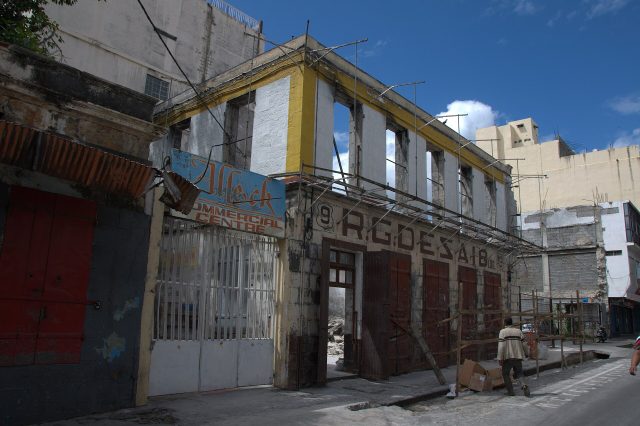
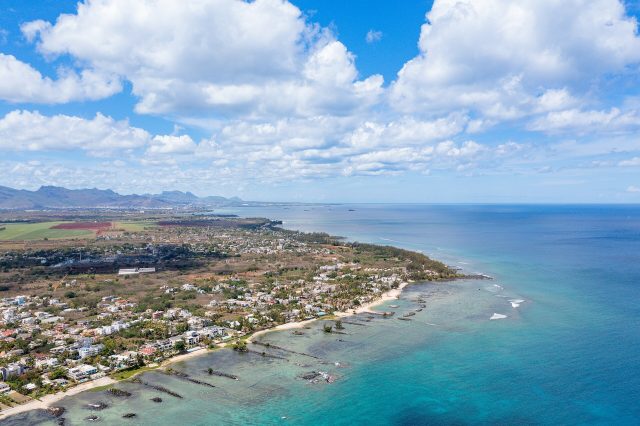
The area around the church is quintessential Triolet, far removed from the tourist hubs of Port Louis or Flic-en-Flac. There are no luxury resorts or pristine beaches here, just the rhythm of everyday Mauritian life. Narrow streets wind past small shops selling local goods, and brightly painted houses with shuttered windows add to the charm. The church seems to watch over it all, a quiet guardian of tradition in a place where life moves at its own pace.
Visiting Saint Gabriel’s isn’t just about admiring its architecture or history; it’s about experiencing the soul of Mauritius. This isn’t a museum piece but a living church where prayers are still offered and bells still ring. If you’re lucky, you might catch a service or a festive mass, when the air hums with organ music and hymns. Even if you’re not religious, the atmosphere invites contemplation—a rare moment of stillness in a world that often feels too fast.
For travelers, Triolet and Saint Gabriel’s offer a different side of Mauritius. There are no crowds here, no resort bustle, just a chance to step into local life. You can wander the streets, stop by a café for a taste of Mauritian cuisine, or simply sit on a bench near the church, watching as people go about their day. This isn’t a place for those seeking spectacle; it’s for those who want to understand the island beyond the postcard images.
Saint Gabriel’s isn’t one of Mauritius’ most famous landmarks, and that’s part of its appeal. It doesn’t try to impress or be anything other than what it is—a church that has served its community for over a century, preserving the past while offering hope for the future. In a world that changes too quickly, places like this remind us of the things that endure: faith, tradition, and the quiet moments that connect us to something greater. Sometimes, all it takes is a pause to listen.