Saint Anthony of Padua Church in Kisantu is one of those quiet places that slowly weave themselves into the fabric of a town’s history without demanding attention. Built in the early 1900s, it sits on a gentle hill, as if watching the years pass below. At the time, Congo was under Belgian rule, and European missionaries were busy constructing Catholic churches—not just as places of worship, but as symbols of colonial influence. Saint Anthony’s was one such building: unassuming yet enduring, much like the era that shaped it.
The church’s architecture reflects the colonial style of its time. Its red brick walls, tall arched windows, and sturdy wooden doors were designed to withstand the tropical climate. Inside, the space is simple and airy, with wooden pews, a modest altar, and a few stained-glass windows that cast a soft, colored light. Some locals say Congolese craftsmen helped build it, and there are whispers of African influences in the details, though no records confirm this. Either way, the church has aged remarkably well, as if time has been kinder to it than to most.
Kisantu is a small town in Central Congo, and here, the church serves as more than just a religious site. On Sundays, people from nearby villages fill the pews, their voices rising in song and prayer, their Sunday best rustling in the quiet. On weekdays, the area is peaceful—schoolchildren from the mission next door chatter about their lessons, or an elderly woman sells fruit by the entrance. Life moves at its own unhurried pace, and the church fits seamlessly into this rhythm.
Saint Anthony of Padua, the church’s namesake, is revered not only in Europe but across Congo. He’s seen as a protector of the poor and a helper in finding lost things, and many turn to him for blessings of health or good fortune. Perhaps that’s why the church has remained meaningful for over a century. There’s no grandeur here, just a sense of quiet authenticity, as if every stone holds the memories of those who came seeking comfort or giving thanks.
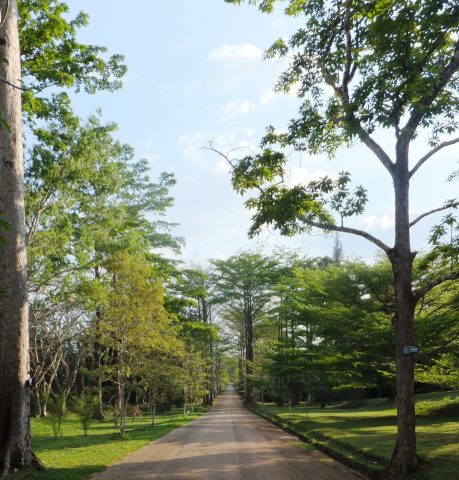
A small garden surrounds the church, filled with palm trees and flowering shrubs. Locals often gather here, some to sit in the shade, others to let their children play on the grass. On hot days, a cool breeze from the Congo River carries the scent of damp earth and greenery. Occasionally, nuns from the nearby convent tend to the plants or sweep the paths. They live close by and often help maintain the grounds, their presence adding to the sense of care that surrounds the place.
Kisantu’s history is closely tied to the Catholic missions that once shaped it. In the early 20th century, the town became home to one of Congo’s first seminaries, turning it into a center for education and healthcare. Saint Anthony’s Church was part of this system, serving not just as a place of worship but as a gathering point for the community. Even after Congo gained independence in 1960, the church remained a symbol, though its role shifted with the country’s changing political tides.
Today, the church feels almost unremarkable next to Kisantu’s newer buildings, but that’s part of what makes it special. It doesn’t try to impress visitors or stand out—it simply exists, as much a part of the town as the people who pass by it every day. Inside, the scent of wax and aged wood lingers, and the walls seem to hold the echoes of every prayer ever spoken within them. Sometimes, the sound of an organ drifts through the air, a reminder that faith here is alive, not just a relic of the past.
Congo’s history is vast and complex, and Saint Anthony’s Church is just one small piece of it. But places like this offer a glimpse into how ordinary lives were shaped, how cultures and traditions intertwined. There are no grand cathedrals or famous relics here, just a quiet space where the past still whispers. And perhaps that’s what makes it truly worth noticing.