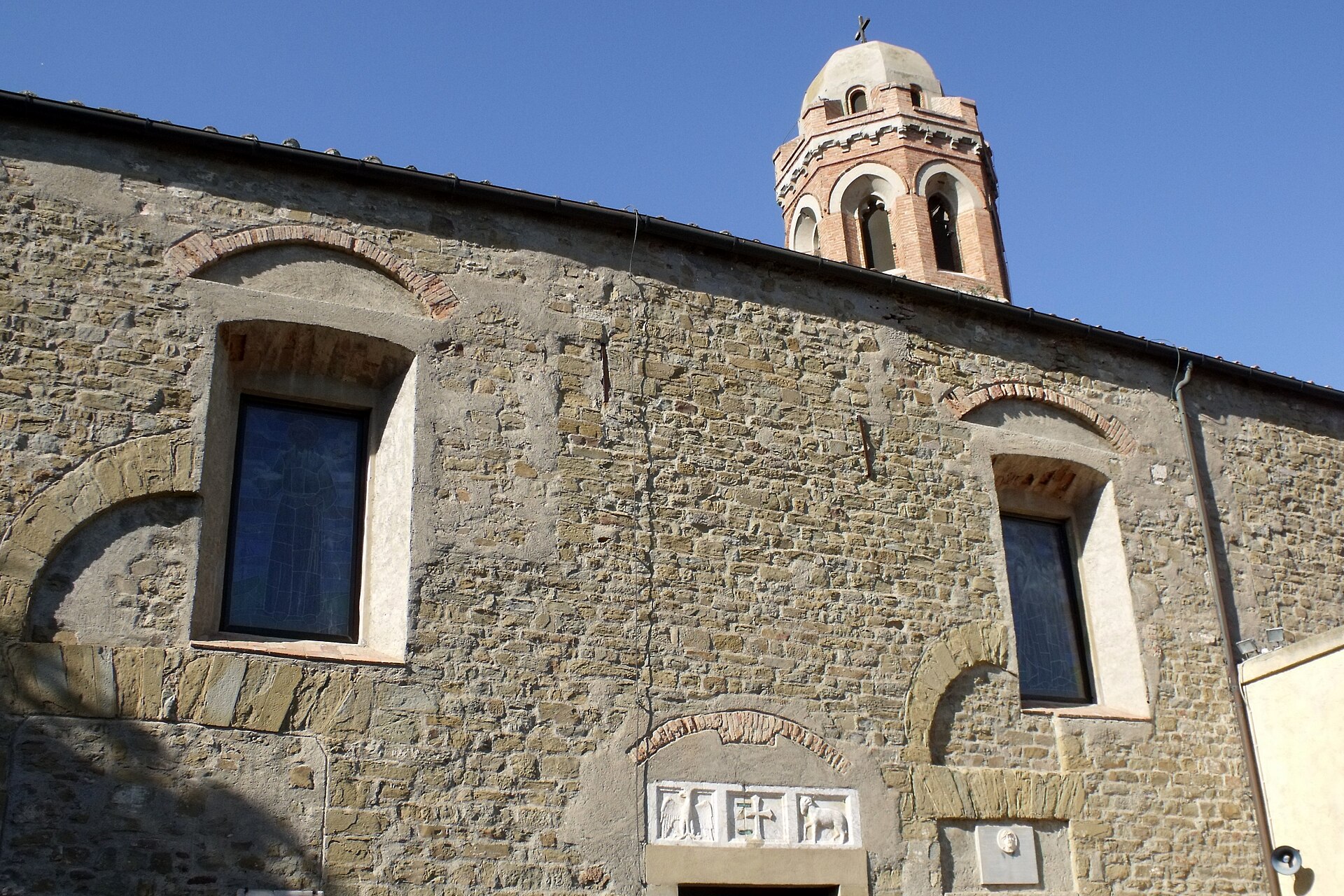
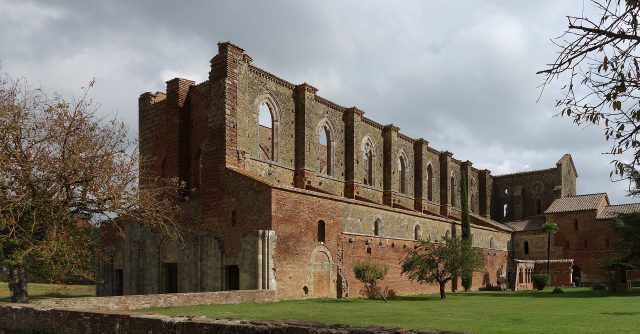
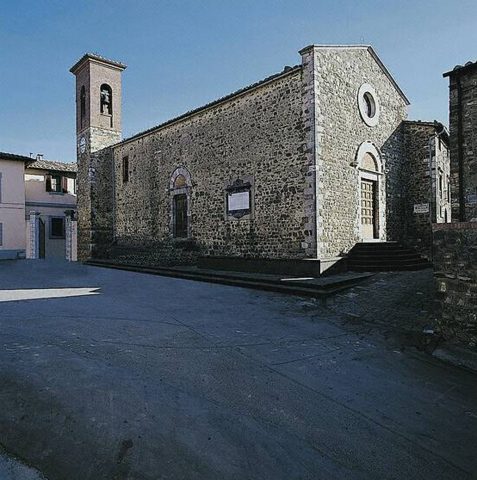
Perched on a quiet square in the heart of Chiusdino, the Church of San Giovanni Battista feels like a place where time has quietly settled into the stones. The town itself is one of those rare corners of Tuscany that hasn’t been polished smooth by tourism—its low, sun-bleached houses with terracotta roofs lean into one another as if sharing old secrets, and the pace of life here moves with the unhurried rhythm of the surrounding hills. The church’s exterior is unassuming, its pale stone facade softened by centuries of wind and sun, its narrow windows and modest bell tower giving little hint of what lies within. But step inside, and the simplicity of the outside world falls away.
The church’s origins stretch back to the 12th century, when Chiusdino was a small but significant stop on the pilgrimage routes to Rome. Back then, the roads hummed with travelers—merchants, monks, and the faithful—all passing through this quiet valley. The original structure was a Romanesque basilica, built to honor John the Baptist, and though it has been altered over the centuries with touches of Gothic and Renaissance detail, its core remains unchanged. Unlike the grand cathedrals of Siena or Florence, San Giovanni Battista was never a wealthy church. It belonged to the people of Chiusdino, and its beauty comes not from gold or marble, but from the quiet craftsmanship of local artists whose names have long faded from memory.
Inside, the church feels both intimate and vast. The high vaulted ceilings, supported by thick stone columns, create an illusion of space in what is actually a modestly sized interior. The walls are covered in frescoes from the 14th and 15th centuries, their colors muted by time, the plaster cracked in places where the damp has seeped in. The scenes they depict—moments from the life of Christ, the saints, and the Last Judgment—are rendered with a raw, almost urgent energy. In the dim light, the figures seem to flicker, as if caught between past and present. The most striking of these is the depiction of the Last Judgment, where angels blow their trumpets and the damned are dragged into the mouth of hell. It’s a scene that feels strangely alive, as though the artist had just set down his brush.
Among the church’s most revered treasures is a wooden crucifix from the 13th century, said to possess miraculous powers. According to local legend, it was discovered in the forest by a farmer, and ever since, pilgrims have come seeking its healing touch. The crucifix is small, but the craftsmanship is extraordinary—the face of Christ is carved with such emotion that it’s impossible not to linger. There’s a quiet dignity in his expression, a sense of acceptance that transcends suffering. Nearby, a simple altar holds offerings of fresh flowers, left by those who still come to pray.
For centuries, San Giovanni Battista has been the heart of Chiusdino’s community. It was here that children were baptized, couples married, and the dead were mourned. On feast days, the church would fill with song, and after Sunday mass, the square outside buzzed with conversation as neighbors caught up on the week’s news. Today, the congregation is smaller—mostly elderly locals and the occasional traveler who stumbles upon the town by chance. Services are infrequent, but when the bells ring, their sound carries across the valley, a reminder that this place is still very much alive.
The church is just one part of Chiusdino’s quiet charm. The town itself is a maze of narrow, cobblestone streets that wind past houses with peeling shutters and doorways worn smooth by generations of footsteps. In the summer, the air is thick with the scent of lavender and baking bread; in winter, woodsmoke curls from chimneys, and the streets are empty except for the occasional old woman sweeping her doorstep. There are no grand piazzas here, no souvenir shops or tourist menus—just the slow, unvarnished rhythm of life as it’s been lived for centuries.
If you find yourself in Chiusdino, take your time. Sit on the steps of the church and watch the light shift across the stone, or step inside and let the silence settle around you. On certain afternoons, when the sun slants through the narrow windows, the frescoes glow with a warm, golden light, as if the past is momentarily illuminated. It’s in these quiet moments that the true magic of San Giovanni Battista reveals itself—not in grandeur or spectacle, but in the way it holds the weight of history so lightly, as if it’s still being written.