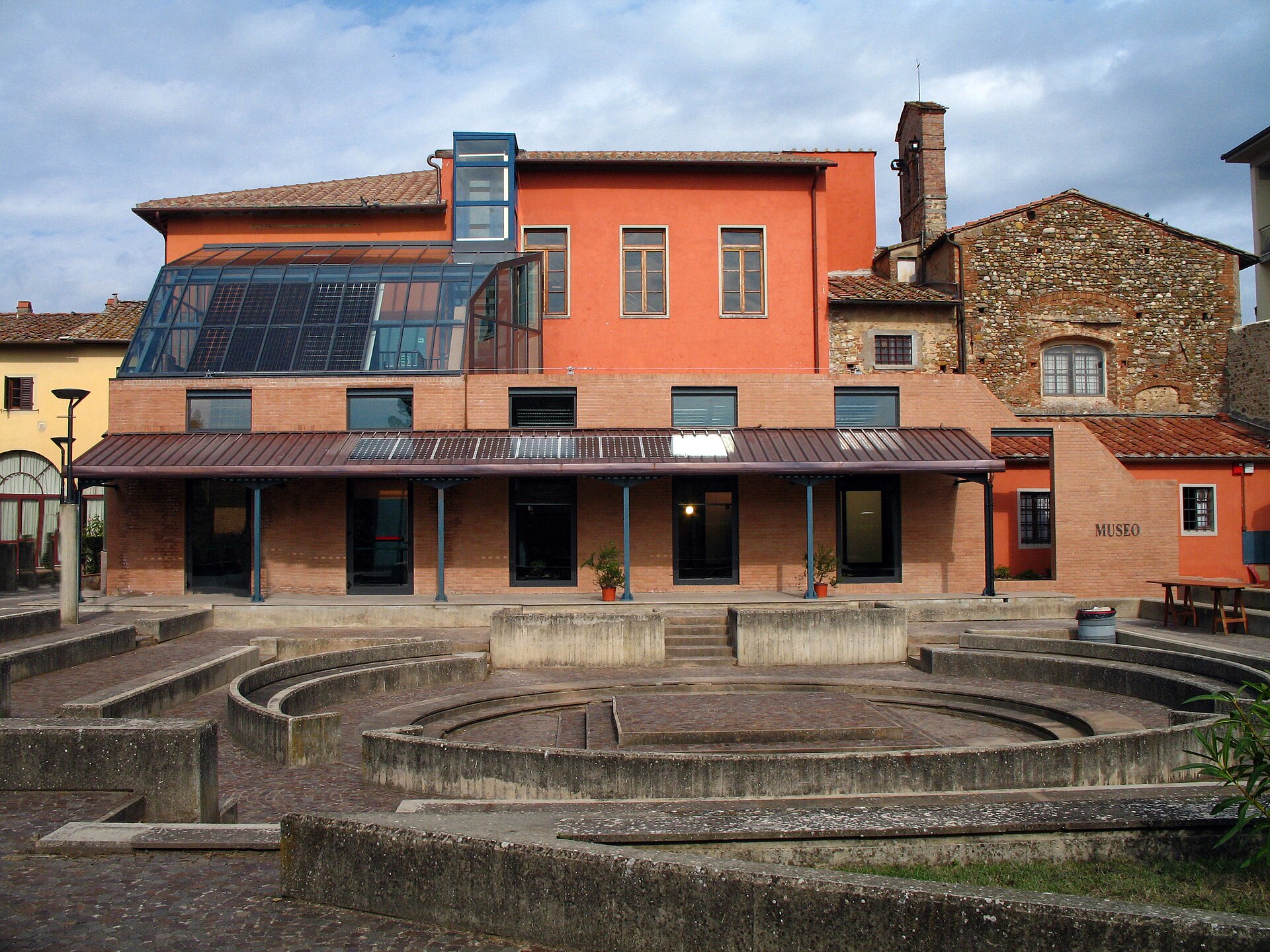
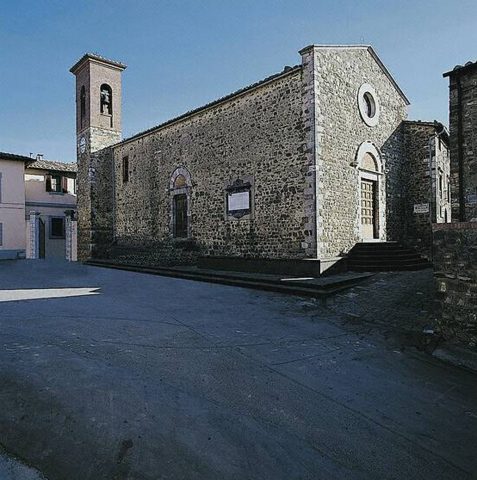
Nestled among the rolling hills of southern Tuscany, the small town of Chiusdino feels like a place time has gently overlooked. Its narrow streets, lined with stone houses and wooden shutters, wind quietly upward toward the parish church, where the Museo d’Arte Sacra occupies what was once the rectory. The museum itself is unassuming—no grand entrance, no crowds, just a quiet doorway leading into rooms where history lingers in the objects left behind. Here, religious art isn’t displayed as mere decoration; it’s presented as something lived, something that once held meaning in the daily rhythm of faith and community.
The collection grew organically over centuries, gathering pieces that once adorned local churches and monasteries. Many of the works were created by artisans whose names have been forgotten, yet their skill remains evident in every brushstroke and carved fold of fabric. Wooden statues of saints stand with a quiet dignity, their faces softened by time, while painted altarpieces glow with the deep blues and golds favored by medieval artists. The textiles are particularly striking—vestments embroidered with silk and gold thread, their patterns still crisp despite the weight of centuries. These weren’t just objects of devotion; they were crafted with care, meant to elevate the sacred moments of worship.
One of the most striking pieces is a 13th-century crucifix, its wooden surface gilded and worn smooth by generations of touch. It’s easy to imagine it hanging above an altar, the centerpiece of a community’s prayers. Nearby, small reliquaries hold fragments of saints’ remains, their ornate exteriors belying the solemnity of what they once protected. These objects might seem distant to modern eyes, but they were once deeply personal—tangible connections to the divine, passed down through families and congregations.
The building that houses the museum is as much a part of the story as the art within. The former rectory, built in the 17th century, retains the sturdy simplicity of traditional Tuscan architecture: thick stone walls, high ceilings with exposed wooden beams, and windows that filter the light into a soft, golden haze. There are no flashy displays or interactive screens here—just the quiet presence of the past, arranged with a respectful restraint. The rooms feel lived-in, as if the objects were only recently set aside rather than centuries removed from their original purpose.
Chiusdino itself is a town that moves at its own pace. The same stone and timber that shape the museum appear throughout its streets, in the arched doorways and hidden courtyards that hint at a way of life that hasn’t changed much over the years. The churches scattered across town still hold some of the art that once filled their interiors, though many of the most precious pieces have found their way to the museum. Walking through Chiusdino, it’s easy to see how the museum acts as a kind of bridge—one that connects the present to a past where art and faith were inseparable.
A visit here isn’t about ticking off a list of masterpieces or snapping the perfect photo. It’s about slowing down, about noticing the small details that often go unremarked: the way the gilding on a frame has cracked with age, the faint traces of pigment on a faded canvas, the smoothness of a wooden statue’s surface where countless hands have rested. There’s a humility to the collection, a sense that these objects were never meant to be admired from a distance but to be part of something larger. The museum doesn’t demand attention; it simply offers a space to reflect on how art and belief have shaped lives over centuries.
For those who find their way to Chiusdino, the museum is a quiet revelation. It doesn’t compete with the grand galleries of Florence or Siena, nor does it try to. Instead, it offers something rarer: a chance to step into a world where art wasn’t just created for beauty’s sake but as an act of devotion. The town itself feels like an extension of the museum—its streets, its churches, its very atmosphere steeped in the same history that fills the display cases. There’s no need to rush. The past here isn’t something to be consumed; it’s something to be felt, in the stillness of a room or the weight of a centuries-old object in your hands.