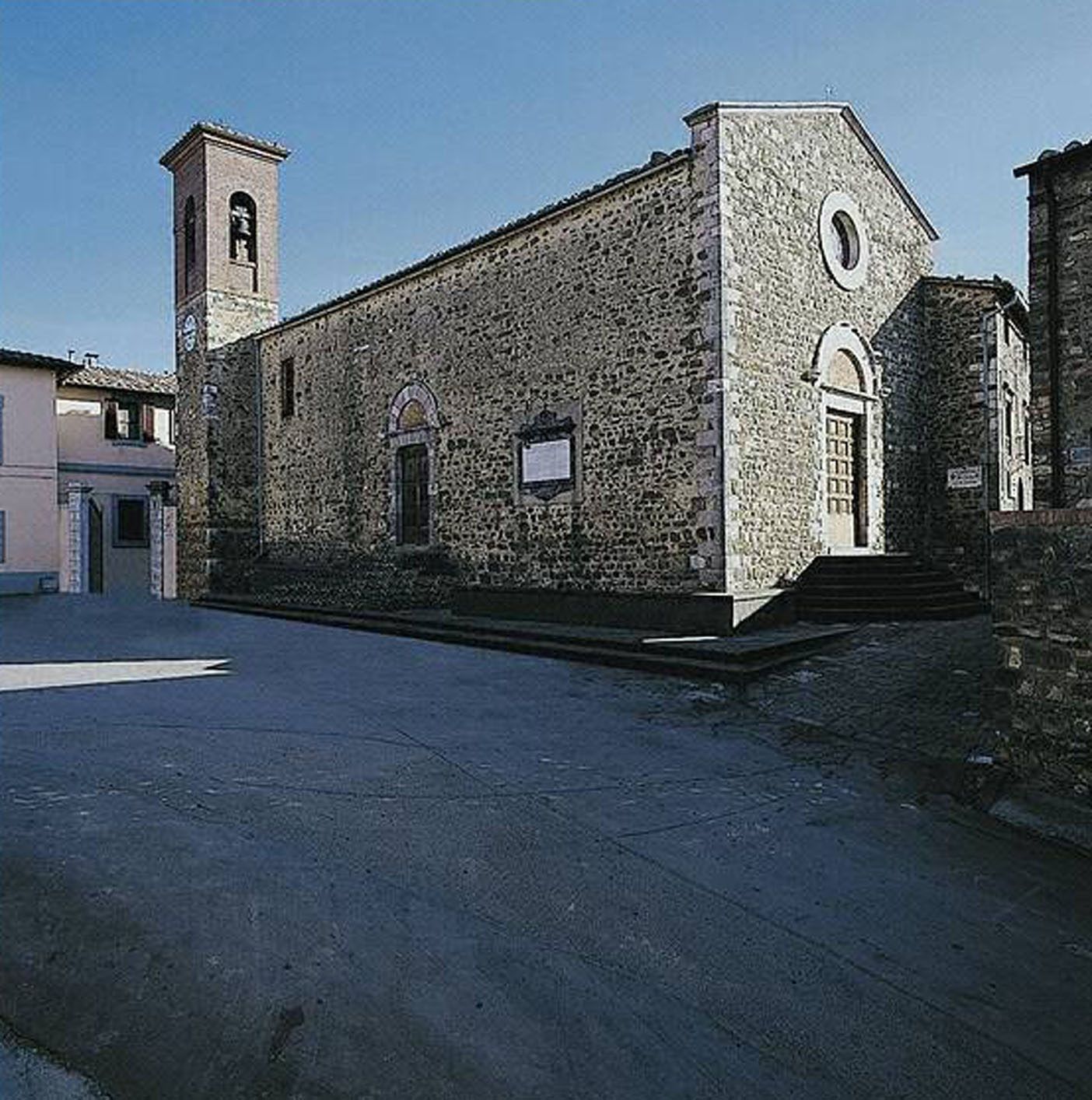
Perched on a gentle hill in the heart of rural Tuscany, the Church of San Michele Arcangelo in Chiusdino feels like a place where time has quietly settled into the stones. The building itself is unassuming—low, weathered walls of rough local stone, a modest arched doorway, and narrow windows that filter the sunlight into soft, golden streaks. Yet this simplicity is deceptive. Step inside, and the outside world fades, replaced by the hush of centuries and the quiet grandeur of medieval art.
Chiusdino was once a fortified outpost, caught between the rival territories of Siena and Volterra, and the church’s origins stretch back to the early Middle Ages. The first records of its existence date to the 11th century, though the structure we see today took shape later, during the 12th and 13th centuries, when the Romanesque style flourished across Tuscany. Over the years, the building has been altered and repaired, but its core remains unchanged—a testament to the enduring strength of rural Romanesque architecture. Fragments of early frescoes still cling to the walls, their faded colors and bold lines hinting at the skill of long-forgotten artists.
The interior is a study in contrasts. Outside, the church appears almost austere, but within, the space opens up into a world of color and symbolism. Thick columns divide the nave, their capitals carved with simple yet expressive reliefs—some almost childlike in their directness, others more refined. The walls are covered in frescoes from different periods, from medieval to Renaissance, each layer telling its own story. The most striking is the Last Judgment on the counter-façade, where angels and demons, saints and sinners are depicted with raw emotion. The figures seem to move, their expressions so vivid that the scene feels less like a painting and more like a glimpse into another time.
San Michele Arcangelo is dedicated to the archangel Michael, a figure deeply revered in Christian tradition. In the Middle Ages, Michael was often seen as a protector, a warrior against evil, and churches in his honor were frequently built on high ground, as if to mark a boundary between the earthly and the divine. This church follows that tradition, standing sentinel over the valley below. Inside, several depictions of the archangel survive, including a powerful fresco of Michael slaying the dragon—a timeless symbol of the triumph of good over darkness.
Unlike the grand cathedrals of Siena or Florence, this church has never been overrun by tourists. It remains a living part of the community, where locals still gather for services and the occasional pilgrim stops to pray. The atmosphere is one of quiet reverence, especially during the rare moments when the church fills with the sound of chanting and the scent of incense. In summer, the silence is almost tangible, broken only by the rustle of leaves outside or the distant toll of a bell.
Chiusdino itself is a village that moves at its own unhurried pace. A few hundred people call it home, and life here revolves around the rhythms of the seasons. Narrow, cobbled streets wind past stone houses with wooden shutters and flower boxes, leading to a small square where an old fountain stands at the center of daily life. Beyond the village, the landscape unfolds in rolling hills, vineyards, and olive groves, a patchwork of green and gold that has changed little over the centuries. It’s easy to imagine the church as it once was—not just a place of worship, but the heart of the community, where births, marriages, and funerals marked the passage of time.
There’s no grand spectacle here, no ornate marble or gilded altars. What makes San Michele Arcangelo special is its authenticity. It’s a place where history isn’t just preserved behind glass or roped-off barriers; it’s still alive in the worn steps of the faithful, in the flicker of candlelight on ancient frescoes, in the way the afternoon sun slants through the narrow windows. To visit is to step into a slower, quieter world, one where the past isn’t just remembered—it’s felt.
If you come here, don’t rush. Take a seat on the bench outside, listen to the wind in the trees, and let the silence settle around you. The church doesn’t offer easy answers or dramatic revelations. Instead, it offers something rarer: a sense of continuity, a connection to the countless lives that have passed through its doors. In a world that moves too fast, places like this remind us of the value of stillness—and the stories that only time can tell.