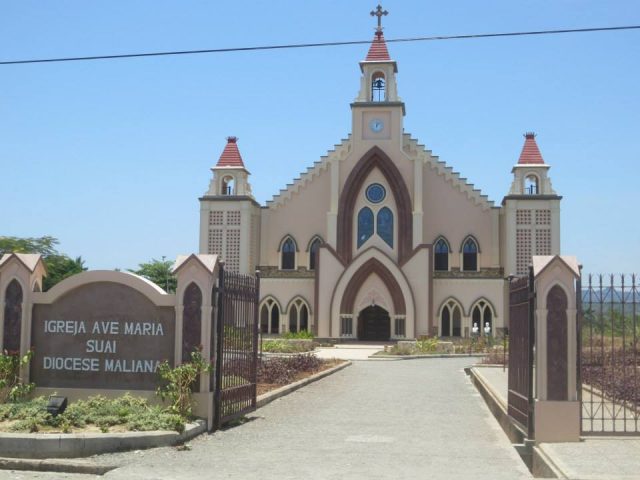
Nossa Senhora da Conceição Church in Suai is the kind of place that quietly becomes part of a town’s story, even if it never seeks the spotlight. Perched on a gentle rise overlooking the Timor Sea, its whitewashed walls don’t demand attention, yet there’s something enduring about them—as if the building has settled into the landscape like an old friend. Suai isn’t a tourist hub, and this church rarely makes it into guidebooks, which is precisely why it feels authentic. It wasn’t built for visitors; it exists for the people who call this place home.
The church dates back to East Timor’s colonial era, when Portugal was consolidating its influence across the region. Catholicism wasn’t just a faith here—it was a tool of cultural integration, and churches often served as the heart of community life. Nossa Senhora da Conceição likely took shape in the mid-20th century, by which time Suai had grown into a modest port town, trading in sandalwood and coffee. Its architecture is unmistakably Portuguese colonial: simple lines, minimal ornamentation, but proportions designed to feel at home anywhere. Inside, there are no grand frescoes or gilded altars, just wooden pews, a modest sanctuary, and a few statues of saints that may have traveled all the way from Portugal.
For locals, the church is more than a place of worship. It’s a gathering point, a thread in the fabric of daily life. On Sundays, families fill the pews, children fidget in their seats, and after Mass, the square outside buzzes with conversation. In a town like Suai, where modern life and tradition often collide, the church acts as a bridge between the two. It’s where festivals are celebrated, news is shared, and sometimes even disputes are settled. In a country still finding its footing after decades of conflict, such places hold communities together.
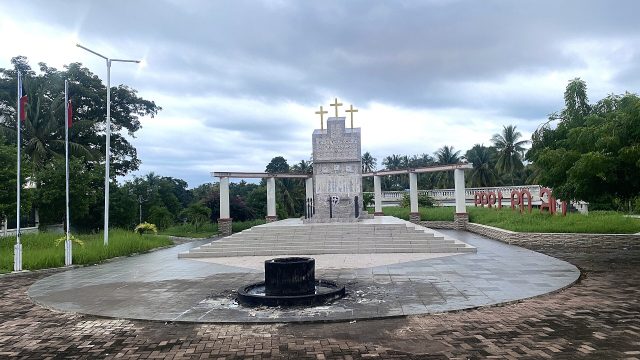
The church has witnessed more than its share of history. When East Timor declared independence from Portugal in 1975, only to be occupied by Indonesia, Suai found itself on the front lines. The town was repeatedly targeted, and many buildings were destroyed. Nossa Senhora da Conceição survived, though not unscathed. After East Timor regained independence in 2002, the church was restored, but traces of its past remain—hairline cracks in the walls, a slightly crooked cross on the roof. These imperfections don’t detract from the building; they give it character, a quiet testament to resilience.
Today, the church shows its age, but that only adds to its charm. The paint on the facade is peeling in places, the wooden doors creak when opened, and the whole structure has a lived-in warmth. Palm trees sway around it, and in the mornings, women with baskets of fruit stop by to pray before heading to the market. There’s no tourist hustle here, no pressure to perform. The church moves to its own rhythm, untouched by expectations.
If you ever find yourself in Suai, it’s worth visiting—not just for the sake of a photograph, but to feel the town’s pulse. Inside, the scent of wax and old wood lingers, and through the open windows, the sound of the sea drifts in. Occasionally, services are held in Tetum, the local language, and the sound of prayers sung by lifelong parishioners fills the air. East Timor has many sites tied to its struggle for independence, places heavy with history, but Nossa Senhora da Conceição offers something different: a reminder of quiet, everyday faith that keeps people rooted in their past.
There are no plaques or signs explaining the church’s history, and that’s typical of Suai. Here, the past isn’t put on display—it simply exists, woven into the present. That’s why the church doesn’t feel like a museum. It’s a living place, where each visitor might find something personal. For some, it’s a symbol of hope; for others, a memory of childhood spent in these streets; for a few, just a cool, quiet refuge from the heat. In a world where so many places start to look the same, corners like this remind us that authenticity isn’t always obvious. Sometimes, it’s the unassuming things that hold the deepest meaning.