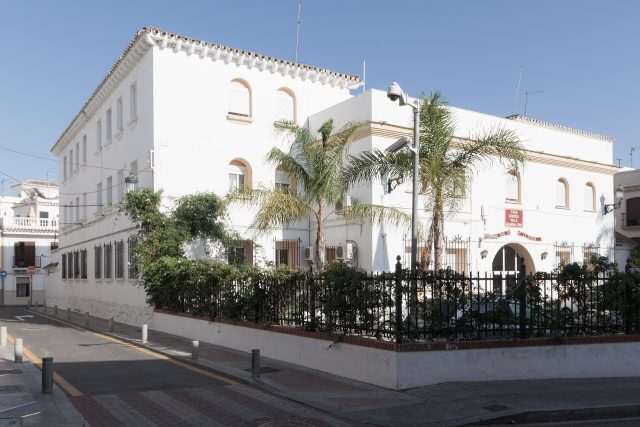
El Salvador Church in Nerja is the kind of place that doesn’t demand attention but quietly lingers in memory. Tucked away in the heart of the old town, it sits on a small square surrounded by whitewashed houses, their wrought-iron balconies draped with terracotta pots of geraniums. Unlike the grand cathedrals of Spain’s major cities, there’s no overwhelming opulence here—just a modest, understated presence that feels perfectly in tune with the slow, sunlit rhythm of this coastal town.
The church’s history stretches back to the early 16th century, when Nerja was little more than a fishing village clinging to the edge of the Costa del Sol. The first records of El Salvador date to 1505, though it began as a simple chapel rather than a full-fledged church. As Nerja grew into a trading and religious hub, the building expanded, gradually taking on the form we see today. By the 17th and 18th centuries, when Baroque architecture dominated Spain, local craftsmen chose a more restrained approach, blending the style with the practical, unpretentious spirit of the region.
From the outside, the church is unassuming—a rectangular structure with a tiled gable roof and a plain portal crowned by a small bell tower. The facade is adorned with only a few decorative touches: shallow pilasters, a simple cornice, and a modest rose window. The tower, added later, follows the same straightforward design—square in shape, with arched openings for the bells and a slender spire topped by a cross. There’s a sense of solidity to it, as if the building has always belonged here, rooted in the landscape like the olive trees on the surrounding hills.
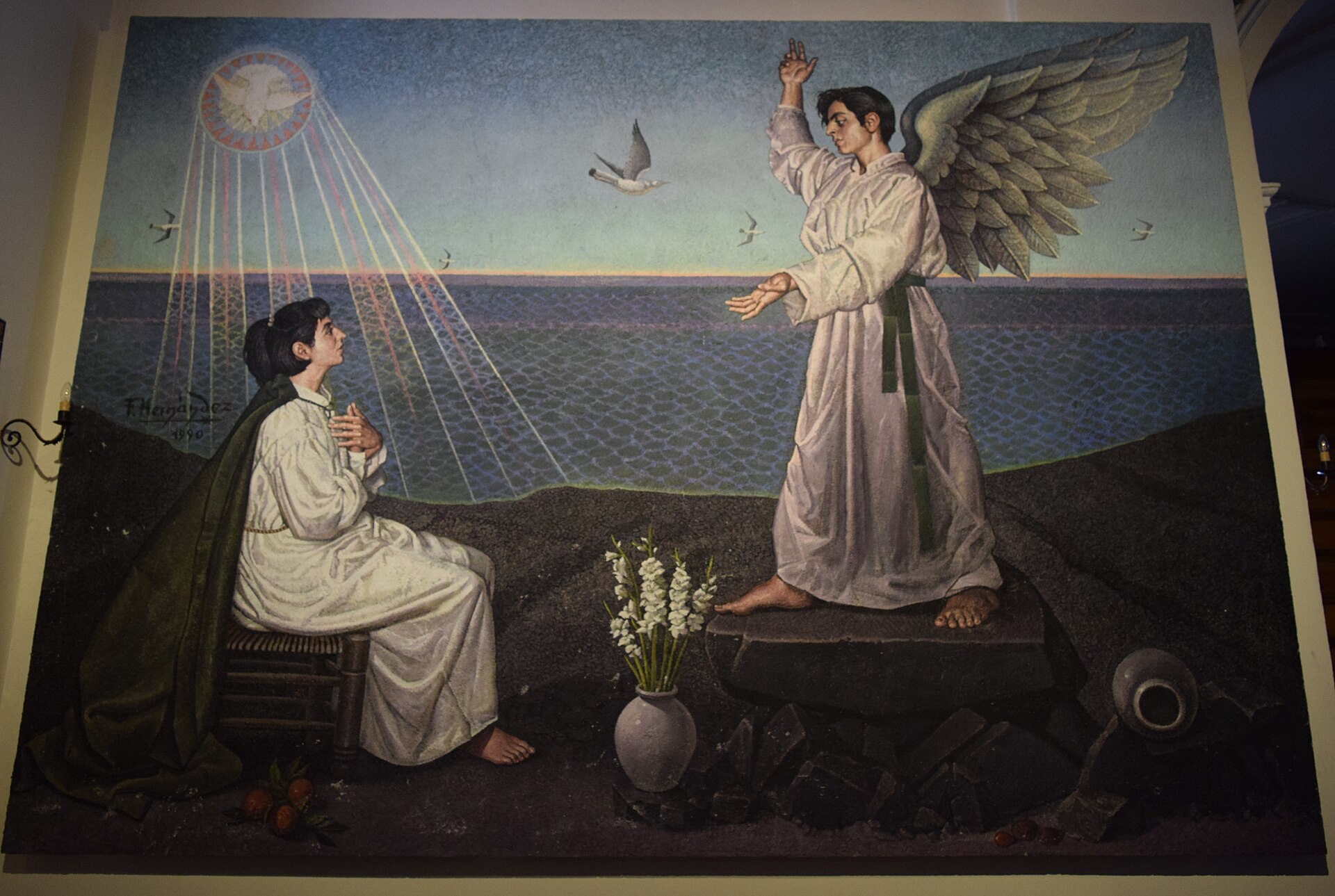
Inside, the church feels intimate rather than imposing. The nave is low, with a wooden ceiling supported by thick beams, and the air carries the faint scent of aged wood and candle wax. The altar, the most ornate part of the interior, is a Baroque piece with delicate carvings and gilding, though even here the craftsmanship leans toward simplicity. At its center stands the statue of Christ the Savior, from which the church takes its name. The side chapels hold other religious figures, including local saints venerated in Nerja, their expressions warm and approachable rather than austere. The walls are hung with paintings depicting biblical scenes, likely the work of local artists—less polished than academic works, but full of quiet devotion.
One of the church’s most striking features is its organ, perched in the choir loft. Though not new, the instrument is well-preserved, and its deep, resonant tones fill the space during occasional concerts of sacred music. On weekdays, the church is often empty, the silence broken only by the creak of a door or the soft footsteps of a visitor. It’s a place where time seems to slow, where the outside world fades into the background.
Nerja may be a popular tourist destination, but it remains a town deeply tied to tradition, and El Salvador plays a central role in that continuity. The church is the focal point for major religious festivals—Christmas, Easter, and the feast day of Saint Anthony, the town’s patron saint. During Holy Week, the streets come alive with processions, and the church becomes the heart of the celebrations. Many locals, even those who have moved away, return for these events, taking part in rituals passed down through generations.
In the summer, when tourists fill the streets, the church offers a quiet refuge. People duck inside to escape the heat, sitting in the cool dimness, lost in their own thoughts. There are no crowds here, no pressure to admire or photograph—just a sense of stillness. That, perhaps, is why El Salvador feels so compelling. It doesn’t exist to impress; it simply endures, woven into the fabric of the town’s daily life.
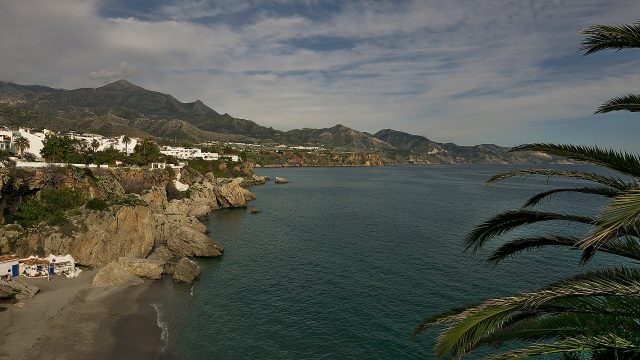
If you step away from the church and wander down one of the narrow lanes of the old quarter, you’ll find a small viewpoint overlooking the sea. From here, Nerja unfolds below—a patchwork of white houses spilling toward the beaches, framed by mountains on one side and the endless blue of the Mediterranean on the other. And there, at the center of it all, stands El Salvador, as it has for centuries. It’s not a monument to be admired from a distance but a living part of the town, as much a part of Nerja as the salt in the air or the sound of waves against the shore.