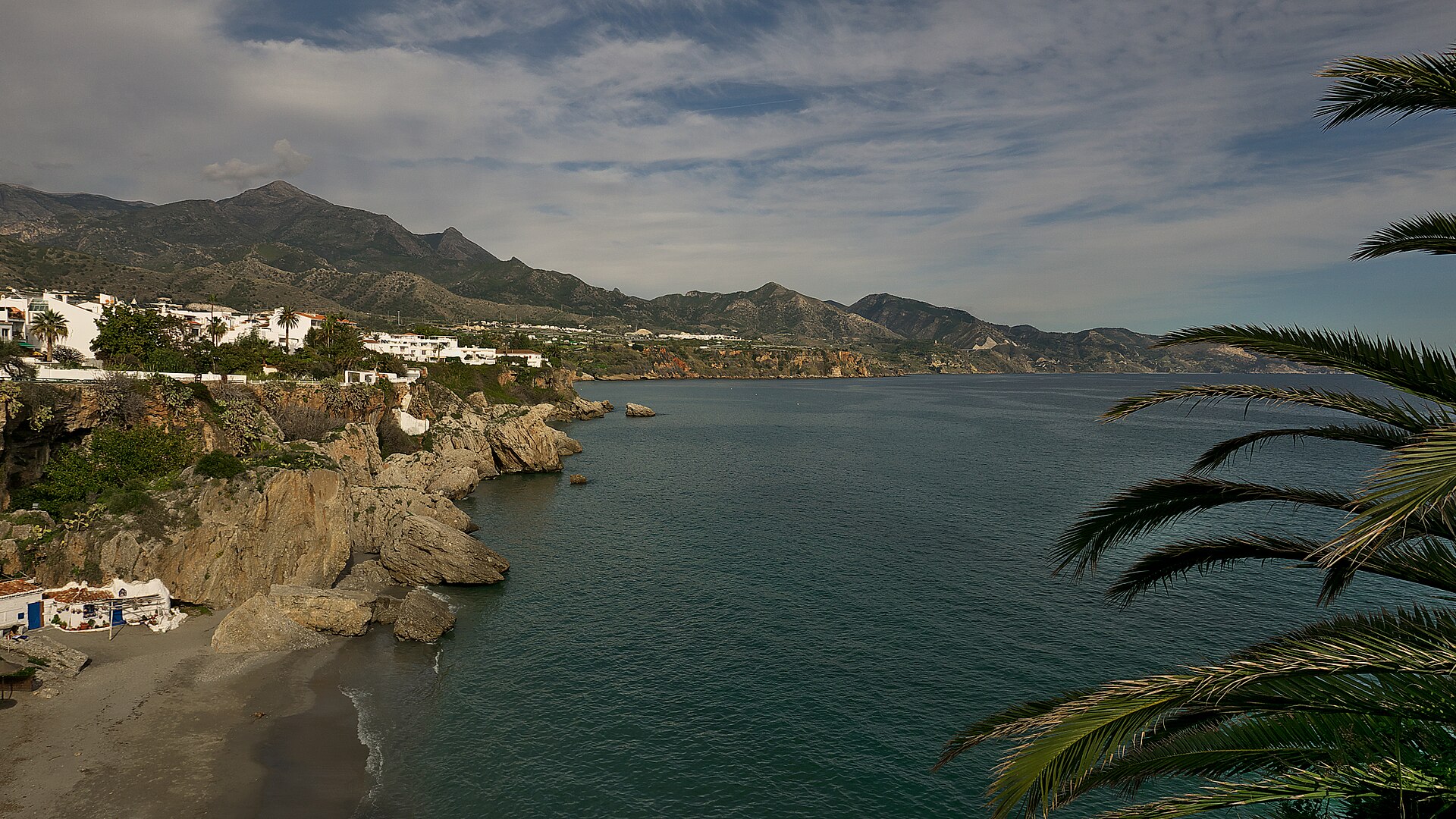
Nerja is a quiet coastal town on the Costa del Sol, where whitewashed houses cluster along narrow streets and the Mediterranean light softens every corner. Among its unassuming charm, one place stands out—not for its size or grandeur, but for the way it captures the essence of the town. The Balcón de Europa is more than a viewpoint; it’s where history, architecture, and the sea converge in a way that feels both effortless and profound. From here, the coastline unfolds in layers of blue and gold, especially at sunset, when the water takes on hues of amber and rose, and the horizon seems to stretch forever.
The name Balcón de Europa dates back to the late 19th century, though its origins are wrapped in a story that may owe as much to local pride as to fact. King Alfonso XII is said to have visited Nerja after a devastating earthquake, and upon seeing the sweeping views, declared the spot a balcony from which all of Europe could be glimpsed. Whether the king actually stood here or not, the name stuck, and today the place lives up to it. There’s a sense of standing at the edge of the continent, where land gives way to sea in a quiet, unbroken line.
The Balcón itself is a small, paved square with low stone railings that drop away toward the cliffs. At its center stands a statue of Alfonso XII, though the likeness is more symbolic than accurate. The square is framed by cafés and restaurants, their terraces spilling out toward the water, where visitors linger over coffee or wine as the light shifts across the waves. In summer, the place hums with activity, but even at its busiest, there’s a calm that comes from the sea’s constant presence—the sound of waves breaking against the rocks below drowns out the noise of the crowd.
Nerja has little in common with the brash resorts further along the coast. There are no towering hotels or crowded beaches here, no sense of being overwhelmed by tourism. The town moves at its own pace, and the Balcón de Europa is where locals and visitors meet on equal terms. In the early morning, fishermen return with their catch, their boats bobbing in the harbor below. By midday, families gather to watch the sea, children darting between the railings while parents sip drinks at the nearby tables. As evening falls, the square comes alive with music—sometimes a lone guitarist, sometimes a group playing flamenco—and the scent of grilled fish drifts through the air.
From the Balcón, one of Nerja’s most scenic walks begins, winding along the cliffs toward Burriana Beach. The path isn’t just a route; it’s a series of small coves and inlets, each with its own character. The locals call these hidden spots *calas*, and they’re as varied as they are beautiful. Some are easily accessible, while others require a scramble down narrow trails, but that’s part of their appeal. There are no sunbeds or umbrellas here, just rocks, water, and silence. The sea is so clear that you can see the seabed shifting beneath the surface, and the only sounds are the cry of gulls and the rhythm of the waves.
Nerja’s history stretches back thousands of years. The area was first settled in Neolithic times, and later became a stopping point for Phoenicians and Romans. During the Middle Ages, it was ruled by the Moors, and their influence lingers in the old quarter’s labyrinth of narrow streets and whitewashed houses. The architecture here is unmistakably Andalusian—arched doorways, tiled courtyards, and fountains that seem to have been part of the town forever. The Balcón de Europa, though a much later addition, feels like a natural extension of this history, a place where different eras and cultures overlap without effort.
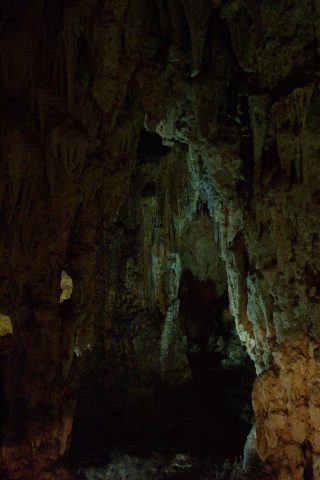
Beyond its role as a tourist destination, Nerja is a town that lives year-round. There are markets where locals sell fresh produce, small shops offering handmade ceramics and leather goods, and bars where tapas are served with the same care they’ve been for generations. The Balcón is the heart of it all, the starting point for any exploration. From here, you can venture to the Caves of Nerja, where prehistoric paintings still cling to the walls, or climb to the Mirador de El Salvador for a sweeping view of the town and the sea beyond.
The Balcón de Europa changes with the seasons. In summer, it’s lively, the air filled with laughter and the clink of glasses, the sea sparkling under the sun. Spring and autumn bring a quieter energy, the square often empty except for a few people lost in thought as they watch the waves. Winter is the most solitary time, when the wind howls off the water and the sky turns a steely gray. Yet there’s a strange beauty in the emptiness, a sense of standing at the very edge of the world, where nothing separates you from the vastness of the sea.
What makes the Balcón de Europa special isn’t any single feature—there are no grand monuments or hidden secrets here. It’s simply a place where the sea, the sky, and the people who visit come together in a way that feels timeless. Nerja doesn’t try to impress; it just exists, offering a quiet corner of the world where the rhythms of life slow down. Maybe that’s why people keep returning—not for anything extraordinary, but for the chance to stand still for a moment and let the beauty of the place sink in.